
Catalogue Search | MBRL


Are you sure you want to remove the book from the shelf?

{{itemTitle}}
2,368
result(s) for
"Martin, Bill"
Sort by:


Progesterone for the prevention of preterm birth in twin pregnancy (STOPPIT): a randomised, double-blind, placebo-controlled study and meta-analysis
Women with twin pregnancy are at high risk for spontaneous preterm delivery. Progesterone seems to be effective in reducing preterm birth in selected high-risk singleton pregnancies, albeit with no significant reduction in perinatal mortality and little evidence of neonatal benefit. We investigated the use of progesterone for prevention of preterm birth in twin pregnancy.
In this double-blind, placebo-controlled trial, 500 women with twin pregnancy were recruited from nine UK National Health Service clinics specialising in the management of twin pregnancy. Women were randomised, by permuted blocks of randomly mixed sizes, either to daily vaginal progesterone gel 90 mg (n=250) or to placebo gel (n=250) for 10 weeks from 24 weeks' gestation. All study personnel and participants were masked to treatment assignment for the duration of the study. The primary outcome was delivery or intrauterine death before 34 weeks' gestation. Analysis was by intention to treat. Additionally we undertook a meta-analysis of published and unpublished data to establish the efficacy of progesterone in prevention of early (<34 weeks' gestation) preterm birth or intrauterine death in women with twin pregnancy. This study is registered, number ISRCTN35782581.
Three participants in each group were lost to follow-up, leaving 247 analysed per group. The combined proportion of intrauterine death or delivery before 34 weeks of pregnancy was 24·7% (61/247) in the progesterone group and 19·4% (48/247) in the placebo group (odds ratio [OR] 1·36, 95% CI 0·89–2·09; p=0·16). The rate of adverse events did not differ between the two groups. The meta-analysis confirmed that progesterone does not prevent early preterm birth in women with twin pregnancy (pooled OR 1·16, 95% CI 0·89–1·51).
Progesterone, administered vaginally, does not prevent preterm birth in women with twin pregnancy.
Chief Scientist Office of the Scottish Government Health Directorate.
Journal Article


In conversation with Bill Martin
As
Nature Neuroscience
celebrates its 25th anniversary, we are having conversations with both established leaders in the field and those earlier in their careers to discuss how the field has evolved and where it is heading. This month we are talking to
Bill Martin
, Global Therapeutic Area Head, Neuroscience at Johnson & Johnson Innovative Medicine. We discussed the challenges and opportunities ahead for the development of treatments for psychiatric disease.
Journal Article

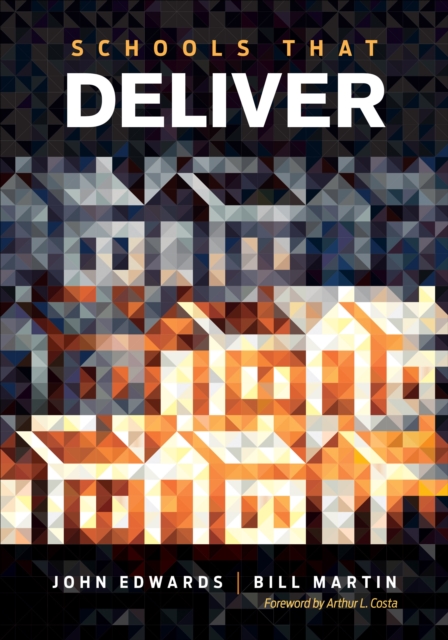
Schools That Deliver
Deliver real change and real results for your school This book focuses directly on what promotes delivery. It provides the practical tools and implementation guide for re-invigorating your school. Set against a solid blend of international research and international best practice, the narrative is carried by voices from schools that are currently delivering across six countries. They tell it how it is, in lived reality. Every process in the book has been tested and refined under the heat of practice, addressing the current realities in education. The book provides a carefully selected repertoire of skills, models, and processes that: • deliver results for children, teachers, school leaders, families and their communities • build trust through ensuring every voice is heard and respected • develop a strong culture of leadership and alignment, while recognizing and embracing the complexities of school change • address the frustrations currently felt by teachers in a positive, productive way Schools That Deliver fills the gap between intention and delivery. The book respects your voice, and your ability to create your own ways of delivering while remaining loyal to the unique personality of your school. When a school community delivers together what really matters for their children, they feel the true joy of education, that splendid feeling of professional satisfaction and achievement that we all deserve.
eBook


Women’s experiences of being invited to participate in a case-control study of stillbirth - findings from the Midlands and North of England Stillbirth Study
Background
The Midlands and North of England Stillbirth Study (MiNESS) was a case-control study of women who had a stillbirth or who had an ongoing pregnancy. During the set up phase questions were raised about whether interviewing women within six weeks of a stillbirth and recruiting women who were still pregnant into a “stillbirth” study was acceptable. This led to the research questions “whether it is appropriate to ask women who have recently experienced a stillbirth to participate in research?” and “whether it is appropriate to ask pregnant women to participate in a research project looking at factors associated with stillbirth.” This nested study aimed to describe the opinions of women approached to participate in MiNESS to explore their views and experiences of a research project focussed on stillbirth.
Methods
Semi- structured interviews were conducted at a single study site involved in MiNESS. Purposive sampling was used to obtain a sample of women who were approached following a stillbirth (case
n
= 6) and those who were approached during pregnancy who gave birth to a live born baby (control
n
= 6). These two groups of women were divided equally according to whether they participated in the main MiNESS questionnaire study and those who declined to do so (
n
= 3 in each group). Interview data were transcribed and analysed using thematic analysis to identify the most important factors in determining whether women participated in MiNESS.
Results
The following themes emerged from the analysis: participants’ understanding of research; approach by researcher; wanting to help; stillbirth taboo. These themes are explored individually in the manuscript. Participants reported positive views about research and previous participation in research studies. Respondents valued an initial approach from a member of staff already known to them. The taboo around stillbirth was a barrier to participation for some women with ongoing pregnancies.
Conclusions
Experiences and views regarding research differed between participants and non-participants in the MiNESS study. Participants reported a greater understanding of the importance and implications of clinical research. When designing future studies, the timing of approach, clarity of information and the person approaching potential participants should be considered to optimise recruitment.
Trial registration
NCT02025530
date registered: 01/01/2014.
Journal Article

Baby bear, baby bear, what do you see?
Illustrations and rhyming text portray a young bear searching for its mother and meeting many North American animals along the way in this easy-reader version of the 2007 tale. Includes note to parents and teachers, as well as activities.
Book

Optimization of MicroCT Imaging and Blood Vessel Diameter Quantitation of Preclinical Specimen Vasculature with Radiopaque Polymer Injection Medium
Vascular networks within a living organism are complex, multi-dimensional, and challenging to image capture. Radio-angiographic studies in live animals require a high level of infrastructure and technical investment in order to administer costly perfusion mediums whose signals metabolize and degrade relatively rapidly, diminishing within a few hours or days. Additionally, live animal specimens must not be subject to long duration scans, which can cause high levels of radiation exposure to the specimen, limiting the quality of images that can be captured. Lastly, despite technological advances in live-animal specimen imaging, it is quite difficult to minimize or prevent movement of a live animal, which can cause motion artifacts in the final data output. It is demonstrated here that through the use of postmortem perfusion protocols of radiopaque silicone polymer mediums and ex-vivo organ harvest, it is possible to acquire a high level of vascular signal in preclinical specimens through the use of micro-computed tomographic (microCT) imaging. Additionally, utilizing high-order rendering algorithms, it is possible to further derive vessel morphometrics for qualitative and quantitative analysis.
Journal Article