
Catalogue Search | MBRL


Are you sure you want to remove the book from the shelf?

{{itemTitle}}
269
result(s) for
"Martin, Debra L."
Sort by:


Climate change, human health, and resilience in the Holocene
Climate change is an indisputable threat to human health, especially for societies already confronted with rising social inequality, political and economic uncertainty, and a cascade of concurrent environmental challenges. Archaeological data about past climate and environment provide an important source of evidence about the potential challenges humans face and the long-term outcomes of alternative short-term adaptive strategies. Evidence from well-dated archaeological human skeletons and mummified remains speaks directly to patterns of human health over time through changing circumstances. Here, we describe variation in human epidemiological patterns in the context of past rapid climate change (RCC) events and other periods of past environmental change. Case studies confirm that human communities responded to environmental changes in diverse ways depending on historical, sociocultural, and biological contingencies. Certain factors, such as social inequality and disproportionate access to resources in large, complex societies may influence the probability of major sociopolitical disruptions and reorganizations—commonly known as “collapse.” This survey of Holocene human–environmental relations demonstrates how flexibility, variation, and maintenance of Indigenous knowledge can be mitigating factors in the face of environmental challenges. Although contemporary climate change is more rapid and of greater magnitude than the RCC events and other environmental changes we discuss here, these lessons from the past provide clarity about potential priorities for equitable, sustainable development and the constraints of modernity we must address.
Journal Article

Bioarchaeology of climate change and violence : ethical considerations
The goal of this monograph is to emphasize with empirical data the complexity of the relationship between climate change and violence. Bioarchaeology is the integration of human skeletal remains from ancient societies with the cultural and environmental context. Information on mortality, disease, diet and other factors provide important data to examine long chronologies of human existence, particularly during periods of droughts and life-threatening climate changes. Case studies are used to reconstruct the responses and short and long-term adaptations made by groups before, during and after dramatic changes in weather and climate. Interpersonal and group violence is also analyzed. The authors find that while in some cases there is an increase in trauma and violence, in other cases there is not. Human groups are capable of avoiding violent altercations and increasing broad networks of cooperation that help to mitigate the effects of climate change. A case study from the U.S. Southwest is provided that shows the variable and surprising ways that ancient farmers in the past dealt with long term droughts.
Book

Symbolic bones and interethnic violence in a frontier zone, northwest Mexico, ca. 500–900 C.E
Although extensive deposits of disarticulated, commingled human bones are common in the prehispanic Northern Frontier of Mesoamerica, detailed bioarchaeological analyses of them are not. To our knowledge, this article provides the first such analysis of bone from a full residential-ceremonial complex and evaluates multiple hypotheses about its significance, concluding that the bones actively represented interethnic violence as well as other relationships among persons living and dead. Description of these practices is important to the discussion of multiethnic societies because the frontier was a context where urbanism and complexity were emerging and groups with the potential to form multiethnic societies were interacting, possibly in the same ways that groups did before the formation of larger multiethnic city-states in the core of Mesoamerica.
Journal Article

Bioarchaeology of frontiers and borderlands
This edited volume presents a series of cases addressing how living on or interacting with the frontier can affect health and socioeconomic status. This book aims to explore how different groups stuck in these zones were affected, how they interacted with the different worlds, how they lived their lives on the \"edge\". This volume also aims to emphasize the ways that frontiers and borderlands are liminal zones that demand a reconceptualization of many of our most deeply held assumptions about the relationships between people-place identity and culture.
Book
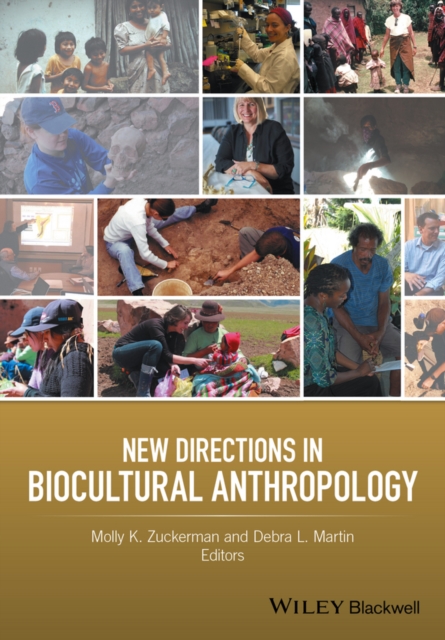
New directions in biocultural anthropology
Biocultural or biosocial anthropology is a research approach that views biology and culture as dialectically and inextricably intertwined, explicitly emphasizing the dynamic interaction between humans and their larger social, cultural, and physical environments. The biocultural approach emerged in anthropology in the 1960s, matured in the 1980s, and is now one of the dominant paradigms in anthropology, particularly within biological anthropology. This volume gathers contributions from the top scholars in biocultural anthropology focusing on six of the most influential, productive, and important areas of research within biocultural anthropology. These are: critical and synthetic approaches within biocultural anthropology; biocultural approaches to identity, including race and racism; health, diet, and nutrition; infectious disease from antiquity to the modern era; epidemiologic transitions and population dynamics; and inequality and violence studies. Focusing on these six major areas of burgeoning research within biocultural anthropology makes the proposed volume timely, widely applicable and useful to scholars engaging in biocultural research and students interested in the biocultural approach, and synthetic in its coverage of contemporary scholarship in biocultural anthropology. Students will be able to grasp the history of the biocultural approach, and how that history continues to impact scholarship, as well as the scope of current research within the approach, and the foci of biocultural research into the future. Importantly, contributions in the text follow a consistent format of a discussion of method and theory relative to a particular aspect of the above six topics, followed by a case study applying the surveyed method and theory. This structure will engage students by providing real world examples of anthropological issues, and demonstrating how biocultural method and theory can be used to elucidate and resolve them.
Key features include:
* Contributions which span the breadth of approaches and topics within biological anthropology from the insights granted through work with ancient human remains to those granted through collaborative research with contemporary peoples.
* Comprehensive treatment of diverse topics within biocultural anthropology, from human variation and adaptability to recent disease pandemics, the embodied effects of race and racism, industrialization and the rise of allergy and autoimmune diseases, and the sociopolitics of slavery and torture.
* Contributions and sections united by thematically cohesive threads.
* Clear, jargon-free language in a text that is designed to be pedagogically flexible: contributions are written to be both understandable and engaging to both undergraduate and graduate students.
* Provision of synthetic theory, method and data in each contribution.
* The use of richly contextualized case studies driven by empirical data.
* Through case-study driven contributions, each chapter demonstrates how biocultural approaches can be used to better understand and resolve real-world problems and anthropological issues.
eBook


Hard Times in Dry Lands
The scientific and systematic integration of data derived from human remains is offered as an important methodology with which to test hypotheses regarding violence in the Greater Southwest prior to European contact. The evidence suggests a continuum of violent activities that does not fit into broad classifications such as warfare. Osteological remains combined with site information illuminates how and why violence was performed and bones were processed at certain times and in certain places. This context-specific approach affords a more emic glimpse of how violence was experienced by victims, perpetrators, and witnesses. Persistent forms of violence included (1) disarticulated human remains, (2) witch killings, (3) massacres, (4) nonlethal head wounds, and (5) raiding for captives. A model that takes these politically and culturally motivated behaviors into consideration is offered. A more parsimonious explanation for violence is that it was a cultural practice that was integrated into other ritual and ceremonial activities.
Journal Article

The Bioarchaeology of Violence
Human violence is an inescapable aspect of our society and culture. As the archaeological record clearly shows, this has always been true. What is its origin? What role does it play in shaping our behavior? How do ritual acts and cultural sanctions make violence acceptable?
These and other questions are addressed by the contributors toThe Bioarchaeology of Violence. Organized thematically, the volume opens by laying the groundwork for new theoretical approaches that move beyond interpretation; it then examines case studies from small-scale conflict to warfare to ritualized violence.
Experts on a wide range of ancient societies highlight the meaning and motivation of past uses of violence, revealing how violence often plays an important role in maintaining and suppressing the challenges to the status quo, and how it is frequently a performance meant to be witnessed by others.
The interesting and nuanced insights offered in this volume explore both the costs and the benefits of violence throughout human prehistory.
eBook
