
Catalogue Search | MBRL


Are you sure you want to remove the book from the shelf?

{{itemTitle}}
8
result(s) for
"Martin, Dominique author"
Sort by:


Land in transition : reform and poverty in rural Vietnam
This book is a case study of Vietnam's efforts to fight poverty using market-oriented land reforms. But what role did the reforms play in poverty reduction? Did the efficiency gains from reform come at a cost to equity? Was rising rural landlessness in the wake of reforms a sign of success or failure?.
eBook

Right-to-work?
In 2006, India embarked on an ambitious attempt to fight poverty by attempting to introduce a wage floor in a setting in which many unskilled workers earn less than the minimum wage. The 2005 national rural employment guarantee act (NREGA) creates a justiciable \"right to work\" by promising 100 days of wage employment in every financial year to all rural households whose adult members volunteer to do unskilled manual work. In attempting to fight poverty in poor places with weak administrative capabilities, the idea of \"rights\" has often been invoked. This book aims to contribute to the understanding of the efficacy of poor states in fighting poverty using an ambitious rights-based program - the largest antipoverty public employment program in India, and possibly anywhere in the world. The program authors study is India's Mahatma Gandhi National Rural Employment Guarantee Scheme (MGNREGS), which was launched to implement the NREGA. This book presents survey-based estimates for India as a whole as well as results for Bihar. Results for India are based on the 2009-10 national sample survey. Two surveys were carried out in 2009 and 2010 and spanned 150 villages spread across all 38 districts in Bihar. These data are supplemented by qualitative research in six districts to better understand supply-side challenges. A distinctive feature of the methodology is that the authors identify the key counterfactual outcomes of interest - that is, what Bihar Rural Employment Guarantee Scheme (BREGS) participants will have done in the absence of the program - by directly asking individual BREGS participants. The advantage of this approach is that it produces an individual-specific estimate of impact - exploiting the information available for each participant - rather than delivering only a mean impact. The authors find compelling evidence that the scheme is reaching relatively poor families. It is important that reform efforts for MGNREGS work on both of these aspects - a stronger, more capable, local administration, plus more effective participation by civil society.
eBook

Right to Work?
India's 2005 National Rural Employment Guarantee Act creates a justiciable 'right to work' by promising up to 100 days of wage employment per year to all rural households whose adult members volunteer to do unskilled manual work. Work is provided in public works projects at the stipulated minimum wage. This study asks: Are the conditions stipulated by the Act met in practice? How much impact on poverty do the earnings from the scheme have? Why might that impact fall short of its potential? How can the scheme bridge that gap? The bulk of the study focuses on the scheme's performance in one of I
Book
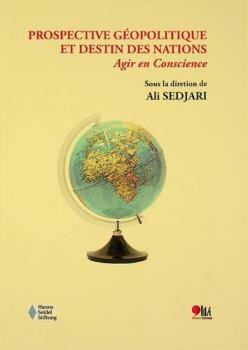
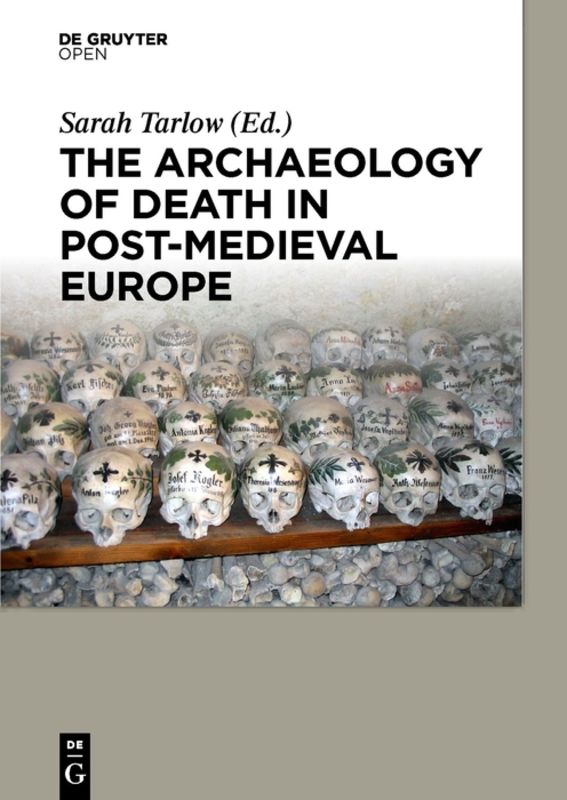
The Archaeology of Death in Post-medieval Europe
Historical burial grounds are an enormous archaeological resource and have the potential to inform studies not only of demography or the history of disease and mortality, but also histories of the body, of religious and other beliefs about death, of changing social relationships, values and aspirations. In the last decades, the intensive urban development and a widespread legal requirement to undertake archaeological excavation of historical sites has led to a massive increase in the number of post-medieval graveyards and burial places that have been subjected to archaeological investigation. The archaeology of the more recent periods, which are comparatively well documented, is no less interesting and important an area of study than prehistoric periods. This volume offers a range of case studies and reflections on aspects of death and burial in post-medieval Europe. Looking at burial goods, the spatial aspects of cemetery organisation and the way that the living interact with the dead, contributors who have worked on sites from Central, North and West Europe present some of their evidence and ideas. The coherence of the volume is maintained by a substantial integrative introduction by the editor, Professor Sarah Tarlow. “This book is a ‘first’ and a necessary one. It is an exciting and far-ranging collection of studies on post-medieval burial practice across Europe that will most certainly be used extensively” Professor Howard Williams
eBook