
Catalogue Search | MBRL


Are you sure you want to remove the book from the shelf?

{{itemTitle}}
12,678
result(s) for
"Martin, Laura"
Sort by:

Code name flood
Sky receives a letter from her long-missing father, who informs her that she must save the world by securing vital information left in the dinosaur-ruled world above ground.
Book

Mapping where ecologists work: biases in the global distribution of terrestrial ecological observations
Although the geographical context of ecological observations shapes ecological theory, the global distribution of ecological studies has never been analyzed. Here, we document the global distribution and context (protected status, biome, anthrome, and net primary productivity) of 2573 terrestrial study sites reported in recent publications (2004-2009) of 10 highly cited ecology journals. We find evidence of several geographical biases, including overrepresentation of protected areas, temperate deciduous woodlands, and wealthy countries. Even within densely settled or agricultural regions, ecologists tend to study \"natural\" fragments. Such biases in trendsetting journals may limit the scalability of ecological theory and hinder conservation efforts in the 75% of the terrestrial world where humans live and work.
Journal Article

The ark plan
A century and a half after cloned dinosaurs forced humans to move into underground compounds, Sky discovers a clue to the whereabouts of her long-missing father and ventures above ground on a quest that has the potential to save the world.
Book

Production of a Shigella sonnei Vaccine Based on Generalized Modules for Membrane Antigens (GMMA), 1790GAHB
Recently, we developed a high yield production process for outer membrane particles from genetically modified bacteria, called Generalized Modules of Membrane Antigens (GMMA), and the corresponding simple two step filtration purification, enabling economic manufacture of these particles for use as vaccines. Using a Shigella sonnei strain that was genetically modified to produce penta-acylated lipopolysaccharide (LPS) with reduced endotoxicity and to maintain the virulence plasmid encoding for the immunodominant O antigen component of the LPS, scale up of the process to GMP pilot scale was straightforward and gave high yields of GMMA with required purity and consistent results. GMMA were formulated with Alhydrogel and were highly immunogenic in mice and rabbits. In mice, a single immunization containing 29 ng protein and 1.75 ng of O antigen elicited substantial anti-LPS antibody levels. As GMMA contain LPS and lipoproteins, assessing potential reactogenicity was a key aspect of vaccine development. In an in vitro monocyte activation test, GMMA from the production strain showed a 600-fold lower stimulatory activity than GMMA with unmodified LPS. Two in vivo tests confirmed the low potential for reactogenicity. We established a modified rabbit pyrogenicity test based on the European Pharmacopoeia pyrogens method but using intramuscular administration of the full human dose (100 μg of protein). The vaccine elicited an average temperature rise of 0.5°C within four hours after administration, which was considered acceptable and showed that the test is able to detect a pyrogenic response. Furthermore, a repeat dose toxicology study in rabbits using intramuscular (100 μg/dose), intranasal (80 μg/dose), and intradermal (10 μg/dose) administration routes showed good tolerability of the vaccine by all routes and supported its suitability for use in humans. The S. sonnei GMMA vaccine is now in Phase 1 dose-escalation clinical trials.
Journal Article

Float
\"Emerson can float--he just can't do it very well. His uncontrollable floating is his RISK factor, which means that he deals with Reoccurring Incidents of the Strange Kind. The last place Emerson wants to be is at a government-mandated summer camp for RISK kids like him, so he's shocked when he actually starts having fun at camp--and he even makes some new friends. But it's not all canoeing and capture-the- flag at Camp Outlier: the summer of fun takes a serious turn when Emerson and his friends discover that one of their own is hiding a deadly secret that puts all of their lives in danger\"--Amazon.com.
Book

TRPM4 and TRPM5 are both required for normal signaling in taste receptor cells
Peripheral taste receptor cells use multiple signaling pathways to transduce taste stimuli into output signals that are sent to the brain. Transient receptor potential melastatin 5 (TRPM5), a sodium-selective TRP channel, functions as a common downstream component in sweet, bitter, and umami signaling pathways. In the absence of TRPM5, mice have a reduced, but not abolished, ability to detect stimuli, suggesting that a TRPM5-independent pathway also contributes to these signals. Here, we identify a critical role for the sodium-selective TRP channel TRPM4 in taste transduction. Using live cell imaging and behavioral studies in KO mice, we show that TRPM4 and TRPM5 are both involved in taste-evoked signaling. Loss of either channel significantly impairs taste, and loss of both channels completely abolishes the ability to detect bitter, sweet, or umami stimuli. Thus, both TRPM4 and TRPM5 are required for transduction of taste stimuli.
Journal Article

Cinderella's big foot
Cinderella's fairy godmother grants her wish to go to the ball, but when she meets the prince Cinderella does not behave well at all, and the fairy godmother must teach her a lesson. Includes puzzles and notes for adults.
Book

Explicit and implicit emotion regulation: a multi-level framework
The ability to adaptively regulate emotion is essential for mental and physical well-being. How should we organize the myriad ways people attempt to regulate their emotions? We explore the utility of a framework that distinguishes among four fundamental classes of emotion regulation strategies. The framework describes each strategy class in terms their behavioral characteristics, underlying psychological processes and supporting neural systems. A key feature of this multi-level framework is its conceptualization of the psychological processes in terms of two orthogonal dimensions that describe (i) the nature of the emotion regulation goal (ranging from to implicit to explicit) and (ii) the nature of the emotion change process (ranging from more automatic to more controlled). After describing the core elements of the framework, we use it to review human and animal research on the neural bases of emotion regulation and to suggest key directions for future research on emotion regulation.
Journal Article

Black Panther. Vol. 2, Avengers of the new world
Ancient threats and modern enemies bring the battle to Wakanda, where T'Challa's new constitutional monarchy is emerging from the chaos of Tetu and Zenzi's rebellion.
BOOK
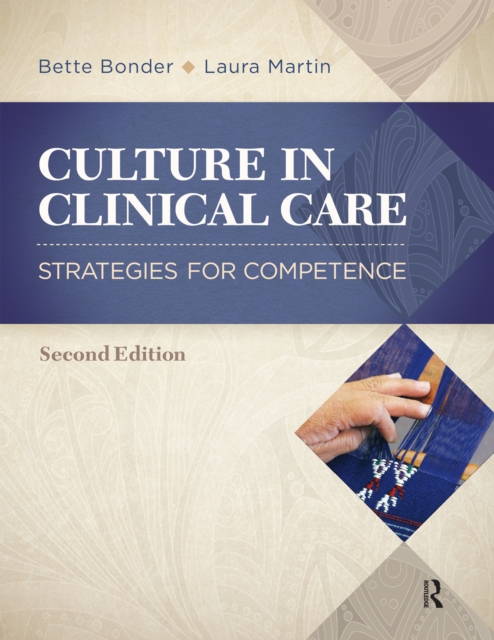
Culture in Clinical Care
Culture in Clinical Care: Strategies for Competence
explores theory and practice to define and describe the multidimensional nature of culture and its interaction with an individual's experience in the development of beliefs, values, and behavior. The newly updated
Second Edition
examines cultural beliefs related to health and wellness and how these beliefs and their associated actions affect intervention strategies.
Based on ethnographic methods, strategies for culturally sensitive assessment and intervention are defined and illustrated, with ample opportunities for reflection and practice. Going beyond traditional fact-centered and attitude-centered approaches,
Culture in Clinical Care, Second Edition
describes the ways in which culture emerges as individuals interact with each other in physical and social environments.
This one-of-a-kind text by Dr. Bette Bonder and Dr. Laura Martin provides health care practitioners and students with chapter objectives, critical thinking questions, interdisciplinary case studies and examples, numerous activities to build observation and interaction skills, comprehensive references and online resources, and images. The book's organization emphasizes practice and reflection by interweaving theory, examples, and continuous hands-on application of concepts. Readers have the opportunity to practice what they are learning and evaluate their own effectiveness while being constantly reminded that all individuals in any interaction embody numerous cultural influences.
Benefits of the updated Second Edition:
Training and practice in ethnographic methods that build awareness and skill
Numerous examples, exercises, and activities for reflection and observation
Interdisciplinary approach suitable for cross-disciplinary teaching contexts
Definition of health care professions themselves as cultures
Web and bibliographic resources
Case studies involving a wide range of practitioner disciplines and cultural groups
Culture in Clinical Care: Strategies for Competence, Second Edition
fills a niche in health professions programs because of its combined emphasis on a theoretical foundation that highlights the individual as a cultural actor and on practical strategies and methods for clinical interventions.
Instructors in educational settings can visit www.efacultylounge.com for additional material to be used in the classroom, including a sample syllabus.
Occupational therapists, physicians, physician assistants, mental health professionals, and a variety of related health professionals will benefit from this interactive, interdisciplinary text.
eBook