
Catalogue Search | MBRL


Are you sure you want to remove the book from the shelf?

{{itemTitle}}
128
result(s) for
"Martin, Michael T. editor"
Sort by:


The Politics and Poetics of Black Film
Written and directed by two white men and performed by an all-black cast, Nothing But a Man (Michael Roemer, 1964) tells the story of a drifter turned family man who struggles with the pressures of small-town life and the limitations placed on him and his community in the Deep South, an area long fraught with racism. Though unmistakably about race and civil rights, the film makes no direct reference to the civil rights movement. Despite this intentional absence, contemporary audiences were acutely aware of the social context for the film's indictment of white prejudice in America. To help frame and situate the film in the context of black film studies, the book gathers primary and secondary resources, including the original screenplay, essays on the film, statements by the filmmakers, and interviews with Robert M. Young, the film's producer and cinematographer, and Khalil Gibran Muhammad, the Director of the Schomburg Center for Research in Black Culture.
eBook


Lewis's child and adolescent psychiatry : a comprehensive textbook
For 25 years, Lewis's Child and Adolescent Psychiatry has been the cornerstone of every child and adolescent psychiatrist's library. Now, three colleagues of Dr. Lewis at the world-renowned Yale Child Study Center, have substantially updated and revised this foundational textbook for its long-awaited fifth edition, the first in ten years. Encyclopedic in scope, it continues to serve as a broad reference, deftly encompassing and integrating scientific principles, research methodologies, and everyday clinical care.Feautres:Ideal for anyone involved in the study or practice of child and adolescent psychiatry.Includes new content on Research Domain Criteria (RDoC) approach advanced by the National Institute of Mental Health.Section on telepsychiatry has been expanded, and psychopharmacology content has been updated and re-organized into five distinct yet linked components.Chapters cover ethics, research methodologies, treating diverse populations, evidence-based practice, common disorders and syndromes, treatment options, legal issues, and more.All royalties from the sale of the book will go to the Break the Cycle initiative of the American Academy of Child and Adolescent Psychiatry.Your book purchase includes a complimentary download of the enhanced eBook for iOS, Android, PC Mac.Take advantage of these practical features that will improve your eBook experience:The ability to download the eBook on multiple devices at one time - providing a seamless reading experience online or offline.Powerful search tools and smart navigation cross-links that allow you to search within this book, or across your entire library of VitalSource eBooks.Multiple viewing options that enable you to scale images and text to any size without losing page clarity as well as responsive design.The ability to highlight text and add notes with one click.
eBook

The Archaeology of Arcuate Communities
The Archaeology of Arcuate Communities is an edited
collection of ten essays that illuminate how Indigenous
communities of the Eastern Woodlands, from 10,000 BC to the
1550s, are analyzed and interpreted by archaeologists today.
Volume editors Martin Menz, Analise Hollingshead, and Haley
Messer define the persistent circular or “arcuate”
pattern of Native settlements in this region as a spatial
manifestation of community activities that reinforced group
identity alongside plazas, mounds, and other architectural
features. The varied case studies in this volume focus on
specific communities, how they evolved, and the types of
archaeological data that have been used to assess them. Part I,
“Defining the Domestic Unit in Arcuate Communities,”
reveals social distinctions between households and household
clusters in arcuate communities, how they differ in terms of
stylistic patterns and exchange, and how they combined to form
distinct social groups at different scales within a broader
community. Part II, “Organizing Principles of Arcuate
Communities,” broadens the scope to identify the organizing
principles of entire arcuate communities, such as the central
role of plazas in structuring their development, how the
distribution of households and central features within
communities was contested and reorganized, and the importance of
mounds in both delineating arcuate communities and marking their
position on the landscape. Part III, “Comparison and Change
in Arcuate Communities,” comprises case studies that
examine changes in the organization of arcuate communities over
time. Rounding out the volume is a concluding chapter that
assesses how and why communities around the world formed in
circular patterns. A valuable resource for archaeologists, this
collection will also be of interest to those seeking to learn
about Native North American settlement, ceremony, and community
organization.
eBook

Recovering Scotland's Slavery Past
The first ever book-length attempt to strip away the myths and write the real history of Scotland's slavery past. Written to appeal to a wide audience, it contains many original ,surprising and uncomfortable conclusions.
eBook
The myth of an afterlife
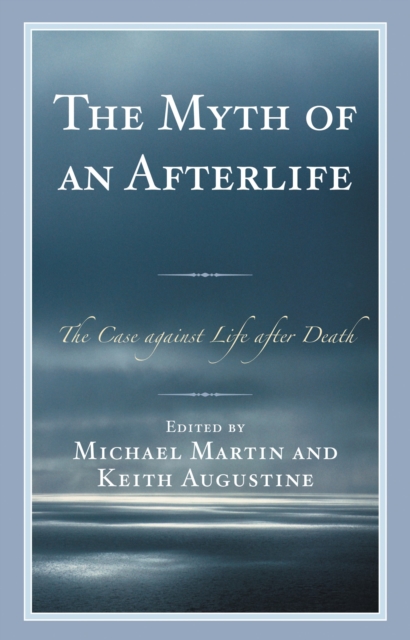
In The Myth of an Afterlife: The Case against Life after Death, Michael Martin and Keith Augustine collect a series of contributions that redress this imbalance in the literature by providing a strong, comprehensive, and up-to-date casebook of the chief arguments against an afterlife. Divided into four separate sections, this collection opens with a broad overview of the issues, as contributors consider the strongest evidence of whether or not we survive death - in particular the biological basis of all mental states and their grounding in brain activity that ceases to function at death. Next, contributors consider a host of conceptual and empirical difficulties that confront the various ways of \"surviving\" death - from bodiless minds to bodily resurrection to any form of posthumous survival. Then essayists turn to internal inconsistencies between traditional theological conceptions of an afterlife - heaven, hell, karmic rebirth - and widely held ethical principles central to the belief systems supporting those notions. In the final section, authors offer critical evaluations of the main types of evidence for an afterlife.
eBook

Against the grain
Highlighting the seminal role of German Jewish intellectuals and ideologues in forming and transforming the modern Jewish world, this volume analyzes the political roads taken by German Jewish thinkers; the impact of the Holocaust on the Central and East European Jewish intelligentsia; and the conundrum of modern Jewish identity. Several of German Jewry's most outstanding figures such as Scholem, Strauss, and Kohn are discussed. Inspired by Steven E. Aschheim's work, several contributors focus on the fraught relationship between German and East European Jews (the so-calledOstjuden) and between German Jews and their non-Jewish neighbors. More generally, this book examines how Central European Jewish thinkers reacted to the terrible crises of the twentieth century-to war, genocide, and the existential threat to the very existence of the Jewish people. It is essential reading for those interested in the triumphs and tragedies of modern European Jewry.
eBook

Archeologies of Confession
Modern religious identities are rooted in collective memories that are constantly made and remade across generations. How do these mutations of memory distort our picture of historical change and the ways that historical actors perceive it? Can one give voice to those whom history has forgotten? The essays collected here examine the formation of religious identities during the Reformation in Germany through case studies of remembering and forgetting—instances in which patterns and practices of religious plurality were excised from historical memory. By tracing their ramifications through the centuries, Archeologies of Confession carefully reconstructs the often surprising histories of plurality that have otherwise been lost or obscured.
eBook

Confucius and the Analects Revisited
Featuring contributions by preeminent scholars of early China, Confucius and the Analects Revisited: New Perspectives on Composition, Dating, and Authorship advances and examines debates surrounding the history of the Confucian Analects.
eBook