
Catalogue Search | MBRL


Are you sure you want to remove the book from the shelf?

{{itemTitle}}
76
result(s) for
"Mason, Adrienne"
Sort by:
Translating landscape history: the translator as knowledge-producer
Authorship is a key indicator of individual scholarly distinction. Academic translators, however, are not academic authors and their status as co-producers of new knowledge is denied by the prevalent institutional assumption that they do no more than reproduce existing scholarship. My aim in this thesis is to challenge that preconception by showing how translators work interactively with others to produce texts which contribute independently to scholarship as hybrid discourses of knowledge, and by demonstrating that translation practice expands our knowledge of translation itself. As the basis for these claims, I use my translation of a French monograph on landscape history by Michel Baridon (1926-2009), published in 2006 by Actes Sud. Within a framework combining Bourdieusian approaches and Latour’s actor-network-theory, I analyse my participation in the ‘making’ of that translation within a global production network. All academic texts are produced and validated collaboratively in the academic communities to which they contribute. I argue that new technologies create a bilingual ‘laboratory’ in which authorial, translatorial and editorial roles and responsibilities can be holistically combined to increase the transformative potential of translation projects and expand the social limits of the translator-function. My construction of scholarly comparability between source and target texts during the translation process illustrates the translator’s role as a co-producer of new knowledge and evidences the interpretative power of translated texts in the production of new historical narratives. My contribution to Translation Studies is twofold: I show how interactive networks of translation production can optimise the epistemological and discursive hybridity of translated academic texts, and I demonstrate that translation practice can make a distinctive, independent contribution to scholarship. On that basis, I argue that practitioner-researchers should be mainstreamed within research communities as co-producers of knowledge and translations acknowledged as a research output.
Dissertation

Planet ark : preserving Earth's biodiversity
Explains how young people can be modern-day Noahs who protect the world's plants and animals from extinction by making small but significant changes in everyday habits.
Book


Whales to the rescue : how whales help engineer the planet
In this text, a marine biologist reveals how whales are 'ecosystem engineers', animals that create, modify or maintain a habitat or ecosystem. Whales do this by reducing the amount of carbon dioxide in the atmosphere. They store loads of carbon in their bodies for decades, even centuries; when they die, they sink to the ocean floor, taking their carbon with them. More carbon in the ocean means less carbon in the atmosphere. And it's all thanks to whales!
Book

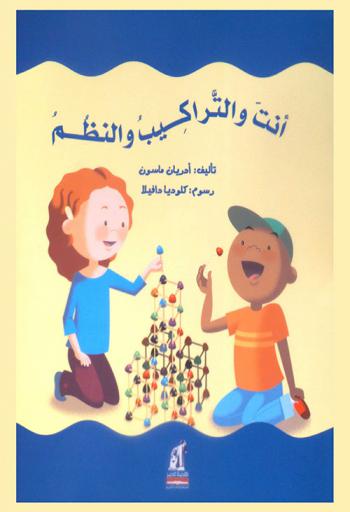
أنت والتراكيب والنظم
هذا الكتاب مخصص للأطفال يستهدف الطفولة المبكرة ويعمل علي اسثمار الطفل في بناء المهارات المختلفة المرتبطة بالخيال والأبتكار وقوة الشخصية والبحث عن حلول إبداعية ويستمد الطفل الكثير من العلم والمعرفة والمعلومات من المنهج السلوكي التربوي رائع يعلم الطفل كيف يستخلص من مشكلاته وكيف يبني شخصيته بشكل مميز ويعطي المربي حلولا لحل مشكلات أبنه تعنيه عن تجاوز الأزمة وإنهائها.
BOOK

Animation Around the World
\"Many of your favorite animated films probably come out of Hollywood, but there are great movies being made in other parts of the world, too.\" (KNOW: The Science Magazine for Curious Kids) Read about animated movies that are made in Canada, Japan and other countries.
Magazine Article