
Catalogue Search | MBRL


Are you sure you want to remove the book from the shelf?

{{itemTitle}}
37
result(s) for
"Mathews, Karen Rose"
Sort by:

Ceremonial, Architectural Theatricality, and the Multisensory Cityscape in the Medieval and Early Modern Mediterranean
Ceremonial deployed with the aim of displaying and perpetuating power was a shared practice across the medieval Mediterranean. Processions, ceremonies, and ritual acts created solidarity and consensus, naturalized dominion, and conveyed legitimacy while minimizing dissent and threats to social and political hierarchies. Such ceremonial acts were carried out in the public spaces of Mediterranean cities, connecting people, objects, and places in multisensory displays. This paper will explore the relationship between urban spaces and ritual and focus on the architectural contexts where ceremonies and rituals were performed. Three cosmopolitan Mediterranean cities—Cairo, Constantinople, and Venice—will serve as case studies for analyzing how richly ornamented architectural structures were employed as the staging areas for spectacle. Their prominent placement and ornamentation highlighted the theatricality of ceremony and defined a multisensory cityscape that was meant to overwhelm the senses and impress participants and spectators alike.
Journal Article
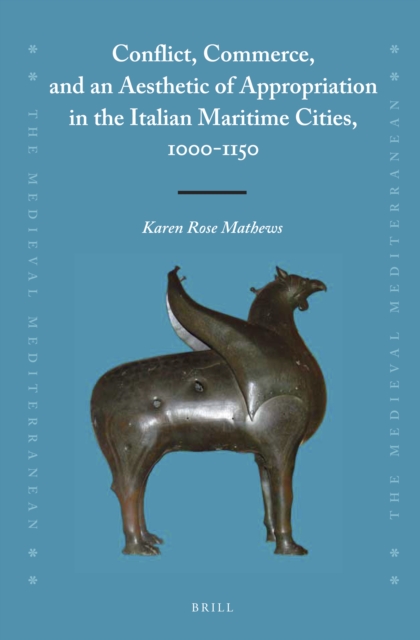
Conflict, Commerce, and an Aesthetic of Appropriation in the Italian Maritime Cities, 1000–1150
In Conflict, Commerce, and an Aesthetic of Appropriation in the Italian Maritime Cities, 1000-1150, Karen Rose Mathews analyzes the relationship between war, trade, and the use of spolia (appropriated objects from past and foreign cultures) as architectural decoration in the public monuments of the Italian maritime republics in the eleventh and twelfth centuries.
eBook

Other Peoples’ Dishes: Islamic Bacini on Eleventh-Century Churches in Pisa
Pisan churches of the eleventh century feature the use of bacini, or ceramic bowls, as decoration on an unprecedented scale. The hundreds of bowls that still exist all came from the Islamic world and were imported at a time when Pisa was undertaking military campaigns against and conducting trade with Muslim territories throughout the Mediterranean. Eleventh-century visual and textual sources characterize the Pisans as traders and crusaders simultaneously, and this paper argues that the seemingly contradictory qualities of holy warrior and merchant were not only complementary but essential for the definition of a Pisan civic identity. The bacini served as visual manifestations of this identity, as they were located in highly visible locations on numerous public monuments throughout the city. In the eleventh century, the bacini in Pisa came predominantly from North Africa and referenced the advantageous trade relations the Pisans enjoyed in the western Mediterranean, differentiating them from their rivals in Amalfi and Venice, who had already established control over commerce in the eastern Mediterranean. Far from being symbols of triumph over a Muslim enemy, these basins from the Islamic world displayed the city’s success in both crusade and trade and its sense of belonging in a Mediterranean environment.
Journal Article
Other Peoples’ Dishes: IslamicBacinion Eleventh-Century Churches in Pisa
Pisan churches of the eleventh century feature the use ofbacini, or ceramic bowls, as decoration on an unprecedented scale. The hundreds of bowls that still exist all came from the Islamic world and were imported at a time when Pisa was undertaking military campaigns against and conducting trade with Muslim territories throughout the Mediterranean. Eleventh-century visual and textual sources characterize the Pisans as traders and crusaders simultaneously, and this paper argues that the seemingly contradictory qualities of holy warrior and merchant were not only complementary but essential for the definition of a Pisan civic identity. Thebaciniserved as visual manifestations of this identity, as they were located in highly visible locations on numerous public monuments throughout the city. In the eleventh century, thebaciniin Pisa came predominantly from North Africa and referenced the advantageous trade relations the Pisans enjoyed in the western Mediterranean, differentiating them from their rivals in Amalfi and Venice, who had already established control over commerce in the eastern Mediterranean. Far from being symbols of triumph over a Muslim enemy, these basins from the Islamic world displayed the city’s success in both crusade and trade and its sense of belonging in a Mediterranean environment.
Journal Article
