
Catalogue Search | MBRL


Are you sure you want to remove the book from the shelf?

{{itemTitle}}
29
result(s) for
"McGlade, Rhiannon"
Sort by:
Catalan cartoons
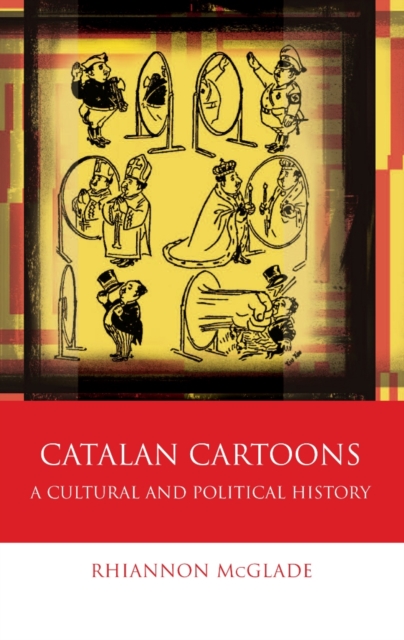
In a world increasingly dominated by visual sensation, our understanding of the role and influence of comics and cartoon humour in popular culture has become essential. This book offers a critical and cognitive focus that captures the changing fortunes of Catalan humour production against the shifting political landscape in the period 1898–1982. It considers how Catalan satire has been influenced by periods of relative calm as well as censorship, violence, war and dictatorship, and among its key features is its presentation of a continued cartooning tradition that was not ended by the installation of the Franco dictatorship, but which rather continued in a number of adapted forms, playing its own role in the evolution of the period. Thus, as well as introducing the most representative cartoonists and publications, the Catalan example is used to explore broader aspects of this complex communication form, opening new avenues for cultural, historical and socio-political research.
eBook

Dissenting Voices? Controlling Children's Comics under Franco
The installation of the Franco dictatorship sparked an inadvertent boom in the production of comics. While many cartoonists hailing from Barcelona's rich satirical tradition went into exile or clandestine publication, still more turned to the children's comics market that had become firmly rooted in the Catalan capital since the 1920s. Until the 1950s, comics remained relatively free from censorial intervention, and the development of characters such as La Familia Ulises, Carpanta and Dona Urraca offered cartoonists an outlet for covert critique. However, in 1952, the Junta Asesora de la Prensa Infantil was established to police children's publications for 'inappropriate' content, marking a turning point in the history of Spain's comics genre. This article discusses the implications of specific legislation for editors, artists and their comic strip characters, focusing on the publications Pulgarcito, TBO and DDT. Keywords: censorship, DDT, Francoist dictatorship, Junta Asesora de la Prensa Infantil, Pulgarcito, Spanish comics, TBO, tebeo
Journal Article
Dissenting Voices?
The installation of the Franco dictatorship sparked an inadvertent boom in the production of comics. While many cartoonists hailing from Barcelona’s rich satirical tradition went into exile or clandestine publication, still more turned to the children’s comics market that had become firmly rooted in the Catalan capital since the 1920s. Until the 1950s, comics remained relatively free from censorial intervention, and the development of characters such as La Familia Ulises, Carpanta and Doña Urraca offered cartoonists an outlet for covert critique. However, in 1952, the Junta Asesora de la Prensa Infantil was established to police children’s publications for ‘inappropriate’ content, marking a turning point in the history of Spain’s comics genre. This article discusses the implications of specific legislation for editors, artists and their comic strip characters, focusing on the publications Pulgarcito, TBO and DDT.
Journal Article
Dissenting Voices?
The installation of the Franco dictatorship sparked an inadvertent boom in the production of comics. While many cartoonists hailing from Barcelona’s rich satirical tradition went into exile or clandestine publication, still more turned to the children’s comics market that had become firmly rooted in the Catalan capital since the 1920s. Until the 1950s, comics remained relatively free from censorial intervention, and the development of characters such as La Familia Ulises, Carpanta and Doña Urraca offered cartoonists an outlet for covert critique. However, in 1952, the Junta Asesora de la Prensa Infantil was established to police children’s publications for ‘inappropriate’ content, marking a turning point in the history of Spain’s comics genre. This article discusses the implications of specific legislation for editors, artists and their comic strip characters, focusing on the publications Pulgarcito, TBO and DDT.
Journal Article
Dissenting Voices?
The installation of the Franco dictatorship sparked an inadvertent boom in the production of comics. While many cartoonists hailing from Barcelona’s rich satirical tradition went into exile or clandestine publication, still more turned to the children’s comics market that had become firmly rooted in the Catalan capital since the 1920s. Until the 1950s, comics remained relatively free from censorial intervention, and the development of characters such as La Familia Ulises, Carpanta and Doña Urraca offered cartoonists an outlet for covert critique. However, in 1952, the Junta Asesora de la Prensa Infantil was established to police children’s publications for ‘inappropriate’ content, marking a turning point in the history of Spain’s comics genre. This article discusses the implications of specific legislation for editors, artists and their comic strip characters, focusing on the publications Pulgarcito, TBO and DDT.
Journal Article
Catalan Cartoon Humour and ‘Otherness’ in the Second Republic and Civil War (1931–1939)
As we have seen, the rise of Lerrouxism and the installation of the Primo de Rivera dictatorship at the beginning of the twentieth century marked a period of intensified anti-Catalanist rhetoric and policy. At root, this forms part of a history of animosity between Catalonia and Castile with a so-called ‘Catalanophobia’ identifiable as early as the sixteenth century.¹ The friction intensified with disputes over the Catalan Statute of Autonomy following the proclamation of the Second Republic. The satirical publications at the time exploited confrontations over the separation of powers, using humour to reflect and reinforce the growing sense of Catalan
Book Chapter
Humour under Franco, Part II
In spite of Catalonia’s history of anticlericalism – evidenced by the violent assaults on churches and the clergy in the Setmana Tràgica and the Spanish Civil War – during the Franco dictatorship the Catalan Catholic Church played a vital role in defending Catalan culture and language, particularly in the harshest years of repression. The regime’s desire to combat secularism, especially in Catalonia, greatly benefited the Spanish Catholic following. In Catalonia, however, the imposition of Castilian in religious services risked alienating the Catalan-speaking Catholics.¹ The Catalan Church capitalised on its permitted legal use of the language and this, as Dowling claims,
Book Chapter
The Golden Age of Catalan Political Cartoons (1898–1931)
The birth of modern Catalan satirical publications can be dated as far back as 1865 with the arrival of Un Tros de Paper, the first humorous weekly produced exclusively in the language, lasting over a year with sixty-nine numbers. Previous attempts at satirical publications such as Lo Pare Arcàngel (1841) had been made during the nineteenth-century revivalist movement of the Renaixença, but these failed to survive the early stages of production.¹ While Spain’s first satirical publication was El Duende Crítico de Madrid (1735–6), the tradition for including graphic humour was not established in the capital until the publication of
Book Chapter
Humour under Franco, Part I
The installation of the Franco dictatorship, bolstered by the support of the Catholic Church, brought about a series of severely repressive measures intent on eradicating separatist elements to ensure the new regime’s maintenance of power. Following the Nationalist victory, the Generalitat was abolished and all of its assets were seized. Throughout 1939, laws were put in place to prohibit the use of Catalan in accordance with Franco’s vision: ‘we require absolute national unity, with a single Castilian language, and a single Spanish personality.’¹ As a direct result of the Civil War, 1940s Spain was characterised by a severe lack of
Book Chapter
Series Editors’ Foreword
Over recent decades the traditional ‘languages and literatures’ model in Spanish departments in universities in the United Kingdom has been superseded by a contextual, interdisciplinary and ‘area studies’ approach to the study of the culture, history, society and politics of the Hispanic and Lusophone worlds – categories that extend far beyond the confines of the Iberian Peninsula, not only in Latin America but also to Spanish-speaking and Lusophone Africa.
In response to these dynamic trends in research priorities and curriculum development, this series is designed to present both disciplinary and interdisciplinary research within the general field of Iberian and Latin
Book Chapter