
Catalogue Search | MBRL


Are you sure you want to remove the book from the shelf?

{{itemTitle}}
412
result(s) for
"McIntosh, Paul"
Sort by:


Action Research and Reflective Practice
The use of reflection as a tool to support and develop practice is becoming increasingly recognised across education, healthcare and the social sciences. Reflection is assumed to create depth of knowledge and meaning, both for self and those practised upon. Running alongside the use of reflection is the prevalent use of action research which some see as a way of approaching the study of human beings from a philosophical perspective, in which sharing takes place within mutually supportive environments. As a result, many academics and practitioners suggest that one cannot improve the methodology of action research without considering philosophical reflection.
In Action Research and Reflective Practice , the author argues that reflective practice and action research can become mechanistic in their use unless fresh creative approaches are employed. Exploring the tension between the use of evidence-based practice, based upon solid ‘objective’ research, and reflection, with its ‘subjectivity’ and personal perception, this book argues that reflection is research. The author increases the use and effectiveness of both action research and reflection through the application of new creative and visual approaches.
Action Research and Reflective Practice demonstrates that creative approaches can be utilised effectively in critically reflexive ways, creating a new style of action research that is both innovative and theoretically robust. The resultant approach will improve evidence-based research in education, healthcare and other social sciences to enhance perception and understanding of events, identity and self. This book will be highly beneficial to undergraduate and postgraduate students, as well as educational and social researchers, across a broad range of subjects within the social sciences.
Paul McIntosh has a background of working as a practitioner in both health and social care in the field of learning disabilities, and extensive experience of higher education for health and social care professionals. He is currently a Research Fellow at Queen Mary, University of London.
@contents: Selected Contents: Acknowledgements Preface Part 1: From evidence based practice to researcher of the self Chapter 1 The Tension in Evidence Based Practice and Reflective Practice Chapter 2 The Relationship between Reflection and Action Research Chapter 3 An overview of theories of consciousness and unconsciousness Part 2: Creativity and the practitioner-researcher Chapter 4 What do we mean by creativity? Chapter 5 Using metaphor and symbolism as analysis Chapter 6 Infinite Possibilities of Knowing and Transformation Chapter 7 Concluding Thoughts; the linkages to Action Research and Critical Creativity
eBook
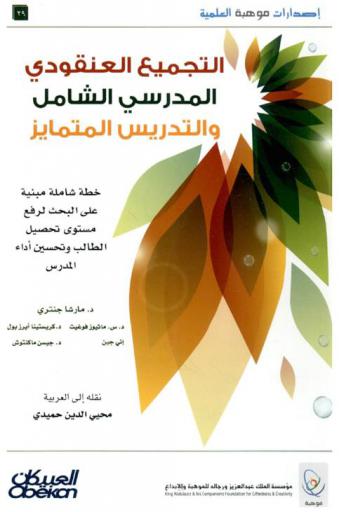
التجميع العنقودي الشامل والتدريس المتمايز : خطة شاملة مبنية على البحث لرفع مستوى تحصيل الطالب وتحسين أداء المدرس
يتناول الكتاب نموذج التجميع العنقودي المدرسي الشامل والتدريس المتمايز المبني على البحوث، تطبيق محدد على مستوى المدرسة كاملة للتجميع العنقودي المترافق مع التدريس المتمايز وهو يركز على تلبية احتياجات الطلاب الموهوبين ويعمل في الوقت ذاته على تحسين تدريس الطلاب جميعا وتحسين تعلمهم وتحصيلهم تشتمل هذه الترجمة للنسخة المنقحة والمحدثة من الكتاب على المسوغ والبحوث المتعلقة بهذا الموضوع، متبوعة بخطوات محددة لتنفيذ تطبيقات عملية تجعل فن التمايز ممكنا من خلال خفض نطاق مستويات التحصيل في غرف الصفوف.
BOOK

Assessment of Core Surgical Skills Using a Mixed Reality Headset – The MoTOR Study
IntroductionSurgical skill assessment utilises direct observation and feedback by an expert which is potentially subjective, therefore obtaining objective data for hand and eye tracking is essential. Our aim was to evaluate a wearable mixed reality (MR) headset in these domains.MethodsParticipants with differing levels of surgical expertise [novice (N), intermediate (I) & expert (E)] performed 4 simulated surgical tasks; 2 general dexterity (tasks 1&2) and 2 surgical skills (tasks 3&4) wearing the MR headset capturing their hand and eye movements (median & range). Metrics included hand path length and the speed of each index or thumb tip. Gaze data were also captured. Participant demographics, prior expertise and current experience were captured with an electronic survey. Data were analysed with a Shapiro-Wilk test or ANOVA as appropriate. A p-value of < 0.05 was significant.ResultsThirty-six participants were analysed (N = 18, I = 8, E = 8). Tasks 1&2 revealed 2 speed outcomes (left index and left-hand speed) which were significant. For tasks 3&4, various outcomes were significant: path length for left hand (N:45 cm vs. I:31 cm vs. E:27 cm, p = 0.03) and right hand (N:48 cm vs. I:29 cm vs. E:28 cm, p = 0.01) and total time (N:456s vs. I:292 vs. E: 245, p = 0.0002). With left-hand-tying, average path length (N:61 cm vs. I:39 vs. E:36, p = 0.04), average speed (N:11 cm/s vs. I:23 vs. E:24, p = 0.03), and total time (N:156s vs. I:43 vs. E:37, p = 0.003) were significant. The gaze-tracking was not statistically significant.ConclusionThe MR headset can be utilised as a valid tool for surgical performance assessment. Outcomes including path length and speed can be valuable metrics captured by the MR Headset during the task completion for detecting surgical proficiency.
Journal Article
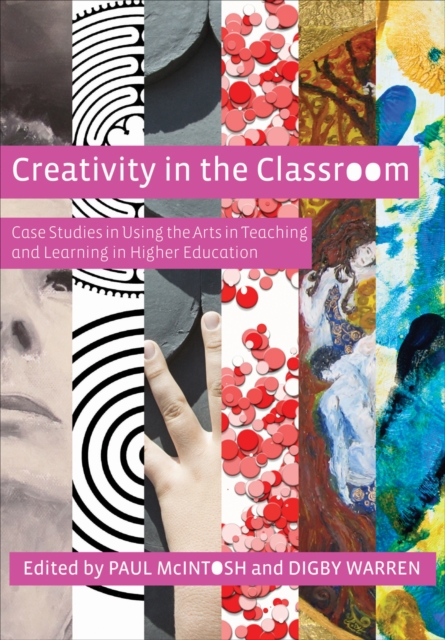
Creativity in the classroom
This volume contests the current higher educational paradigm of using objectives and outcomes as ways to measure learning. Instead, the contributors propose approaches to learning that draw upon the creative arts and humanities, including cinema, literature, dance, drama and visual art.
eBook


Maximizing Total Sugar Recovery from Low Severity Pretreatment-Hydrolysis of Sweet Sorghum Bagasse Through Cultivar Selection and Process Optimization
The nature of a sweet sorghum cultivar influences the recovery of sugars from the bagasse during pretreatment. The sugars recovered are used in applications for conversion to high-value products such as alcohols, organic acids, and other fuels and chemicals. The severity of the pretreatment used plays a crucial role in the yield and quality of the sugars that can be recovered. Therefore, a strategic approach was taken to lower the severity of the pretreatment process to a combined severity factor (CSF) value of 0.48, whilst maintaining a high level of total-sugar recovery (i.e. 68% (w/w) and higher). This was achieved by screening 23 sweet sorghum cultivars for high-performance characteristics at low-severity conditions and optimizing the pretreatment process conditions. The pretreatment conditions included time, temperature, and acid concentration ranges of 5 to 60 min, 150 to 210 oC, and 0.00–0.96% (w/w) H2SO4, respectively. Cultivar AP6 was identified as the best performer, producing the highest total sugar yield of 78.17%. A reduction in total by-product formation from 4.79 to 2.79 g/100 g biomass was also observed. Three preferred cultivars selected for pilot scale pretreatment using steam explosion resulted in maximum total sugar recoveries that exceeded 80% (w/w). Cultivar selection provides an opportunity to utilize sweet sorghum bagasse that will liberate sugars at desired yields while reducing the generation of by-products by implementing low severity pretreatments.
Journal Article

New Insights into Gastrointestinal Involvement in Late-Onset Pompe Disease: Lessons Learned from Bench and Bedside
Background: There are new emerging phenotypes in Pompe disease, and studies on smooth muscle pathology are limited. Gastrointestinal (GI) manifestations are poorly understood and underreported in Pompe disease. Methods: To understand the extent and the effects of enzyme replacement therapy (ERT; alglucosidase alfa) in Pompe disease, we studied the histopathology (entire GI tract) in Pompe mice (GAAKO 6neo/6neo). To determine the disease burden in patients with late-onset Pompe disease (LOPD), we used Patient-Reported Outcomes Measurements Information System (PROMIS)-GI symptom scales and a GI-focused medical history. Results: Pompe mice showed early, extensive, and progressive glycogen accumulation throughout the GI tract. Long-term ERT (6 months) was more effective to clear the glycogen accumulation than short-term ERT (5 weeks). GI manifestations were highly prevalent and severe, presented early in life, and were not fully amenable to ERT in patients with LOPD (n = 58; age range: 18–79 years, median age: 51.55 years; 35 females; 53 on ERT). Conclusion: GI manifestations cause a significant disease burden on adults with LOPD, and should be evaluated during routine clinical visits, using quantitative tools (PROMIS-GI measures). The study also highlights the need for next generation therapies for Pompe disease that target the smooth muscles.
Journal Article

Working Memory Training for Children Using the Adaptive, Self-Select, and Stepwise Approaches to Setting the Difficulty Level of Training Activities: Protocol for a Randomized Controlled Trial
Background:A common yet untested assumption of cognitive training in children is that activities should be adaptive, with difficulty adjusted to the individual’s performance in order to maximize improvements on untrained tasks (known as transfer). Working memory training provides the ideal testbed to systematically examine this assumption as it is one of the most widely studied domains in the cognitive training literature, and is critical for children’s learning, including following instructions and reasoning.Objective:This trial aimed to examine children’s outcomes of working memory training using adaptive, self-select (child selects difficulty level), and stepwise (difficulty level increases incrementally) approaches to setting the difficulty of training activities compared to an active control condition immediately and 6-month postintervention. While the aim is exploratory, we hypothesized that children allocated to a working memory training condition would show greater improvements: (1) on near transfer measures compared to intermediate and far transfer measures and (2) immediately postintervention compared to 6-month postintervention.Methods:This double-blinded, active-controlled, parallel-group randomized trial aimed to recruit 128 children aged 7 to 11 years from 1 metropolitan primary school in Melbourne, Australia. Following baseline testing, children were randomized into 1 of 4 conditions: adaptive, self-select, or stepwise working memory training, or active control. An experimental intervention embedded in Minecraft was developed for teachers to deliver in class over 2 consecutive weeks (10 × 20-minute sessions). The working memory training comprised 2 training activities with processing demands similar to daily activities: backward span and following instructions. The control comprised creative activities. Pre- and postintervention, children completed a set of working memory tests (near and intermediate transfer) and the Raven’s Standard Progressive Matrices (far transfer) to determine training outcomes, as well as motivation questionnaires to determine if motivations toward learning and the intervention were similar across conditions. Caregivers completed the ADHD-Rating Scale-5 to measure their child’s attention (far transfer). Statistical analysis will include traditional null hypothesis significance testing and Bayesian methods to quantify evidence for both the null and alternative hypotheses.Results:Data collection concluded in December 2022. Data are currently being processed and analyzed.Conclusions:This trial will determine whether the adaptive approach to setting the difficulty of training activities maximizes cognitive training outcomes for children. This trial has several strengths: it adopts best practices for cognitive training studies (design, methods, and analysis plan); uses a range of measures to detect discrete levels of transfer; has a 6-month postintervention assessment; is appropriately powered; and uses an experimental working memory training intervention based on our current understanding of the cognitive mechanisms of training. Findings will inform future research and design of cognitive training interventions and highlight the value of the evidence-based principles of cognitive training.Trial Registration:Australian New Zealand Clinical Trials Registry, ACTRN12621000990820; https://www.anzctr.org.au/ACTRN12621000990820.aspxInternational Registered Report Identifier (IRRID):DERR1-10.2196/47496
Journal Article

The multi-modal Australian ScienceS Imaging and Visualization Environment (MASSIVE) high performance computing infrastructure: applications in neuroscience and neuroinformatics research
The Multi-modal Australian ScienceS Imaging and Visualization Environment (MASSIVE) is a national imaging and visualization facility established by Monash University, the Australian Synchrotron, the Commonwealth Scientific Industrial Research Organization (CSIRO), and the Victorian Partnership for Advanced Computing (VPAC), with funding from the National Computational Infrastructure and the Victorian Government. The MASSIVE facility provides hardware, software, and expertise to drive research in the biomedical sciences, particularly advanced brain imaging research using synchrotron x-ray and infrared imaging, functional and structural magnetic resonance imaging (MRI), x-ray computer tomography (CT), electron microscopy and optical microscopy. The development of MASSIVE has been based on best practice in system integration methodologies, frameworks, and architectures. The facility has: (i) integrated multiple different neuroimaging analysis software components, (ii) enabled cross-platform and cross-modality integration of neuroinformatics tools, and (iii) brought together neuroimaging databases and analysis workflows. MASSIVE is now operational as a nationally distributed and integrated facility for neuroinfomatics and brain imaging research.
Journal Article