
Catalogue Search | MBRL


Are you sure you want to remove the book from the shelf?

{{itemTitle}}
5
result(s) for
"McNabb, David E., author"
Sort by:

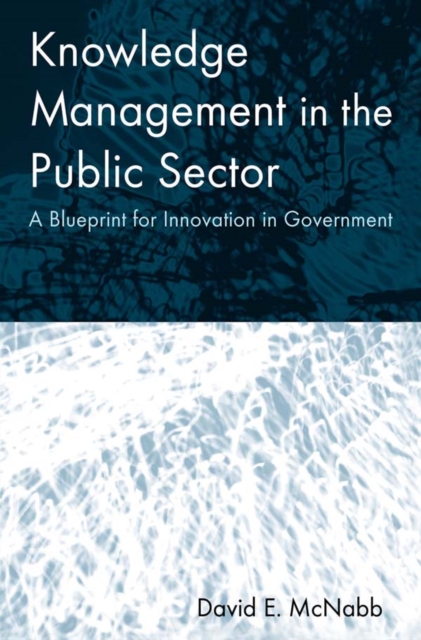
Knowledge Management in the Public Sector
This comprehensive text introduces public management students and government and nonprofit administrators to the principles and practices of Knowledge Management. The first book to focus exclusively on knowledge management techniques in government agencies, it covers such important concepts as collecting, categorizing, processing, distributing, and archiving critical organization data and information - and then converting and disseminating these resources to all who need to share in the organizational knowledge. Written in an easy-to-read, non-technical style, the book includes a thorough review of the current literature in the field as well as a comprehensive presentation of Knowledge Management techniques. Extensive illustrations, models, checklists, and instructions lead readers through the steps involved in instituting KM programs in government and non-profit agencies.
Business education is a critical ingredient in establishing a viable middle class of managers in transitioning and developing economies. Compiled in association with the Center for International Business Education and Research, this comprehensive examination of business and management education, pedagogical models, and curricula innovations in institutions around the world is the first such work to emphasize emerging markets.
eBook

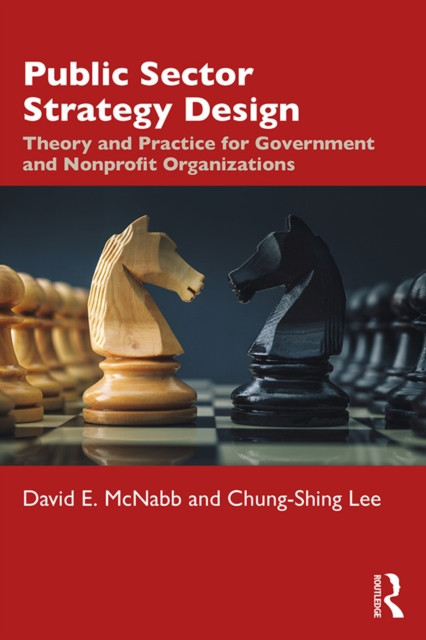
Public Sector Strategy Design
Within the public sector, strategies are not designed to influence markets, but instead to guide operations within a complex environment of multilateral power, influence, bargaining, and voting. In this book, authors David McNabb and Chung-Shingh Lee examine five frameworks public sector organization managers have followed when designing public sector strategies. Its purpose is to serve as a guide for managers and administrators of large and small public organizations and agencies. This book is the product of a combined more than 60 years of researching, teaching, and leading organizational seminars on the theory and practice of management applications in industrial, commercial, nonprofit, and public sector organizations.
The book consists of four parts: Strategic Management and Strategy Fundamentals; Frameworks for Designing Strategies; Public Sector Strategies; and Implementing Strategic Management. Throughout, the focus is on the widespread value of strategic management and adopting the strategy appropriate for the organization. Including chapters on game theory, competitive forces, resources-based view, dynamic capabilities, and network governance, the authors demonstrate ways that real managers of public sector and civil society organizations have put strategic management to work in their organizations. This book will be of interest to both practicing and aspiring public servants.
eBook
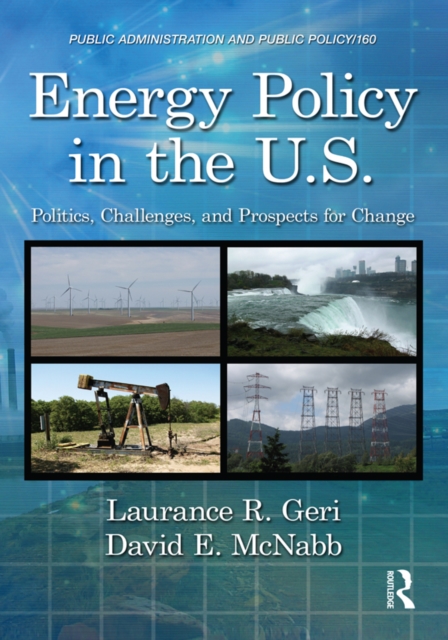
Energy Policy in the U.S
Whether we are in a time of increasing energy costs or a time of cheap, abundant energy, the policies that control the sources, availability, distribution and use of energy produce effects that impact our daily lives, especially the highly consumptive American way of life. We rely on cheap energy, yet we also have to consider the high environmental costs. In an effort to provide greater awareness of the necessary policy decisions facing our elected and appointed officials,
Energy Policy in the U.S.: Politics, Challenges, and Prospects for Change
presents an overview of important energy policies and the policy process in the United States, including their history, goals, methods of action, and consequences.
In the first half of the book, the authors frame the energy policy issue by reviewing U.S. energy policy history, identifying the policy-making players, and illuminating the costs, benefits, and economic and political realities of currently competing policy alternatives. The book examines the stakeholders and their attempts to influence energy policy and addresses the role of supply and demand on the national commitment to energy conservation and the development of alternative energy sources.
The latter half of the book delves into specific energy policy strategies, including economic and regulatory options, and factors that influence energy policies, such as the importance of international cooperation. Renewed interest in various renewable and nontraditional energy resources-for example, hydrogen, nuclear fusion, biomass, and tide motion-is examined, and policy agendas are explored in view of scientific, economic, regulatory, production, and environmental constraints. This book provides excellent insight into the complex task of creating a comprehensive energy policy and its importance in the continued availability of energy to power our way of life and economy while protecting our environment and national security.
eBook