
Catalogue Search | MBRL


Are you sure you want to remove the book from the shelf?

{{itemTitle}}
12
result(s) for
"Meehan, Ciara"
Sort by:

A just society for Ireland? : 1964-1987
Drawing on interviews with key players and previously unused archival sources, this book offers a fascinating account of a critical period in Fine Gael's history when the party was challenged to define its place in Irish politics.
Book
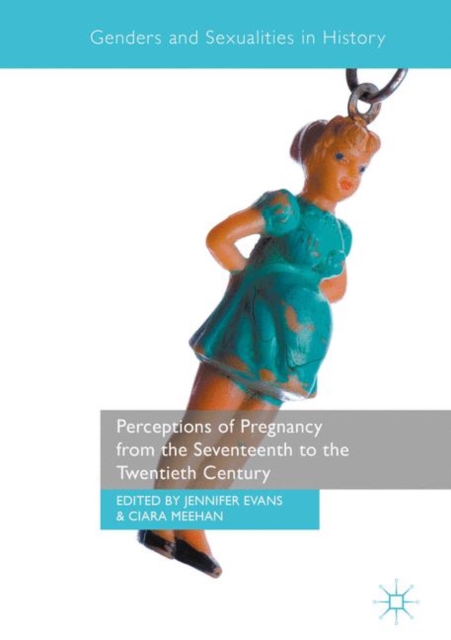
Perceptions of pregnancy from the seventeenth to the twentieth century
This multi-disciplinary collection brings together work by scholars from Britain, America and Canada on the popular, personal and institutional histories of pregnancy. It follows the process of reproduction from conception and contraception, to birth and parenthood. The contributors explore several key themes: narratives of pregnancy and birth, the patient-consumer, and literary representations of childbearing. This book explores how these issues have been constructed, represented and experienced in a range of geographical locations from the seventeenth to the twentieth century. Crossing the boundary between the pre-modern and modern worlds, the chapters reveal the continuities, similarities and differences in understanding a process that is often, in the popular mind-set, considered to be fundamental and unchanging.
eBook

The prose of logic and of scorn
‘An extraordinarily clever journalist’ was the tribute paid to Arthur Griffith by Augustine Birrell, the Chief Secretary for Ireland from 1907 until just after the 1916 Rising.² Griffith, however, is best remembered as a founder member of the Sinn Féin party in 1907 and a signatory of the 1921 Anglo-Irish Treaty. Although he became president of Dáil Éireann, he was not a natural politician. Circumstance had taken him down a political route, but he was more comfortable with the life of a journalist. He was considered to be ‘at his most effective, in the editorial chair, serving as “an encyclopaedia
Book Chapter

‘The prose of logic and of scorn’: Arthur Griffith and Sinn Féin, 1906–1914
This chapter focuses on Sinn Fein and its influence in altering the vision for Ireland's future. Published between 1906 and 1914, it had the longest print run of Arthur Griffith's publications and was arguably the most important. The ideas outlined in Sinn Fein, which for a short time also published a daily edition, built on those already propagated through the United Irishman. When confronted with the difficulty facing all editors and journalists posed by the Defence of the Realm Act (DORA) during the First World War, Griffith displayed real ingenuity in producing his next publication. Through Sinn Fein newspaper, Griffith advanced the notion of political and economic independence and aimed to educate his readers. The newspaper's performance was clearly affected by the performance of the Irish Parliamentary Party. In 1913, the newspaper declared that 'the future Ireland can only be an Ireland reuniting itself with its Gaelic past'.
Book Chapter

Introduction
Separated by hundreds of years and situated in different geographical locations, these women’s experiences resonate with shared anxieties and hopes. Both women found themselves constrained by social expectations of their sexual behaviour and by the corporeal reality of their pregnancies, unable to move unproblematically into suitable marriages. Leaving aside the authenticity of either letter, both women sought advice, and perhaps solace, from the writers and readers of a magazine, Athenian Oracle in 1710 and Woman’s Way in 1969. Although working on disparate bodies of literature, various conversations about our research in our shared office led us to repeatedly find similarities in the social conventions, sexual knowledge, and emotional responses to the reproductive bodies of the historical women we studied. Discussions about these continuities, and discontinuities, subsequently prompted us to discuss the relative lack of comparative research in the history of reproduction. This gave rise to a conference we organised at the University of Hertfordshire in summer 2014.
Book Chapter
