
Catalogue Search | MBRL


Are you sure you want to remove the book from the shelf?

{{itemTitle}}
33,803
result(s) for
"Mei, Li"
Sort by:

Cloning and Expression Analysis of cDNAs Encoding ABA 8'-Hydroxylase in Peanut Plants in Response to Osmotic Stress
Abscisic acid (ABA) catabolism is one of the determinants of endogenous ABA levels affecting numerous aspects of plant growth and abiotic-stress responses. The major ABA catabolic pathway is triggered by ABA 8'-hydroxylation catalysed by ABA 8'-hydroxylase, the cytochrome P450 CYP707A family. In this study, the full-length cDNAs of AhCYP707A1 and AhCYP707A2 were cloned and characterized from peanut. Expression analyses showed that AhCYP707A1 and AhCYP707A2 were expressed ubiquitously in peanut roots, stems, and leaves with different transcript accumulation levels, including the higher expression of AhCYP707A1 in roots. The expression of AhCYP707A2 was significantly up-regulated by 20% PEG6000 or 250 mmol/L NaCl in peanut roots, stems, and leaves, whereas the up-regulation of AhCYP707A1 transcript level by PEG6000 or NaCl was observed only in roots instead of leaves and stems. Due to the osmotic and ionic stresses of high concentration of NaCl to plants simultaneously, low concentration of LiCl (30 mmol/L, at which concentration osmotic status of cells is not seriously affected, the toxicity of Li+ being higher than that of Na+) was used to examine whether the effect of NaCl might be related to osmotic or ionic stress. The results revealed visually the susceptibility to osmotic stress and the resistance to salt ions in peanut seedlings. The significant up-regulation of AhCYP707A1, AhCYP707A2 and AhNCED1 transcripts and endogenous ABA levels by PEG6000 or NaCl instead of LiCl, showed that the osmotic stress instead of ionic stress affected the expression of those genes and the biosynthesis of ABA in peanut. The functional expression of AhCYP707A1 cDNA in yeast showed that the microsomal fractions prepared from yeast cell expressing recombinant AhCYP707A1 protein exhibited the catalytic activity of ABA 8'-hydroxylase. These results demonstrate that the expressions of AhCYP707A1 and AhCYP707A2 play an important role in ABA catabolism in peanut, particularly in response to osmotic stress.
Journal Article


Host selection shapes crop microbiome assembly and network complexity
• Plant microbiomes are essential to host health and productivity but the ecological processes that govern crop microbiome assembly are not fully known.
• Here we examined bacterial communities across 684 samples from soils (rhizosphere and bulk soil) and multiple compartment niches (rhizoplane, root endosphere, phylloplane, and leaf endosphere) in maize (Zea mays)-wheat (Triticum aestivum)/barley (Hordeum vulgare) rotation system under different fertilization practices at two contrasting sites.
• Our results demonstrate that microbiome assembly along the soil-plant continuum is shaped predominantly by compartment niche and host species rather than by site or fertilization practice. From soils to epiphytes to endophytes, host selection pressure sequentially increased and bacterial diversity and network complexity consequently reduced, with the strongest host effect in leaf endosphere. Source tracking indicates that crop microbiome is mainly derived from soils and gradually enriched and filtered at different plant compartment niches. Moreover, crop microbiomes were dominated by a few dominant taxa (c. 0.5% of bacterial phylotypes), with bacilli identified as the important biomarker taxa for wheat and barley and Methylobacteriaceae for maize.
• Our work provides comprehensive empirical evidence on host selection, potential sources and enrichment processes for crop microbiome assembly, and has important implications for future crop management and manipulation of crop microbiome for sustainable agriculture.
Journal Article

Terracotta Army : Legacy of the First Emperor of China
\"This catalog accompanies the exhibition Terracotta Army: Legacy of the First Emperor of China, organized by the Virginia Museum of Fine Arts\"-- Provided by publisher.
Book

3D Printed Nitrogen‐Doped Thick Carbon Architectures for Supercapacitor: Ink Rheology and Electrochemical Performance
The 3D printing technique offers huge opportunities for customized thick‐electrode designs with high loading densities to enhance the area capacity in a limited space. However, key challenges remain in formulating 3D printable inks with exceptional rheological performance and facilitating electronic/ion transport in thick bulk electrodes. Herein, a hybrid ink consisting of woody‐derived cellulose nanofibers (CNFs), multiwalled carbon nanotubes (MWCNTs), and urea is formulated for the 3D printing nitrogen‐doped thick electrodes, in which CNFs serve as both dispersing and thickening agents for MWCNTs, whereas urea acts as a doping agent. By systematically tailoring the concentration‐dependent rheological performance and 3D printing process of the ink, a variety of gel architectures with high geometric accuracy and superior shape fidelity are successfully printed. The as‐printed gel architecture is then transformed into a nitrogen‐doped carbon block with a hierarchical porous structure and superior electrochemical performance after freeze‐drying and annealing treatments. Furthermore, a quasi‐solid‐state symmetric supercapacitor assembled with two interdigitated carbon blocks obtained by a 3D printing technique combined with a nitrogen‐doping strategy delivers an energy density of 0.10 mWh cm−2 at 0.56 mW cm−2. This work provides guidance for the formulation of the printable ink used for 3D printing of high‐performance thick carbon electrodes. A 3D printable CMU ink consisting of CNFs, MWCNTs, and urea is successfully developed by rational tailoring the concentration‐dependent rheological performance of inks and optimization of the 3D printing parameters. The N‐doped, hierarchically porous, thick carbon architectures can be achieved by 3D printing, freeze‐drying, and annealing approach, which hold the great potential in customized electrochemical energy storage device.
Journal Article
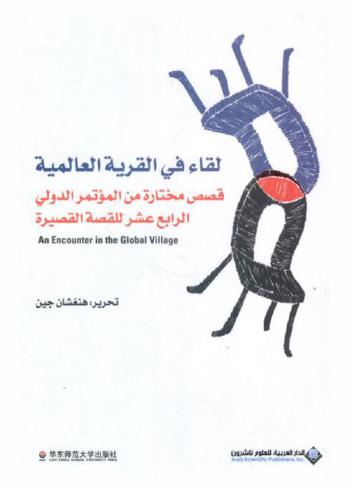
لقاء في القرية العالمية = An encounter in the global village : قصص مختارة من المؤتمر الدولي الرابع عشر للقصة القصيرة
هذا الكتاب يحتوي على قصص مختارة من المؤتمر الدولي الرابع عشر للقصة القصيرة وهذا اللقاء الذي نظم من قبل جمعية دراسة القصص القصيرة الإنجليزية (أس أس أس أس إي) وهي جمعية عالمية أنشئت في الولايات المتحدة عام 1992 وينعقد كل عامين ويعتبر اللقاء العالمي الوحيد الذي يركز بشكل خاص على دراسات القصة القصيرة أما القصص المشاركة في اللقاء فهي مكتوبة من قبل 29 كاتبا ينتمون إلى عشرة دول هي الصين وتايوان والهند والولايات المتحدة وكندا ونيوزلندا وفرنسا وإيرلندا والنمسا وسنغافورا وجامايكا.
BOOK

Pathological mechanism of chondrocytes and the surrounding environment during osteoarthritis of temporomandibular joint
Temporomandibular joint (TMJ) osteoarthritis is a common chronic degenerative disease of the TMJ. In order to explore its aetiology and pathological mechanism, many animal models and cell models have been constructed to simulate the pathological process of TMJ osteoarthritis. The main pathological features of TMJ osteoarthritis include chondrocyte death, extracellular matrix (ECM) degradation and subchondral bone remodelling. Chondrocyte apoptosis accelerates the destruction of cartilage. However, autophagy has a protective effect on condylar chondrocytes. Degradation of ECM not only changes the properties of cartilage but also affects the phenotype of chondrocytes. The loss of subchondral bone in the early stages of TMJ osteoarthritis plays an aetiological role in the onset of osteoarthritis. In recent years, increasing evidence has suggested that chondrocyte hypertrophy and endochondral angiogenesis promote TMJ osteoarthritis. Hypertrophic chondrocytes secrete many factors that promote cartilage degeneration. These chondrocytes can further differentiate into osteoblasts and osteocytes and accelerate cartilage ossification. Intrachondral angiogenesis and neoneurogenesis are considered to be important triggers of arthralgia in TMJ osteoarthritis. Many molecular signalling pathways in endochondral osteogenesis are responsible for TMJ osteoarthritis. These latest discoveries in TMJ osteoarthritis have further enhanced the understanding of this disease and contributed to the development of molecular therapies. This paper summarizes recent cognition on the pathogenesis of TMJ osteoarthritis, focusing on the role of chondrocyte hypertrophy degeneration and cartilage angiogenesis.
Journal Article


Protist communities are more sensitive to nitrogen fertilization than other microorganisms in diverse agricultural soils
Background
Agricultural food production is at the base of food and fodder, with fertilization having fundamentally and continuously increased crop yield over the last decades. The performance of crops is intimately tied to their microbiome as they together form holobionts. The importance of the microbiome for plant performance is, however, notoriously ignored in agricultural systems as fertilization disconnects the dependency of plants for often plant-beneficial microbial processes. Moreover, we lack a holistic understanding of how fertilization regimes affect the soil microbiome. Here, we examined the effect of a 2-year fertilization regime (no nitrogen fertilization control, nitrogen fertilization, and nitrogen fertilization plus straw amendment) on entire soil microbiomes (bacteria, fungi, and protist) in three common agricultural soil types cropped with maize in two seasons.
Results
We found that the application of nitrogen fertilizers more strongly affected protist than bacterial and fungal communities. Nitrogen fertilization indirectly reduced protist diversity through changing abiotic properties and bacterial and fungal communities which differed between soil types and sampling seasons. Nitrogen fertilizer plus straw amendment had greater effects on soil physicochemical properties and microbiome diversity than nitrogen addition alone. Moreover, nitrogen fertilization, even more together with straw, increased soil microbiome network complexity, suggesting that the application of nitrogen fertilizers tightened soil microbiomes interactions.
Conclusions
Together, our results suggest that protists are the most susceptible microbiome component to the application of nitrogen fertilizers. As protist communities also exhibit the strongest seasonal dynamics, they serve as the most sensitive bioindicators of soil changes. Changes in protist communities might have long-term effects if some of the key protist hubs that govern microbiome complexities as top microbiome predators are altered. This study serves as the stepping stone to promote protists as promising agents in targeted microbiome engineering to help in reducing the dependency on exogenous unsustainably high fertilization and pesticide applications.
Journal Article