
Catalogue Search | MBRL


Are you sure you want to remove the book from the shelf?

{{itemTitle}}
2
result(s) for
"Meixner, Uwe, editor"
Sort by:

Quantum physics meets the philosophy of mind : new essays on the mind-body relation in quantum-theoretical perspective
\"Quantum physics, unlike classical physics, suggests a non-physicalistic metaphysics. Whereas physicalism implies a reductive position in the philosophy of mind, quantum physics is compatible with non-reductionism, and actually seems to support it. The essays in this book explore, from various points of view, the possibilities of basing a non-reductive philosophy of mind on quantum physics.\"--Back cover.
Book
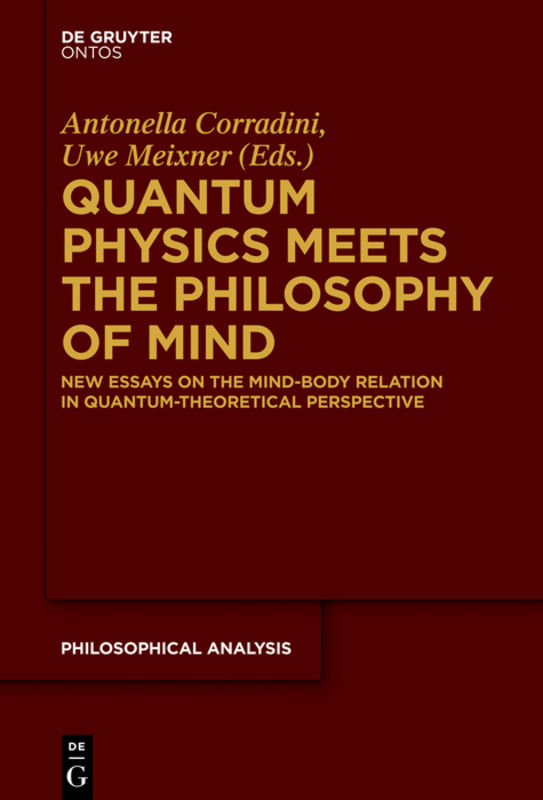
Quantum Physics Meets the Philosophy of Mind
Quantum physics, in contrast to classical physics, allows non-locality and indeterminism in nature. Moreover, the role of the observer seems indispensable in quantum physics. In fact, quantum physics, unlike classical physics, suggests a metaphysics that is not physicalism (which is today's official metaphysical doctrine). As is well known, physicalism implies a reductive position in the philosophy of mind, specifically in its two core areas, the philosophy of consciousness and the philosophy of action. Quantum physics, in contrast, is compatible with psychological non-reductionism, and actually seems to support it. The essays in this book explore, from various points of view, the possibilities of basing a non-reductive philosophy of mind on quantum physics. In doing so, they not only engage with the ontological and epistemological aspects of the question but also with the neurophysiological ones.
eBook