
Catalogue Search | MBRL


Are you sure you want to remove the book from the shelf?

{{itemTitle}}
69
result(s) for
"Melbye, David"
Sort by:

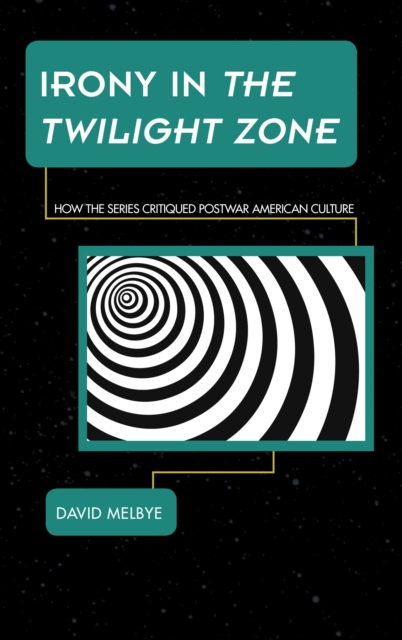
Irony in the twilight zone
This book explores the multiple types of irony-technological, invasive, martial, sociopolitical, and domestic-that were employed by the classic television show The Twilight Zone. Each of these uses of irony acts as a critique of a specific aspect of American culture, but all inform each other, creating a larger sense of social critique.
eBook

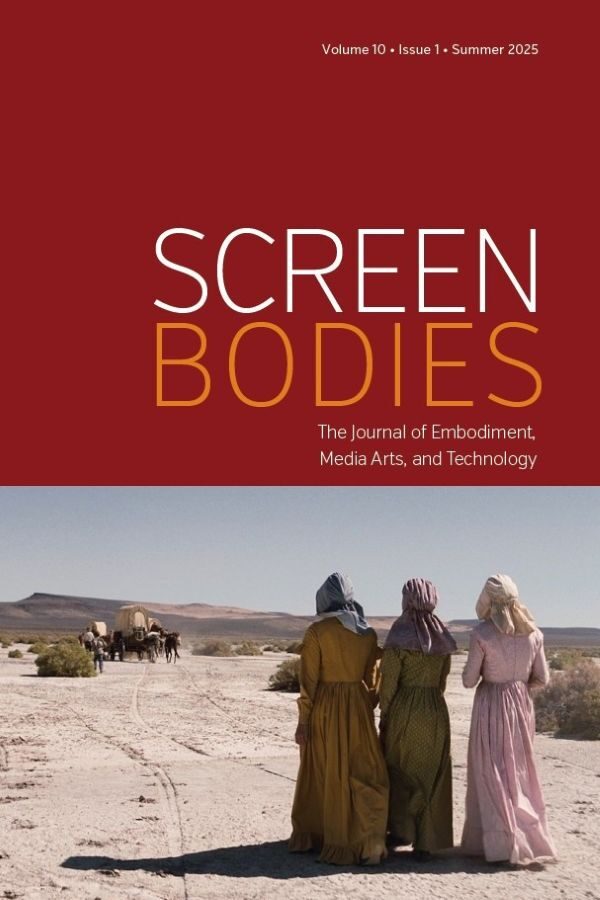
Modernist Embodiment
Abstract This article embarks from George Lakoff and Mark Johnson's embodied understanding of metaphor in linguistic contexts and proceeds beyond merely an extended notion of “visual” metaphor toward an operational understanding of the term “allegory” in the cinematic context. Specifically, a pattern of Sisyphean landscape allegory in a global array of postwar narrative cinema is identified and explored, in which a psychologically conflicted protagonist struggles against a resistant natural landscape, connoting varying degrees of existential “futility.” The recurrent experiential configuration of this modernist allegory on screen, especially in terms of its haptic dimensions, is explored for its ability to “invoke” social critique—as felt, visceral content.
Journal Article

Global cinema studies in landscape allegory
\"This edited volume addresses the narrative and stylistic approaches to imbuing natural settings in audiovisual media with a psychological dimension, or, in other words, configuring a 'landscape' to function beyond its typical role as a backdrop-and the cultural contexts for this aesthetic impulse\"-- Provided by publisher.
BOOK

The Politics of Contemporary European Cinema: Histories, Borders, Diasporas
Bristol, Portland: Intellect, 2002, 145 pp., $ 39.95 In his timely book The Politics of Contemporary European Cinema: Histories, Borders, Diasporas, Mike Wayne addresses the issues of Europe and European cinema in light of the historical transformations that are shaping the region, specifically the collapse of the Soviet Union, the movement towards political and economic integration, and the post-colonial legacy of migration. The author uses The Disappearance of Finbar (Sue Clayton, 1996) as a case in point-a British film whose co-production circumstances not only problematize any sense of national representation but also demarcate the portrayal of inherent Euro-racism and class conflict. [...]Wayne's call for a more \"materialist\" approach to assessing European national identities within the process of globalization is definitely worth considering.
Journal Article