
Catalogue Search | MBRL


Are you sure you want to remove the book from the shelf?

{{itemTitle}}
39
result(s) for
"Mergel, Ines"
Sort by:

Co-production of digital public services in Austrian public administrations
In the digital transformation of public administrations, objectives are no longer simply the implementation of new technology, but the involvement of all stakeholders into the process of digitalization. The Digital Roadmap of the Austrian government emphasizes the need of co-production of public services as a key element to public service delivery and, subsequently, innovation of the public sector. To understand how co-production in digital service delivery is implemented in Austria, we conducted interviews with 41 experts from public administrations in order to understand who is involved in such processes, how they are involved, and what outcomes are to be achieved.
Journal Article
Public value co-creation in living labs: Results from three case studies
Living Labs - innovation units established to introduce new methods and approaches into public sector organizations - have received a lot of attention as methods for experimentation and open innovation practices in public sector organizations. However, little is known so far about how they co-create public value and which conditions influence these co-creation practices. Therefore, the research questions are: which organizational factors influence the process of public value co-creation and which outcomes and values are produced as a result? The research questions were answered by employing a qualitative research approach conducting semi-structured interviews with employees and participants of three living labs in Germany and Austria. The results show top-level support and lab leadership as the most important context factors. Living labs produce tangible and intangible outcomes. The tangible outcomes are the products developed within the lab, and the intangible outcomes are created by the interaction between the lab's participants. The main contributions are twofold: first, context factors are identified that lead to the success of co-creation processes within living labs. Second, the study contributes to the literature on public value because it is shown that participation in living labs itself leads to added value in addition to the tangible and intangible outcomes.
Journal Article

Networks in Public Administration Scholarship: Understanding Where We Are and Where We Need to Go
This article examines the road that network scholarship has followed in Public Administration. We look at the historical drivers of the use of networks in practice and scholarship in the field and discuss how that has shaped the current literature. The body of the article focuses on the current challenges that network scholars face in the discipline, specifically basic theoretical issues, knowledge about formal networks, knowledge about informal networks, and methodological issues. We close the article with a look to the future and some suggestions for the future of network scholarship in Public Administration.
Journal Article
Competences that foster digital transformation of public administrations: An Austrian case study
Digitalisation has changed society, and, as a result, public administrations are required to undergo significant changes to satisfy emergent societal needs. These changes impact all areas of the public sector, including the development and provision of digital services, the design of processes, and the development of policy. To implement the digital strategies and transformation requirements, public administrations must rethink the competences that their workforce as well as the external stakeholders may need. To understand how one nation implements its digital strategy and upskills its civil servants, we conducted a qualitative analysis of 41 Austrian expert interviews. The research shows that different stakeholders require a variety of competences to participate in the digital transformation of its processes and services. The results demonstrate the high level of diversity and the need for a holistic approach to tackle the complexity of the digital public sector, where leadership plays the most important role. In addition, the study shows that the use of competence frameworks for measurement and monitoring needs to be adapted to the local context.
Journal Article
Living labs for public sector innovation: An integrative literature review
The public administration literature and adjacent fields have devoted increasing attention to living labs as environments and structures enabling the co-creation of public sector innovation. However, living labs remain a somewhat elusive concept and phenomenon, and there is a lack of understanding of its versatile nature. To gain a deeper understanding of the multiple dimensions of living labs, this article provides a review assessing how the environments, methods and outcomes of living labs are addressed in the extant research literature. The findings are drawn together in a model synthesizing how living labs link to public sector innovation, followed by an outline of knowledge gaps and future research avenues.
Journal Article

Building Holistic Evidence for Social Media Impact
Social media measurement is important for understanding an organization's reach and engagement with its audiences. In response to Warren Kagarise and Staci M. Zavattaro's question about what works in social media measurement, this article discusses how public administration researchers and practitioners are using social media data that they can easily collect from social media platforms and contrasts these practices with data measurement efforts that can provide deeper insights for evidence-based decision making. This evidence includes interactivity and connectivity among citizens, attributes of network actors, and network structures and positions to understand how content travels through the network and who are the influential actors.
Journal Article
Big Data in Public Affairs
This article offers an overview of the conceptual, substantive, and practical issues surrounding \"big data\" to provide one perspective on how the field of public affairs can successfully cope with the big data revolution. Big data in public affairs refers to a combination of administrative data collected through traditional means and large-scale data sets created by sensors, computer networks, or individuals as they use the Internet. In public affairs, new opportunities for real-time insights into behavioral patterns are emerging but are bound by safeguards limiting government reach through the restriction of the collection and analysis of these data. To address both the opportunities and challenges of this emerging phenomenon, the authors first review the evolving canon of big data articles across related fields. Second, they derive a working definition of big data in public affairs. Third, they review the methodological and analytic challenges of using big data in public affairs scholarship and practice. The article concludes with implications for public affairs.
Journal Article
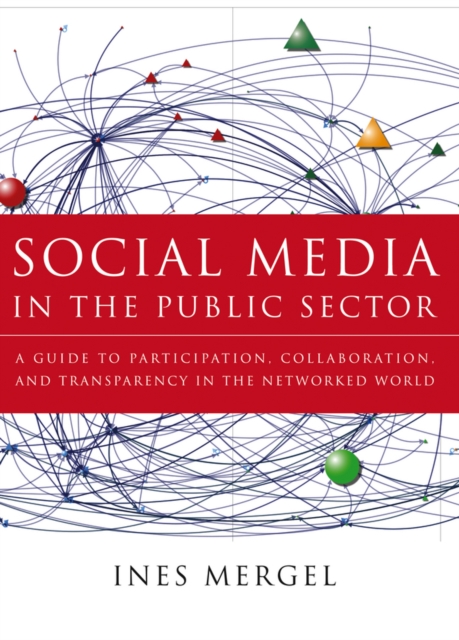
Social media in the public sector
In today's networked world, the public sector is tapping into new media applications to increase government organizations' participation, transparency and collaboration. The book contains a review of the current state of the public administration literature and shows how Government 2.0 activities can potentially challenge or change the existing paradigms. It includes an overview of each of the tools used to increase participation, transparency and collaboration. The book also highlights case examples at the local, state, federal and international levels. The author offers recommendations for the implementation processes at the end of each chapter and includes suggested readings and references
eBook
Implementing Open Innovation in the Public Sector: The Case of Challenge.gov
As part of the Open Government Initiative, the Barack Obama administration has called for new forms ofcolUboration with stakeholders to increase the innovativeness of public service delivery. Federal managers are employing a new policy instrument called Challenge. gov to implement open innovation concepts invented in the private sector to crowdsource solutions from previously untapped problem solvers and to leverage collective intelligence to tackle complex social and technical public management problems. The authors highlight the work conducted by the Office of Citizen Services and Innovative Technologies at the General Services Administration, the administrator of the Challenge. gov platform. Specifically, this Administrative Profile features the work of Tammi Marcoullier, program manager for Challenge. gov, and Karen Trebon, deputy program manager, and their role as change agents who mediate collaborative practices between policy makers and public agencies as they navigate the political and legal environments of their local agencies. The profile provides insights into the implementation process of crowdsourcing solutions for public management problems, as well as lessons learned for designing open innovation processes in the public sector.
Journal Article
A Three-Stage Adoption Process for Social Media Use in Government
Social media applications are slowly diffusing across all levels of government. The organizational dynamics underlying adoption and use decisions follow a process similar to that for previous waves of new information and communication technologies. The authors suggest that the organizational diffusion of these types of new information and communication technologies, initially aimed at individual use and available through markets, including social media applications, follows a three-stage process. First, agencies experiment informally with social media outside of accepted technology use policies. Next, order evolves from the first chaotic stage as government organizations recognize the need to draft norms and regulations. Finally, organizational institutions evolve that clearly outline appropriate behavior, types of interactions, and new modes of communication that subsequently are formalized in social media strategies and policies. For each of the stages, the authors provide examples and a set of propositions to guide future research.
Journal Article