
Catalogue Search | MBRL


Are you sure you want to remove the book from the shelf?

{{itemTitle}}
123
result(s) for
"Michael Rocque"
Sort by:

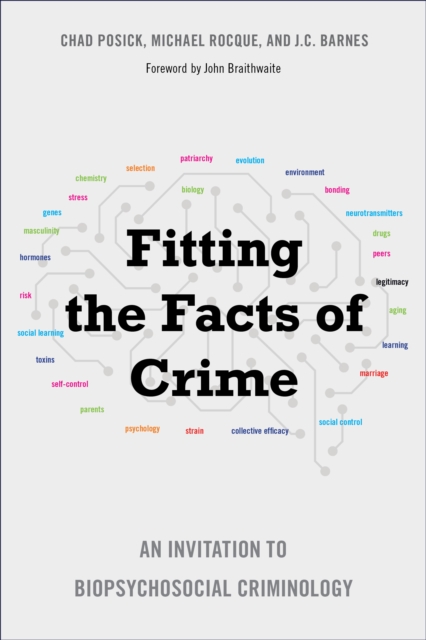
Fitting the Facts of Crime
Biosocial criminology--and biosocial criminologists--focuses on both the environmental and biological factors that contribute to antisocial behavior.Importantly, these two domains are not separate parts of an equation but pieces of the same puzzle that fit together for a complete picture of the causes of crime/antisocial behavior. Fitting.
eBook

Office Discipline and Student Behavior: Does Race Matter?
Previous research has consistently found a relationship between student race and discipline. For example, African Americans are more likely than whites to be sent to the office or suspended. However, much of this work is limited by a lack of student behavior and school‐level variables. This study examined the effect of student race on office referrals in 45 elementary schools while controlling for ratings of student behavior and using a fixed effects model to remove school‐level influences. The results indicate that African American students are significantly more likely to be referred to the office than other racial groups. Neither student behavior nor school‐level factors are sufficient to explain this relationship; however, these factors do dampen the effect of race on discipline, suggesting that previous work has reported inflated coefficients. Given the historical association between exclusionary school discipline and later negative life outcomes, this issue warrants increased attention. Implications and directions for future research are discussed.
Journal Article

UNDERSTANDING THE ANTECEDENTS OF THE \SCHOOL-TO-JAIL\ LINK: THE RELATIONSHIP BETWEEN RACE AND SCHOOL DISCIPLINE
One of the strongest findings in the juvenile delinquency literature is the relationship between a lack of school success, school disengagement, and involvement in the criminal justice system. This link has been deemed the \"school-to-jail pipeline.\" To date, research has not clarified the antecedents or origins of this school failure and disengagement, although it is known that it occurs at relatively young ages. This study examines one possible source: racial bias in school discipline experienced during the elementary school years. Using a multi-level analysis, we examine whether African-American elementary school students are more likely to receive disciplinary infractions while controlling for individual-level, classroom-level, and school-level factors. Our findings, robust across several models, show that African-American children receive more disciplinary infractions than children from other racial categories. Classroom factors, school factors, and student behavior are not sufficient to account for this finding. We also find that school-level characteristics (e.g., percentage of black students) are related to overall discipline levels, consistent with a racial threat hypothesis. These findings have important implications for the school-to-jail literature and may point to one explanation for why minority students fare less well and are more likely to disengage from schools at a younger age than whites.
Journal Article

The Criminal Brain, Second Edition
What is the relationship between criminality and biology? Nineteenth-century phrenologists insisted that criminality was innate, inherent in the offender's brain matter. While they were eventually repudiated as pseudo-scientists, today the pendulum has swung back. Both criminologists and biologists have begun to speak of a tantalizing but disturbing possibility: that criminality may be inherited as a set of genetic deficits that place one at risk to commit theft, violence, or acts of sexual deviance. But what do these new theories really assert? Are they as dangerous as their forerunners, which the Nazis and other eugenicists used to sterilize, incarcerate, and even execute thousands of supposed \"born\" criminals? How can we prepare for a future in which leaders may propose crime-control programs based on biology?In this second edition ofThe Criminal Brain, Nicole Rafter, Chad Posick, and Michael Rocque describe early biological theories of crime and provide a lively, up-to-date overview of the newest research in biosocial criminology. New chapters introduce the theories of the latter part of the 20th century; apply and critically assess current biosocial and evolutionary theories, the developments in neuro-imaging, and recent progressions in fields such as epigenetics; and finally, provide a vision for the future of criminology and crime policy from a biosocial perspective. The book is a careful, critical examination of each research approach and conclusion. Both compiling and analyzing the body of scholarship devoted to understanding the criminal brain, this volume serves as a condensed, accessible, and contemporary exploration of biological theories of crime and their everyday relevance.
eBook

Maturation beyond Age: Interrelationships among Psychosocial, Adult Role, and Identity Maturation and their Implications for Desistance from Crime
The integrated maturation theory describes psychosocial, adult role, and identity maturation as interrelated domains associated with criminal desistance, but to this point these domains have not been examined simultaneously, which raises questions about the relative importance of each domain to desistance. The aims of the current study were to unravel the development of maturation by examining interrelationships across components of psychosocial, adult role, and identity domains while also clarifying which components were related to desistance. Data were used from the Pathways to Desistance Study on male (n= 1170) and female (n= 184) youth with a history of offending. Participants were an average age of 14.04 (SD= 1.14) at baseline and were followed for seven years. Network modeling examined, from between-subjects and within-individual perspectives, (a) relationships among repeated measures of psychosocial, adult role, and identity maturation components and (b) relationships between these components and offending. Based on centrality indexes from the between-subjects network, responsibility (psychosocial domain), work orientation (adult role domain), and self identity (identity domain) were most important to the development of maturation. After accounting for interrelationships among maturation components, measures of consideration of others (adult role domain) and moral disengagement (identity domain) related to both lower levels of offending and within-individual declines in offending. The findings supported the integrated maturation theory’s description of maturation as comprised of a wide range of interrelated components across different domains that are important to desistance.
Journal Article


The Analysis of Bounded Count Data in Criminology
Background
Criminological research utilizes several types of delinquency scales, including frequency counts and, increasingly, variety scores. The latter counts the number of distinct types of crimes an individual has committed. Often, variety scores are modeled via count regression techniques (e.g., Poisson, negative binomial), which are best suited to the analysis of
unbounded
count data. Variety scores, however, are inherently
bounded
.
Methods
We review common regression approaches for count data and then advocate for a different, more suitable approach for variety scores—binomial regression, and zero-inflated binomial regression, which allow one to consider variety scores as a series of binomial trials, thus accounting for bounding. We provide a demonstration with two simulations and data from the Fayetteville Youth Study.
Conclusions
Binomial regression generally performs better than traditional regression models when modeling variety scores. Importantly, the interpretation of binomial regression models is straightforward and related to the more familiar logistic regression. We recommend researchers use binomial regression models when faced with variety delinquency scores.
Journal Article
Forecasting the Severity of Mass Public Shootings in the United States
Objectives
Mass shootings seemingly lie outside the grasp of explanation and prediction, because they are statistical outliers—in terms of their frequency and severity—within the broader context of crime and violence. Innovative scholarship has developed procedures to estimate the future likelihood of rare catastrophic events such as earthquakes that exceed 7.0 on the Richter scale or terrorist attacks that are similar in magnitude to 9/11.
Methods
Because the frequency and severity of mass public shootings follow a distribution resembling these previously studied rare catastrophic event classes, we utilized similar procedures to forecast the future severity of these incidents within the United States.
Results
Using a dataset containing 156 mass public shootings that took place in the U.S. between 1976 and 2018, we forecast the future probability of attacks reaching each of a variety of severity levels in terms of the number of gunfire victims killed and wounded across three different choices of tail model, three different scenarios for future incident rates, and other parameters. Using a set of mid-range parameters, we find that the probability of an event as deadly as the 2017 massacre in Las Vegas occurring before 2040 is 35% (90% uncertainty interval [8, 72]) and we characterize how this projection varies substantially with choice of modeling parameters.
Conclusions
Our results suggest an uncertain, but concerning, future risk of large-scale mass public shootings, while also illustrating how such forecasts depend on assumptions made about the tail location and other details of the severity distribution model.
Journal Article

From urban to suburban criminology: Understanding crime in America’s “safe” cities
Simon Singer’s [
1
]
America’s Safest City
represents a new and innovative contribution to the criminological literature. It not only provides a fresh look at understanding crime in America, it sheds the light on a heretofore understudied part of the country, but one that is increasingly populated: Suburbia. Singer offers a new theoretical perspective which he calls “relational modernity.” Because the perspective is so new, it is important to critically appraise and evaluate its merits. Thus, this special issue offers an overview and analysis of the book from four luminaries in criminology.
Journal Article