
Catalogue Search | MBRL


Are you sure you want to remove the book from the shelf?

{{itemTitle}}
2
result(s) for
"Michaud, Roland photographer"
Sort by:
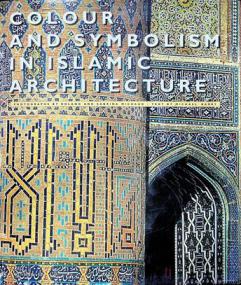
Colour and symbolism in Islamic architecture : eight centuries of the tile-maker's art
\"Colour and Symbolism in Islamic Architecture gathers together the largest collection of photographs ever published of the astonishing tiled domes, minarets and walls of Islamic Asia. Over three decades Roland and Sabrina Michaud have travelled from Turkey to the Chinese borders, through towns and cities such as Herat, Samarkand, Esfahan, Konya and Lahore, to photograph the mosques and buildings that carry the distinctive mark of the tile-maker's art. Exquisitely decorated, these often fragile architectural structures are adorned with thousands of ceramic tiles bearing the 'seven colours of heaven': turquoise, night-blue, black, green, red, ochre and white - a dazzling testimony to the ceramist's art.\" \"Michael Barry's text draws on a wealth of technical and iconographic information to illuminate the history and meaning of these remarkable decorations. He traces the history of Islamic architectural tiles from their first major appearance at the end of the twelfth century as a means of protection from the weather, through their apogee in the fifteenth century which saw them perhaps at their most ornate, right up to the present day when Herat's tilemasters still perpetuate the finest medieval traditions.\" \"Beginning with a highly evocative traveller's impression of modern Afghanistan, the text combines profound historical knowledge with insight into the technical innovations that shaped the course of tile decoration in medieval Islam. In addition, in order to explore the symbolism behind the seven colours Michael Barry turns to one of the greatest medieval Persian-language poets, Nezami of Ganjeh, and his verse romance The Brides of the Seven Climes. He translates this series of tales, which are as charming and gripping as any in the Thousand and One Nights, and in his commentary provides a fascinating glimpse of the philosophical, literary and religious context for Nezami's work\"--Jacket
Book