
Catalogue Search | MBRL


Are you sure you want to remove the book from the shelf?

{{itemTitle}}
7
result(s) for
"Micklich, Thomas"
Sort by:
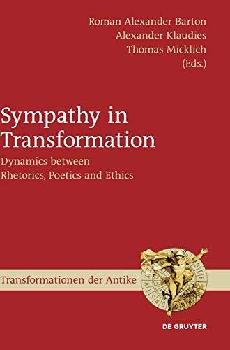
Sympathy in transformation : dynamics between rhetorics, poetics and ethics
\"There is little doubt that sympathy plays a pivotal role in aesthetic as well as moral experience, yet also little agreement on how to describe this connection and its long history. This volume investigates the changes in the concept of sympathy as well as its rhetorical, poetical and ethical functions from antiquity to the threshold of Romanticism. The focus is on sympathy's development from a cosmological principle expressing the coherence, correspondence, and unity of all things into a theoretical key concept of intersubjectivity informing moral philosophy, criticism and literature. Thus, Sympathy in Transformation offers important insights into the many ways in which, when sympathy migrates into diverse discourses in Early Modernity, its ancient origins dwindle out of sight, while some of its central elements re-emerge in a surprising manner.\"--Back cover.
Book
The First Scube3 Mutant Mouse Line with Pleiotropic Phenotypic Alterations
The vertebrate Scube (Signal peptide, CUB, and EGF-like domain-containing protein) family consists of three independent members, Scube1–3, which encode secreted cell surface-associated membrane glycoproteins. Limited information about the general function of this gene family is available, and their roles during adulthood. Here, we present the first Scube3 mutant mouse line (Scube3N294K/N294K), which clearly shows phenotypic alterations by carrying a missense mutation in exon 8, and thus contributes to our understanding of SCUBE3 functions. We performed a detailed phenotypic characterization in the German Mouse Clinic (GMC). Scube3N294K/N294K mutants showed morphological abnormalities of the skeleton, alterations of parameters relevant for bone metabolism, changes in renal function, and hearing impairments. These findings correlate with characteristics of the rare metabolic bone disorder Paget disease of bone (PDB), associated with the chromosomal region of human SCUBE3. In addition, alterations in energy metabolism, behavior, and neurological functions were detected in Scube3N294K/N294K mice. The Scube3N294K/N294K mutant mouse line may serve as a new model for further studying the effect of impaired SCUBE3 gene function.
Journal Article

Standardized, systemic phenotypic analysis of Umod(C93F) and Umod(A227T) mutant mice
Uromodulin-associated kidney disease (UAKD) summarizes different clinical features of an autosomal dominant heritable disease syndrome in humans with a proven uromodulin (UMOD) mutation involved. It is often characterized by hyperuricemia, gout, alteration of urine concentrating ability, as well as a variable rate of disease progression inconstantly leading to renal failure and histological alterations of the kidneys. We recently established the two Umod mutant mouse lines Umod(C93F) and Umod(A227T) on the C3H inbred genetic background both showing kidney defects analogous to those found in human UAKD patients. In addition, disease symptoms were revealed that were not yet described in other published mouse models of UAKD. To examine if further organ systems and/or metabolic pathways are affected by Umod mutations as primary or secondary effects, we describe a standardized, systemic phenotypic analysis of the two mutant mouse lines Umod(A227T) and Umod(C93F) in the German Mouse Clinic. Different genotypes as well as different ages were tested. Beside the already published changes in body weight, body composition and bone metabolism, the influence of the Umod mutation on energy metabolism was confirmed. Hematological analysis revealed a moderate microcytic and erythropenic anemia in older Umod mutant mice. Data of the other analyses in 7-10 month-old mutant mice showed single small additional effects.
Journal Article

Innovations in phenotyping of mouse models in the German Mouse Clinic
Under the label of the German Mouse Clinic (GMC), a concept has been developed and implemented that allows the better understanding of human diseases on the pathophysiological and molecular level. This includes better understanding of the crosstalk between different organs, pleiotropy of genes, and the systemic impact of envirotypes and drugs. In the GMC, experts from various fields of mouse genetics and physiology, in close collaboration with clinicians, work side by side under one roof. The GMC is an open-access platform for the scientific community by providing phenotypic analysis in bilateral collaborations (“bottom-up projects”) and as a partner and driver in international large-scale biology projects (“top-down projects”). Furthermore, technology development is a major topic in the GMC. Innovative techniques for primary and secondary screens are developed and implemented into the phenotyping pipelines (e.g., detection of volatile organic compounds, VOCs).
Journal Article
Standardized, Systemic Phenotypic Analysis of UmodC93F and UmodA227T Mutant Mice
Uromodulin-associated kidney disease (UAKD) summarizes different clinical features of an autosomal dominant heritable disease syndrome in humans with a proven uromodulin (UMOD) mutation involved. It is often characterized by hyperuricemia, gout, alteration of urine concentrating ability, as well as a variable rate of disease progression inconstantly leading to renal failure and histological alterations of the kidneys. We recently established the two Umod mutant mouse lines UmodC93F and UmodA227T on the C3H inbred genetic background both showing kidney defects analogous to those found in human UAKD patients. In addition, disease symptoms were revealed that were not yet described in other published mouse models of UAKD. To examine if further organ systems and/or metabolic pathways are affected by Umod mutations as primary or secondary effects, we describe a standardized, systemic phenotypic analysis of the two mutant mouse lines UmodA227T and UmodC93F in the German Mouse Clinic. Different genotypes as well as different ages were tested. Beside the already published changes in body weight, body composition and bone metabolism, the influence of the Umod mutation on energy metabolism was confirmed. Hematological analysis revealed a moderate microcytic and erythropenic anemia in older Umod mutant mice. Data of the other analyses in 7-10 month-old mutant mice showed single small additional effects.
Journal Article

Standardized, Systemic Phenotypic Analysis of Umod C93F and Umod A227T Mutant Mice
Uromodulin-associated kidney disease (UAKD) summarizes different clinical features of an autosomal dominant heritable disease syndrome in humans with a proven uromodulin (UMOD) mutation involved. It is often characterized by hyperuricemia, gout, alteration of urine concentrating ability, as well as a variable rate of disease progression inconstantly leading to renal failure and histological alterations of the kidneys. We recently established the two Umod mutant mouse lines Umod C93F and Umod A227T on the C3H inbred genetic background both showing kidney defects analogous to those found in human UAKD patients. In addition, disease symptoms were revealed that were not yet described in other published mouse models of UAKD. To examine if further organ systems and/or metabolic pathways are affected by Umod mutations as primary or secondary effects, we describe a standardized, systemic phenotypic analysis of the two mutant mouse lines Umod A227T and Umod C93F in the German Mouse Clinic. Different genotypes as well as different ages were tested. Beside the already published changes in body weight, body composition and bone metabolism, the influence of the Umod mutation on energy metabolism was confirmed. Hematological analysis revealed a moderate microcytic and erythropenic anemia in older Umod mutant mice. Data of the other analyses in 7-10 month-old mutant mice showed single small additional effects.
Journal Article