
Catalogue Search | MBRL


Are you sure you want to remove the book from the shelf?

{{itemTitle}}
5
result(s) for
"Mikics, David, 1961- author"
Sort by:

Stanley Kubrick : American filmmaker
An engrossing biography of one of the most influential filmmakers in cinematic history, Kubrick grew up in the Bronx, a doctor's son. From a young age he was consumed by photography, chess, and, above all else, movies. He was a self-taught filmmaker and self-proclaimed outsider, and his films exist in a unique world of their own outside the Hollywood mainstream. Kubrick's Jewishness played a crucial role in his idea of himself as an outsider. Obsessed with rebellion against authority, war, and male violence, Kubrick was himself a calm, coolly masterful creator and a talkative, ever-curious polymath immersed in friends and family. Drawing on interviews and new archival material, Mikics for the first time explores the personal side of Kubrick's films.
BOOK
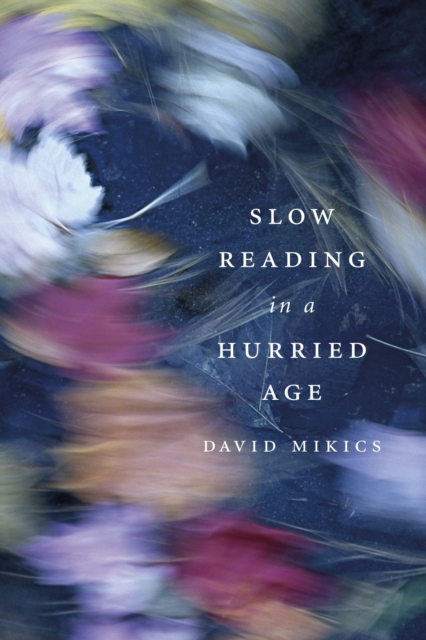
Slow Reading in a Hurried Age
Reading, David Mikics says, should not be drudgery, and not mere information-gathering or escape either, but a way to live life at a higher pitch. Slow Reading in a Hurried Age is a practical guide for anyone who yearns for a more meaningful, satisfying reading experience, as well as sharper reading skills and improved concentration.
eBook

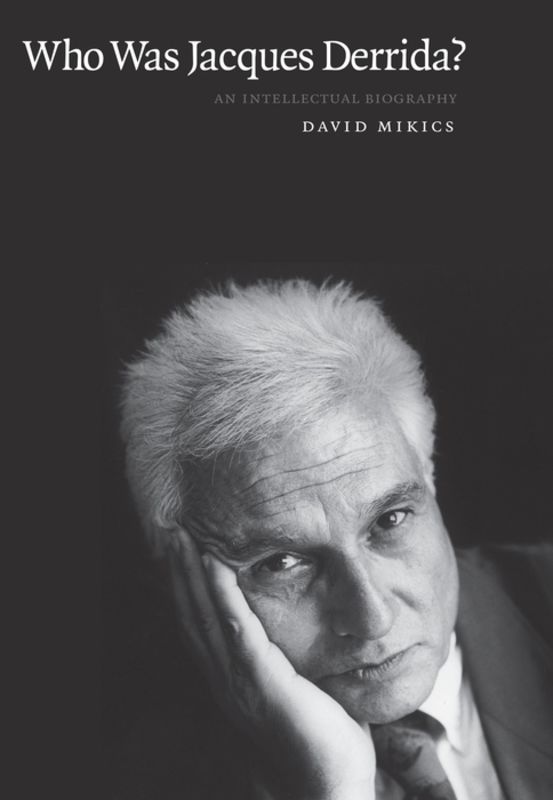
Who Was Jacques Derrida?
Who Was Jacques Derrida?is the first intellectual biography of Derrida, the first full-scale appraisal of his career, his influence, and his philosophical roots. It is also the first attempt to define his crucial importance as the ambassador of \"theory,\" the phenomenon that has had a profound influence on academic life in the humanities. Mikics lucidly and sensitively describes for the general reader Derrida's deep connection to his Jewish roots. He succinctly defines his vision of philosophy as a discipline that resists psychology. While pointing out the flaws of that vision and Derrida's betrayal of his most adamantly expounded beliefs, Mikics ultimately concludes that \"Derrida was neither so brilliantly right nor so badly wrong as his enthusiasts and critics, respectively, claimed.\"
eBook
A new handbook of literary terms
A New Handbook of Literary Terms offers a lively, informative guide to words and concepts that every student of literature needs to know. Mikics's definitions are essayistic, witty, learned, and always a pleasure to read. They sketch the derivation and history of each term, including especially lucid explanations of verse forms and providing a firm sense of literary periods and movements from classicism to postmodernism. The Handbook also supplies a helpful map to the intricate and at times confusing terrain of literary theory at the beginning of the twenty-first century: the author has designated a series of terms, from New Criticism to queer theory, that serves as a concise but thorough introduction to recent developments in literary study. Mikics's Handbook is ideal for classroom use at all levels, from freshman to graduate. Instructors can assign individual entries, many of which are well-shaped essays in their own right. Useful bibliographical suggestions are given at the end of most entries. The Handbook's enjoyable style and thoughtful perspective will encourage students to browse and learn more. Every reader of literature will want to own this compact, delightfully written guide.
eBook