
Catalogue Search | MBRL


Are you sure you want to remove the book from the shelf?

{{itemTitle}}
763
result(s) for
"Miller, Ann M."
Sort by:

Francisella tularensis-infected human neutrophils are trojan horses for infection of macrophages
Francisella tularensis , the causative agent of tularemia, is a Gram-negative bacterium that infects neutrophils (polymorphonuclear leukocytes, PMNs) and macrophages. Previous studies by our group and others demonstrate that F. tularensis inhibits the respiratory burst, escapes the phagosome, replicates in the cytosol, and significantly prolongs human neutrophil lifespan. However, the fate of infected neutrophils and their bacterial cargo are unknown. We now demonstrate that F. tularensis -infected neutrophils (iPMNs) interacted more efficiently with primary human monocyte-derived macrophages (MDMs) than aged, control PMNs despite their viability and paucity of surface phosphatidylserine and identified an important role for serum and C1q in this process. Uptake by this mechanism supported bacterial growth in MDMs, indicating that iPMNs can act as Trojan horses to spread infection. Efferocytosis of apoptotic cells favors repolarization of macrophages from a proinflammatory (M1) phenotype to a pro-resolution (M2) phenotype. In marked contrast, the effects of iPMN were distinct, as these cells elicited an atypical MDM phenotype notable for downregulation of both M1 and M2 surface markers that was accompanied by sustained expression of indoleamine 2,3 dioxygenase and suppressor of cytokine signaling 1 as well as low proinflammatory cytokine secretion. Altogether, our data advance understanding of neutrophil-macrophage interactions and reveal a potential new mechanism for F. tularensis dissemination and immunomodulation within a host.
Journal Article
Pharmacological ascorbate as a novel therapeutic strategy to enhance cancer immunotherapy
Pharmacological ascorbate (i.e., intravenous infusions of vitamin C reaching ~ 20 mM in plasma) is under active investigation as an adjuvant to standard of care anti-cancer treatments due to its dual redox roles as an antioxidant in normal tissues and as a prooxidant in malignant tissues. Immune checkpoint inhibitors (ICIs) are highly promising therapies for many cancer patients but face several challenges including low response rates, primary or acquired resistance, and toxicity. Ascorbate modulates both innate and adaptive immune functions and plays a key role in maintaining the balance between pro and anti-inflammatory states. Furthermore, the success of pharmacological ascorbate as a radiosensitizer and a chemosensitizer in pre-clinical studies and early phase clinical trials suggests that it may also enhance the efficacy and expand the benefits of ICIs.
Journal Article

A More Rapid Method for Culturing LUHMES-Derived Neurons Provides Greater Cell Numbers and Facilitates Studies of Multiple Viruses
The ability to study mature neuronal cells ex vivo is complicated by their non-dividing nature and difficulty in obtaining large numbers of primary cells from organisms. Thus, numerous transformed progenitor models have been developed that can be routinely cultured, then scaled, and differentiated to mature neurons. In this paper, we present a new method for differentiating one such model, the Lund human mesencephalic (LUHMES) dopaminergic neurons. This method is two days faster than some established protocols, results in nearly five times greater numbers of mature neurons, and involves fewer handling steps that could introduce technical variability. Moreover, it overcomes the problem of cell aggregate formation that commonly impedes high-resolution imaging, cell dissociation, and downstream analysis. While recently established for herpes simplex virus type 1, we demonstrate that LUHMES neurons can facilitate studies of other herpesviruses, as well as RNA viruses associated with childhood encephalitis and hemorrhagic fever. This protocol provides an improvement in the generation of large-scale neuronal cultures, which may be readily applicable to other neuronal 2D cell culture models and provides a system for studying neurotrophic viruses. We named this method the Streamlined Protocol for Enhanced Expansion and Differentiation Yield, or SPEEDY, method.
Journal Article

Nicotinamide phosphoribosyltransferase expression and clinical outcome of resected stage I/II pancreatic ductal adenocarcinoma
Nicotinamide phosphoribosyltransferase (NAMPT) plays a key role in the biosynthesis of nicotinamide adenine dinucleotide (NAD+), which is a vital cofactor in redox reactions and a substrate for NAD+ consuming enzymes including CD38, PARPs and sirtuins. NAMPT over-expression has been shown in various cancers and its inhibition decreases cancer cell growth, making it an attractive therapeutic target. Here we examine the NAMPT expression in a large cohort of resected stage I/II pancreatic ductal adenocarcinomas (PDAs) and correlate its expression with clinical outcomes and pathologic features.
A retrospective review of patients with PDAs was conducted at a single institution. Tissue microarrays (TMAs) containing primary PDAs and their metastatic lymph nodes (mLNs) were constructed and stained for NAMPT expression. Each TMA core was evaluated for staining intensity of cancer cells (0 = no staining, 1+ = weak, 2+ = moderate, 3+ = strong) and a mean score was calculated for each case with at least two evaluable cores. NAMPT expression was correlated with clinicopathological variables using chi-squared or Fisher's exact test, and t-tests for categorical and continuous variables, respectively. Survival probabilities were estimated and plotted using the Kaplan-Meier method. Cox proportional hazards regression was used to assess the effects of NAMPT staining values on recurrence-free survival (RFS) and overall survival (OS). This study was conducted under an approved IRB protocol.
173 primary PDAs had at least 2 TMA cores with identifiable cancer cells. The mean IHC score was 0.55 (range: 0 to 2.33). The mean IHC score of mLNs was 0.39 (range: 0-2), which was not significantly different from their primary tumors (mean IHC score = 0.47, P = 0.38). Sixty-four percent (111/173) of PDAs were positive for NAMPT staining. Stage II tumors were more likely to be positive (68% of 151 vs 41% of 22; P = 0.01). Non-obese non-diabetic patients were more likely to have NAMPT+ tumors (43.7% vs. 27.9%, P = 0.04). While RFS and OS were not statistically different between NAMPT+ vs. NAMPT- PDAs, patients with NAMPT- tumors tended to have a longer median OS (26.0 vs. 20.4 months, P = 0.34).
NAMPT expression was detected in 64% of stage I/II PDAs and up to 72% in non-obese non-diabetic patients. Frequency of NAMPT expression correlated with pathological stage, consistent with published literature regarding its role in cancer progression. While RFS and OS were not statistically significantly different, patients with NAMPT+ PDAs tended to have a shorter survival. Thus, NAMPT inhibition may prove beneficial in clinical trials.
Journal Article

From Snorkelers to Scuba Divers in the Elementary Science Classroom
From Snorkelers to Scuba Divers in the Elementary Science Classroom: Strategies and Lessons That Move Students Toward Deeper Learning By John Almarode and Ann M. Miller. Inspire a deep and lasting love of science in young students With so much attention paid to student performance in science, it is imperative for teacher to foster prolonged interest and deep conceptual understanding from an early age. From Snorkelers to Scuba Divers combines the latest findings in the science of learning with student and teacher-tested techniques to provide the framework for encouraging young learners to shed their snorkels and plunge into the world of science. Readers will find: Evidence-based, research-driven strategies that encourage both deep thinking and conceptual understanding Classroom examples that demonstrate each aspect of the standards-based instructional framework in action Professional development tasks that provide teachers with support in implementing strategies for students at all levels, from surface to deep.
eBook

Captivate, activate, and invigorate the student brain in science and math, grades 6-12
John Almarode and Ann Miller provide numerous strategies and a model for developing engaging science and math lessons and units that captivate students, activate prior knowledge, and invigorate student interest by making lessons rigorous and relevant.
eBook

Dendritic cell NLRC4 regulates influenza A virus–specific CD4+ T cell responses through FasL expression
Influenza A virus (IAV)-specific T cell responses are important correlates of protection during primary and subsequent infections. Generation and maintenance of robust IAV-specific T cell responses relies on T cell interactions with dendritic cells (DCs). In this study, we explore the role of nucleotide-binding domain leucine-rich repeat containing receptor family member NLRC4 in modulating the DC phenotype during IAV infection. Nlrc4-/- mice had worsened survival and increased viral titers during infection, normal innate immune cell recruitment and IAV-specific CD8 T cell responses, but severely blunted IAV-specific CD4 T cell responses compared to wild-type mice. The defect in the pulmonary IAV-specific CD4 T cell response was not a result of defective priming or migration of these cells in Nlrc4-/- mice but was instead due to an increase in FasL+ DCs, resulting in IAV-specific CD4 T cell death. Together, our data support a novel role for NLRC4 in regulating the phenotype of lung DCs during a respiratory viral infection, and thereby influencing the magnitude of protective T cell responses.
Journal Article
Dendritic cell NLRC4 regulates influenza A virus-specific CD4.sup.+ T cell responses through FasL expression
Influenza A virus-specific (IAV-specific) T cell responses are important correlates of protection during primary and subsequent infections. The generation and maintenance of robust IAV-specific T cell responses relies on T cell interactions with dendritic cells (DCs). In this study, we explore the role of the nucleotide-binding domain leucine-rich repeat- containing receptor family member NLRC4 in modulating the DC phenotype during IAV infection. [Nlrc4.sup.-/-] mice had worsened survival and increased viral titers during infection, normal innate immune cell recruitment, and IAV-specific [CD8.sup.+] T cell responses, but severely blunted IAV-specific [CD4.sup.+] T cell responses compared with WT mice. The defect in the pulmonary IAV-specific [CD4.sup.+] T cell response was not a result of defective priming or migration of these cells in [Nlrc4.sup.-/-] mice but was instead due to an increase in [FasL.sup.+] DCs, resulting in IAV- specific [CD4.sup.+] T cell death. Together, our data support a role for NLRC4 in regulating the phenotype of lung DCs during a respiratory viral infection and thereby influencing the magnitude of protective T cell responses.
Journal Article

The Superior Colliculus-Pretectum Mediates the Direct Effects of Light on Sleep
Light and dark have immediate effects on sleep and wakefulness in mammals, but the neural mechanisms underlying these effects are poorly understood. Lesions of the visual cortex or the superior colliculus-pretectal area were performed in albino rats to determine retinorecipient areas that mediate the effects of light on behavior, including rapid eye movement sleep triggering by lights-off and redistribution of non-rapid eye movement sleep in short light-dark cycles. Acute responses to changes in light conditions were virtually eliminated by superior colliculus-pretectal area lesions but not by visual cortex lesions. Circadian entrainment was evident in both groups with lesions and in normal controls. Thus, acute light-dark effects on sleep and wakefulness appear to be mediated independently from cortical vision or circadian rhythms.
Journal Article
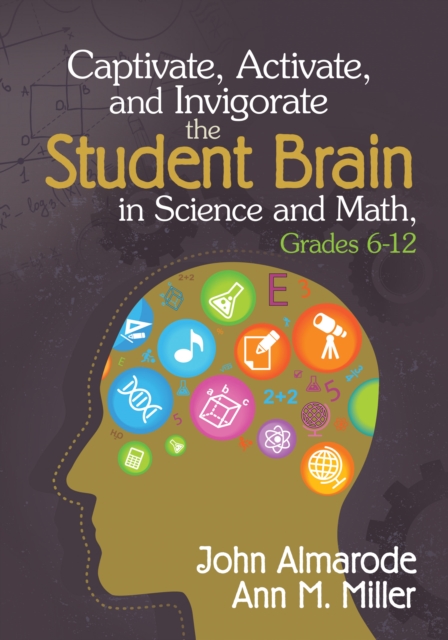
Captivate, activate, and invigorate the student brain in science and math.: (Grades 6-12)
Banish boredom once and for all! If your STEM lessons are falling on disinterested ears, mix things up with engaging, brain-based science and math strategies that captivate students' attention, activate prior knowledge, and invigorate interest. Blending current research on the student brain with practical methods for teaching science and math, Almarode and Miller identify six essential \"ingredients\" in a recipe for student success. You'll discover: A customizable framework you can use right away Classroom-ready, content-specific attention grabbers Overt and covert strategies to boost behavioral, emotional, and cognitive engagement Techniques for making relevant connections that maximize retention
eBook