
Catalogue Search | MBRL


Are you sure you want to remove the book from the shelf?

{{itemTitle}}
649
result(s) for
"Miller, Henry K"
Sort by:

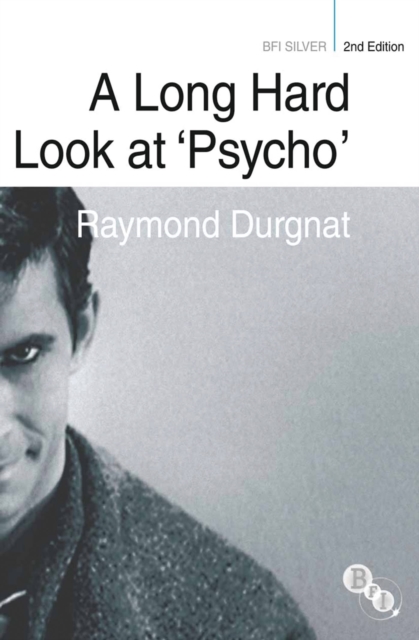
A Long Hard Look at ‘Psycho’
Upon its release in 1960, Alfred Hitchcock's Psycho divided critical opinion, with several leading film critics condemning Hitchcock's apparent encouragement of the audience's identification with the gruesome murder that lies at the heart of the film. Such antipathy did little to harm Psycho's box-office returns, and it would go on to be acknowledged as one of the greatest film thrillers, with scenes and characters that are among the most iconic in all cinema. In his illuminating study of Psycho, Raymond Durgnat provides a minute analysis of its unfolding narrative, enabling us to consider what happens to the viewer as he or she watches the film, and to think afresh about questions of spectatorship, Hollywood narrative codes, psycho-analysis, editing and shot composition. In his introduction to the new edition, Henry K. Miller presents A Long Hard Look at ‘Psycho’ as the culmination of Durgnat's decades-long campaign to correct what he called film studies' ‘Grand Error’. In the course of expounding Durgnat's root-and-branch challenge to our inherited shibboleths about Hollywood cinema in general and Hitchcock in particular, Miller also describes the eclectic intellectual tradition to which Durgnat claimed allegiance. This band of amis inconnus, among them William Empson, Edgar Morin and Manny Farber, had at its head Durgnat's mentor Thorold Dickinson. The book's story begins in the early 1960s, when Dickinson made the long hard look the basis of his pioneering film course at the Slade School of Fine Art, and Psycho became one of its first objects.
eBook

Voyeurs upon History
This article discusses the collaboration of Stephen Dwoskin and Marc Karlin, both Jewish filmmakers based in London in the 1970s, drawing in particular on evidence in the Dwoskin archive at the University of Reading that reveals Dwoskin’s hitherto unacknowledged contribution to Karlin’s film For Memory (1984). I demonstrate that this erasure is symptomatic of Dwoskin’s treatment by historians of British film culture, and argue that Dwoskin and Karlin’s collaboration, although it did not come to fruition, is revealing of the two filmmakers’ differing relationships with Britishness and Jewishness, and prompted a new and significant engagement on Dwoskin’s part with questions of diaspora, displacement, and integration.
Journal Article

Peter Whitehead: The Slade Years
According to Whitehead today, Dickinson- whose own route into the movies came through a similarly fortunate meeting with an eminent fi lmmaker, George Pearson, while at Oxford in the 1920s- was heard saying that \"at the end, after about two hours, after which he had interviewed me about everything to do with the Slade and my life, I had the impression I was no longer in charge of the fi lm department. Dickinson, who tried about this time to entice Jean Rouch over for a screening, showed Resnais' tele vi sion documentary on Robbe- Grillet in February, and in the same month, as a special edition of the little magazine Motion, his former student Raymond Durgnat published the fi rst monograph in En glish on the French New Wave. [...]the trends in painting that Whitehead saw as prefi guring the rise of nonfi gurative cinema were obviously apparent among his fellow students; the teachings of Cohen and of Ernst Gombrich, who held a Slade professorship during 1961- 1963, fed directly into his work. \"32 Whitehead set out to analyze the intellectual formation of a generation of fi lmmakers- and how their work refl ected or represented the mental environment of a generation of fi lmgoers. [...]the interest in Antonioni was \"his awareness of the metaphysical signifi - cance of environment and how this presence can infl uence the actions of us all. Henry K. Miller read Modern History at Wadham College, Oxford. Since 2005, he has been researching and writing a PhD thesis on the origins of fi lm culture in Britain at Birkbeck, University of London.
Journal Article
The Major Realist Film Theorists
From the 1910s to the emergence of structuralism and post-structuralism in the 1960s, the writings of John Grierson, Siegfried Kracauer, André Bazin and Georg Lukács dominated realist film theory. In this critical anthology, the first collection to address their work in one volume, a wide range of international scholars explore the interconnections between their ideas and help generate new understandings of this important, if neglected, field. Challenging preconceptions about 'classical' theory and the nature of realist representation, and in the process demonstrating how this body of work can be seen as a cohesive theoretical model, this invaluable collection will help return the realist paradigm of film theory to the forefront of academic enquiry.
eBook

28 YEARS LATER: THE BONE TEMPLE
Miller reviews the film, 28 Years Later: The Bone Temple, directed by Nia Dacosta and starring Ralph Fiennes, Jack O'Connell, and Alfie Williams.
Magazine Article
SHOOT TO THRILL
Miller profiles Kathryn Bigelow, highlighting her latest film, House of Dynamite, as the most compelling of her career and her views on various issues related to her life and career. A tense political thriller focused on nuclear threat, the film exemplifies Bigelow's long shift from stylized genre work (Blue Steel, Point Break, Strange Days) toward journalistic realism and meticulous research. House of Dynamite uniquely structures 15 minutes of a potential nuclear crisis across overlapping perspectives and repeated sequences, creating narrative depth while showing characters constantly mediated through screens and telecommunications. Bigelow's commitment to authenticity extends to filming actors in real vehicles and locations rather than studios, giving the story grounded immediacy. She traces her career evolution--from postmodern, stylized cinema to high-stakes realism--and emphasizes her influences, particularly her Columbia University mentor Sylvere Lauringer and the ideas of French philosophers like Michel Foucault. Bigelow's work consistently explores power, perception, and the mediated experience of crises, connecting her early experimental instincts to the rigorous, journalistic approach seen in her recent films.
Magazine Article
A COMPLICATED PASSION: THE LIFE AND WORK OF AGNÈS VARDA
Miller reviews A Complicated Passion: The Life and Work of Agnes Varda by Carrie Rickey.
Magazine Article