
Catalogue Search | MBRL


Are you sure you want to remove the book from the shelf?

{{itemTitle}}
1,629
result(s) for
"Miller, Paul B."
Sort by:
Embers of Empire
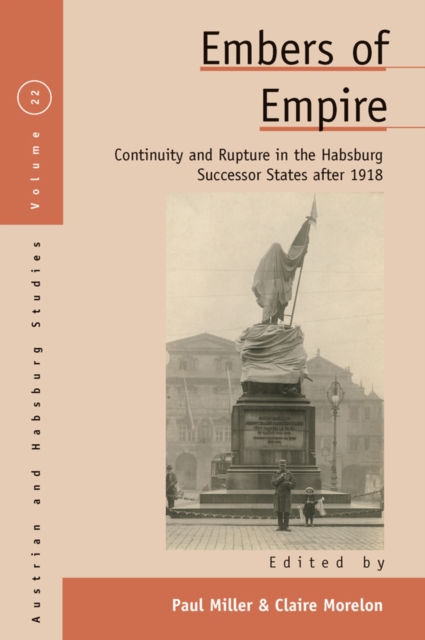
The collapse of the Habsburg Monarchy at the end of World War I ushered in a period of radical change for East-Central European political structures and national identities. Yet this transformed landscape inevitably still bore the traces of its imperial past. Breaking with traditional histories that take 1918 as a strict line of demarcation, this collection focuses on the complexities that attended the transition from the Habsburg Empire to its successor states. In so doing, it produces new and more nuanced insights into the persistence and effectiveness of imperial institutions, as well as the sources of instability in the newly formed nation-states.
eBook

AGAINST FIDUCIARY CONSTITUTIONALISM
A growing body of scholarship draws connections between fiduciary law and the Constitution. In much of this literature, the Constitution is described as a fiduciary instrument that establishes fiduciary duties, not least for the President of the United States.
This Article examines and critiques the claims of fiduciary constitutionalism. Although a range of arguments are made in this literature, there are common failings. Some of these involve a literalistic misreading of the works of leading political philosophers (e.g., Plato and Locke). Other failings involve fiduciary law, such as mistakes about how to identify fiduciary relationships and about the content and enforcement of fiduciary duties. Still other failings sound in constitutional law, including the attempt to locate the genre of the Constitution in the categories of private fiduciary law. These criticisms suggest weaknesses in the new and increasingly influential attempt to develop fiduciary constitutionalism.
Journal Article

When are research risks reasonable in relation to anticipated benefits?
The question “When are research risks reasonable in relation to anticipated benefits?” is at the heart of disputes in the ethics of clinical research. Institutional review boards are often criticized for inconsistent decision-making, a problem that is compounded by a number of contemporary controversies, including the ethics of research involving placebo controls, developing countries, incapable adults and emergency rooms. If this pressing ethical question is to be addressed in a principled way, then a systematic approach to the ethics of risk in research is required. Component analysis provides such a systematic approach.
Journal Article

JUSTIFYING FIDUCIARY REMEDIES
Fiduciary remedies are notoriously potent. Fiduciaries who profit from their disloyalty are liable to be ordered to disgorge all of their gains, even where they act for the primary purpose of benefitting their beneficiaries. It is commonly assumed that any plausible justification for disgorgement awards will be inconsistent with formal corrective justice. Formal corrective justice asserts that remedies rectify wrongs and share in the justification for primary rights. Disgorgement seems inconsistent with formal corrective justice because it appears responsive to public-interest considerations having nothing to do with the primary right to loyalty. This article challenges conventional wisdom and offers an argument that explains how disgorgement for disloyalty effectuates formal corrective justice. It does so by restoring gains to beneficiaries to which they are entitled as a matter of primary right by virtue of their exclusive claim over fiduciary power.
Journal Article

Elusive Origins
Although the questions of modernity and postmodernity are debated as frequently in the Caribbean as in other cultural zones, the Enlightenment-generally considered the origin of European modernity-is rarely discussed as such in the Caribbean context. Paul B. Miller constellates modern Caribbean writers of varying national and linguistic traditions whose common thread is their representation of the Enlightenment and the Age of Revolution in the Caribbean. In a comparative reading of such writers as Alejo Carpentier (Cuba), C. L. R. James (Trinidad), Marie Chauvet (Haiti), Maryse Condé (Guadeloupe), Reinaldo Arenas (Cuba), and Edgardo Rodríguez Juliá (Puerto Rico), Miller shows how these authors deploy their historical imagination in order to assess and reevaluate the elusive and often conflicted origins of their own modernity.
Miller documents the conceptual and ideological shift from an earlier generation of writers to a more recent one whose narrative strategies bear a strong resemblance to postmodern cultural practices, including the use of parody in targeting their discursive predecessors, the questioning of Enlightenment assumptions, and a suspicion regarding the dialectical unfolding of history as their precursors understood it. By positing the Cuban Revolution as a dividing line between the earlier generation and their postmodern successors, Miller confers a Caribbean specificity upon the commonplace notion of postmodernity.
The dual advantage of Elusive Origins's thematic specificity coupled with its inclusiveness allows a reflection on canonical writers in conjunction with lesser-known figures. Furthermore, the inclusion of Francophone and Anglophone writers in addition to those from the Hispanic Caribbean opens up the volume geographically, linguistically, and nationally, expanding its contribution to a nonessentialist understanding of the Caribbean in a Latin American, Atlantic, and global context.
eBook

Continuing the Normative Dialog: Illuminating the Asset/Liability Theory
SYNOPSIS: This paper responds to the call in Dichev (2008) for rekindling the public discussion of normative accounting theories and analyses. Our goal is to enable and encourage members of the accounting academy to participate productively in dialogs with policy makers and to bring normative theory and analysis into their classrooms to help prepare students for more productive careers as practitioners or educators. Toward that end, we begin by explaining our position on the functional role for normativism. Next we offer up five guidelines to be applied in constructing and analyzing normative accounting theories. The guidelines are then used to frame a discussion of our version of the normative asset/liability theory of income measurement and financial position, especially its advantage of basing accounting measures on observed empirical data without relying on assumptions, predictions, and allocations. This theory is similar to and yet distinct from the one described in the Financial Accounting Standards Board’s Conceptual Framework and is quite different from the “balance sheet approach” criticized by Dichev. In the final section of the paper we use the guidelines to address several points in Dichev’s article and to suggest ways his analysis could be improved.
Journal Article

Medical or surgical treatment before embryo transfer improves outcomes in women with abnormal endometrial BCL6 expression
PurposeTo evaluate the effect of medical or surgical treatment prior to embryo transfer in women with elevated endometrial BCL6 expression and suspected endometriosis in a prospective, cohort study design at a university-associated infertility clinic.MethodsAll subjects had at least 1 year of unexplained infertility (UI) and each prospectively underwent endometrial biopsy and immunostaining for the oncogene BCL6, prior to embryo transfer during an assisted reproductive technology (ART) cycle. To be included, subjects had to have an abnormal BCL6 result, defined by elevated HSCORE ≥ 1.4. Women that were pre-treated with laparoscopy or medical suppression with GnRH agonist (depot leuprolide acetate; Lupron®, Abbvie, Inc., Chicago, IL) for 2 months were compared to a group that went untreated (controls). Endpoints included implantation rate (IR), clinical pregnancy rate (CPR), and live birth rate (LBR), and as well as cycle characteristics. Miscarriage rate were also compared between treatment and control group.ResultsWomen in each group had similar characteristics. Those treated by medical suppression and those undergoing laparoscopy for endometriosis had a significantly higher LBR, (5/10; 50%; 95%CI 23.7 to 76.3%) and (11/21; 52.4%; 95%CI 32.4 to 71.7), respectively, compared to controls (4/54; 7.4%; 95%CI 2.9 to 17.6). An absolute benefit of 44.2% (16/31; 95%CI 24.6 to 61.2) and a number need to treat of 3 for those that received treatment (medical suppression and laparoscopy), compared to no treatment. Miscarriages were significantly more common in the control group.ConclusionsWomen with suspected endometriosis and aberrant endometrial BCL6 expression have worse reproductive outcomes following embryo transfer, including a high miscarriage rate, poor IR, and low LBR and CPR compared to cycles pre-treated with medical and surgical management.
Journal Article

Regularizing the Trust Protector
Increasingly, settlors of trusts in on-shore jurisdictions are making use of trust protectors. Protectors serve a variety of functions but generally speaking they are appointed to provide additional security for settlors' expectations that trusts will be administered in accordance with their intentions. Given the potential breadth and variety of functions performed and powers wielded by protectors, their use generates important and profound theoretical issues. Taking its cues from recent efforts to regularize trust protection, this Article addresses questions concerning the extension of fiduciary duties to trust protectors. Amongst other things, it questions the tenability of proposals for broad extension of fiduciary status to protectors and advocates a structured, fact-based approach to fiduciary characterization of trust protection mandates according to which they may be considered fiduciary only if and to the extent they implicate fiduciary powers.
Journal Article

Regulating the Market in Human Research Participants
Lemmens and Miller critically examine \"finder's fees\" and other recruitment incentives issued to physicians for successfully referring patients to clinical trial investigators.
Journal Article

Fiduciary Obligation in Clinical Research
Heated debate surrounds the question whether the relationship between physician‐researcher and patient‐subject is governed by a duty of care. Miller and Weijer argue that fiduciary law provides a strong legal foundation for this duty, and for articulating the terms of the relationship between physician‐researcher and patient‐subject.
Journal Article