
Catalogue Search | MBRL


Are you sure you want to remove the book from the shelf?

{{itemTitle}}
7
result(s) for
"Mills, Jon, 1964- editor"
Sort by:

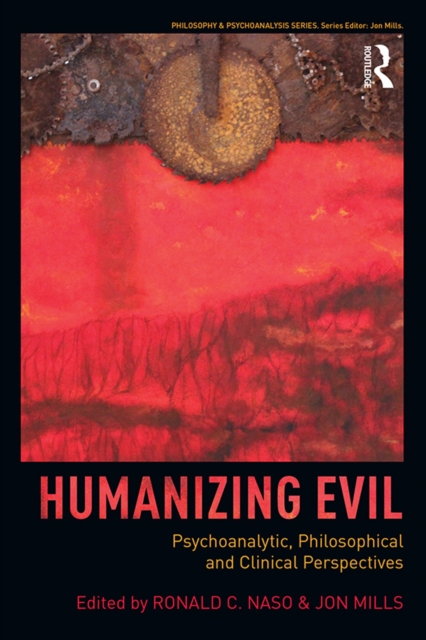
Humanizing Evil
Psychoanalysis has traditionally had difficulty in accounting for the existence of evil. Freud saw it as a direct expression of unconscious forces, whereas more recent theorists have examined the links between early traumatic experiences and later 'evil' behaviour. Humanizing Evil: Psychoanalytic, Philosophical and Clinical Perspectives explores the controversies surrounding definitions of evil, and examines its various forms, from the destructive forces contained within the normal mind to the most horrific expressions observed in contemporary life.
Ronald Naso and Jon Mills bring together an international group of experts to explore how more subtle factors can play a part, such as conformity pressures, or the morally destabilizing effects of anonymity, and show how analysts can understand and work with such factors in clinical practice. Each chapter is unified by the view that evil is intrinsically linked to human freedom, regardless of the gap experienced by perpetrators between their intentions and consequences. While some forms of evil follow seamlessly from psychopathology, others call this relationship into question. Rape, murder, serial killing, and psychopathy show very clear links to psychopathology and character whereas the horrors of war, religious fundamentalism, and political extremism resist such reductionism.
Humanizing Evil is unique in the diversity of perspectives it brings to bear on the problem of evil. It will be essential reading for psychoanalysts, psychotherapists, philosophers, and Jungians. Because it is an integrative depth-psychological effort, it will interest general readers as well as scholars from a variety of disciplines including the humanities, philosophy, religion, mental health, criminal justice, political science, sociology, and interdisciplinary studies.
Ronald Naso, Ph.D., ABPP is psychoanalyst and clinical psychologist in independent practice
eBook


