
Catalogue Search | MBRL


Are you sure you want to remove the book from the shelf?

{{itemTitle}}
3
result(s) for
"Mills, Kurt, author"
Sort by:


International Responses to Mass Atrocities in Africa
Since the end of World War II and the founding of the United Nations, genocide, crimes against humanity and other war crimes-mass atrocities-have been explicitly illegal. When such crimes are committed, the international community has an obligation to respond: the human rights of the victims outweigh the sovereignty claims of states that engage in or allow such human rights violations. This obligation has come to be known as the responsibility to protect. Yet, parallel to this responsibility, two other related responsibilities have developed: to prosecute those responsible for the crimes, and to provide humanitarian relief to the victims-what the author calls the responsibility to palliate. Even though this rhetoric of protecting those in need is well used by the international community, its application in practice has been erratic at best.
InInternational Responses to Mass Atrocities in Africa, Kurt Mills develops a typology of responses to mass atrocities, investigates the limitations of these responses, and calls for such responses to be implemented in a more timely and thoughtful manner. Mills considers four cases of international responses to mass atrocities-in Rwanda, the Democratic Republic of the Congo, Uganda, and Darfur-putting the cases into historical context and analyzing them according to the typology, showing how the responses interact. Although all are intended to address human suffering, they are very different types of actions and accomplish different things, over different timescales, on different orders of magnitude, and by very different types of actors. But the critical question is whether they accomplish their objectives in a mutually supportive way-and what the trade-offs in using one or more of these responses may be. By expanding the understanding of international responsibilities, Mills provides critical analysis of the possibilities for the international community to respond to humanitarian crises.
eBook
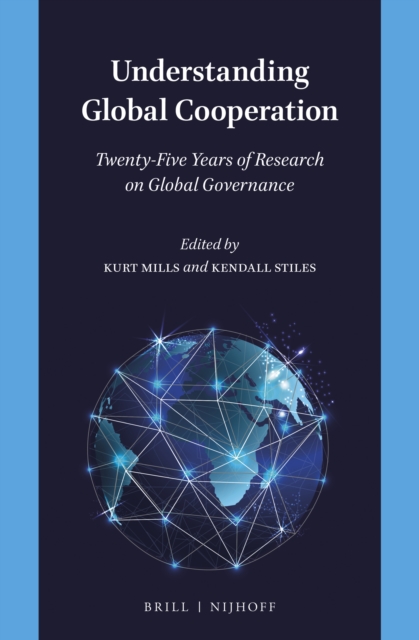
Understanding global cooperation : twenty-five years of research on global governance
This work is a collection of twenty-five articles previously published in Global Governance - one from each year of the journal's existence - highlighting some of the best work published in the journal, along with an Introduction by the two editors Kurt Mills and Kendall Stiles.
eBook