
Catalogue Search | MBRL


Are you sure you want to remove the book from the shelf?

{{itemTitle}}
1,849
result(s) for
"Mitchell, Gordon"
Sort by:

Automobility and the Anthropocene : the car as post-human
This work traces the evolution of cars from horsecars, carriages, and bicycles, and the influence of Henry Ford and Alfred P. Sloan on labour standards and consumer behaviours. As the car industry pushes high-tech autonomous or self-driving vehicles, it relies on futuristic fantasies and false promises.
BOOK

Inaugural Review Prize 2023: The exercise hyperpnoea dilemma: A 21st‐century perspective
During mild or moderate exercise, alveolar ventilation increases in direct proportion to metabolic rate, regulating arterial CO2 pressure near resting levels. Mechanisms giving rise to the hyperpnoea of exercise are unsettled despite over a century of investigation. In the past three decades, neuroscience has advanced tremendously, raising optimism that the ‘exercise hyperpnoea dilemma’ can finally be solved. In this review, new perspectives are offered in the hope of stimulating original ideas based on modern neuroscience methods and current understanding. We first describe the ventilatory control system and the challenge exercise places upon blood‐gas regulation. We highlight relevant system properties, including feedforward, feedback and adaptive (i.e., plasticity) control of breathing. We then elaborate a seldom explored hypothesis that the exercise ventilatory response continuously adapts (learns and relearns) throughout life and ponder if the memory ‘engram’ encoding the feedforward exercise ventilatory stimulus could reside within the cerebellum. Our hypotheses are based on accumulating evidence supporting the cerebellum's role in motor learning and the numerous direct and indirect projections from deep cerebellar nuclei to brainstem respiratory neurons. We propose that cerebellar learning may be obligatory for the accurate and adjustable exercise hyperpnoea capable of tracking changes in life conditions/experiences, and that learning arises from specific cerebellar microcircuits that can be interrogated using powerful techniques such as optogenetics and chemogenetics. Although this review is speculative, we consider it essential to reframe our perspective if we are to solve the till‐now intractable exercise hyperpnoea dilemma. What is the topic of this review? This review reframes our perspective on the control of breathing during mild or moderate exercise, emphasising concepts of learning, memory and plasticity. What advances does it highlight? We propose that exercise hyperpnoea continuously adapts to ever‐changing life conditions/experiences. We question if the memory ‘engram’ encoding exercise hyperpnoea resides within the cerebellum and outline powerful new methods to test this hypothesis. It is our hope that this review generates new ideas and renewed study of exercise hyperpnoea in the 21st century.
Journal Article


First case of chronic wasting disease in Europe in a Norwegian free‑ranging reindeer
Chronic wasting disease (CWD) is a fatal contagious prion disease in cervids that is enzootic in some areas in North America. The disease has been found in deer, elk and moose in the USA and Canada, and in South Korea following the importation of infected animals. Here we report the first case of CWD in Europe, in a Norwegian free-ranging reindeer in Southern Norway. The origin of the disease is unknown. Until now a low number of cervids, and among them a few reindeer, have been tested for CWD in Norway. Therefore the prevalence of CWD is unknown.
Journal Article

American art : selections from the Yale University Art Gallery
\"This volume presents an engaging selection of highlights and introduces readers to the richness and diversity of the Yale University Art Gallery's holdings of American art. An introductory essay outlines pivotal moments in the three-hundred-year history of collecting, exhibiting, and teaching with American art at Yale and commemorates the fiftieth anniversary of the founding of the Friends of American Arts at Yale, whose support continues to ensure the excellence of the collection. The more than one hundred object entries that follow create a narrative that charts the multiplicity of experiences and accomplishments of artists and artisans living and working in North America-- from the earliest days of European settlement to the present. Among the catalogued objects are works by some of the best-known names in American art as well as recent acquisitions and masterpieces that represent diverse American identities. A dazzling range of media is displayed, including paintings and sculpture, medals, prints and drawings, photographs, jewelry, furniture, and decorative arts. Each object is illustrated with a full-page image and is accompanied by a one-page discussion that focuses on its contribution to the history of American art.\"--Back cover.
Book

Global expansion of tropical cyclone precipitation footprint
Precipitation from tropical cyclones (TCs) can cause massive damage from inland floods and is becoming more intense under a warming climate. However, knowledge gaps still exist in changes of spatial patterns in heavy TC precipitation. Here we define a metric, DIST30, as the mean radial distance from centers of clustered heavy rainfall cells (> 30 mm/3 h) to TC center, representing the footprint of heavy TC precipitation. There is significant global increase in DIST30 at a rate of 0.34 km/year. Increases of DIST30 cover 59.87% of total TC impact areas, with growth especially strong in the Western North Pacific, Northern Atlantic, and Southern Pacific. The XGBoost machine learning model showed that monthly DIST30 variability is majorly controlled by TC maximum wind speed, location, sea surface temperature, vertical wind shear, and total water column vapor. TC poleward migration in the Northern Hemisphere contributes substantially to the DIST30 upward trend globally.
The tropical cyclone (TC) precipitation footprint has expanded globally. Interpretable machine learning reveals that this footprint is majorly controlled by TC wind speed, location, sea surface temperature, wind shear, and total water column vapor.
Journal Article
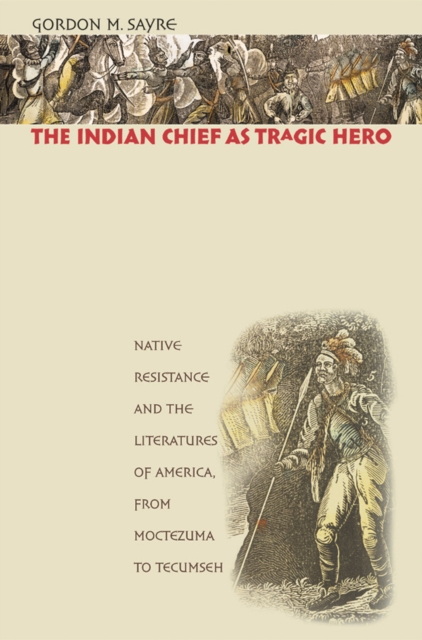
The Indian chief as tragic hero : native resistance and the literatures of America, from Moctezuma to Tecumseh
The leaders of anticolonial wars of resistance--Metacom, Pontiac, Tecumseh, and Cuauhtemoc--spread fear across the frontiers of North America. Yet once defeated, these men became iconic martyrs for postcolonial national identity in Canada, the United States, and Mexico. By the early 1800s a craze arose for Indian tragedy on the U.S. stage, such as John Augustus Stone's Metamora, and for Indian biographies as national historiography, such as the writings of Benjamin Drake, Francis Parkman, and William Apess.With chapters on seven major resistance struggles, including the Pueblo Revolt of 1680 and the Natchez Massacre of 1729, The Indian Chief as Tragic Hero offers an analysis of not only the tragedies and epics written about these leaders, but also their own speeches and strategies, as recorded in archival sources and narratives by adversaries including Hernan Cortes, Antoine-Simon Le Page du Pratz, Joseph Doddridge, Robert Rogers, and William Henry Harrison. Sayre concludes that these tragedies and epics about Native resistance laid the foundation for revolutionary culture and historiography in the three modern nations of North America, and that, at odds with the trope of the complaisant \"vanishing Indian,\" these leaders presented colonizers with a cathartic reproof of past injustices.
eBook

Acute intermittent hypoxia enhances corticospinal synaptic plasticity in humans
Acute intermittent hypoxia (AIH) enhances voluntary motor output in humans with central nervous system damage. The neural mechanisms contributing to these beneficial effects are unknown. We examined corticospinal function by evaluating motor evoked potentials (MEPs) elicited by cortical and subcortical stimulation of corticospinal axons and the activity in intracortical circuits in a finger muscle before and after 30 min of AIH or sham AIH. We found that the amplitude of cortically and subcortically elicited MEPs increased for 75 min after AIH but not sham AIH while intracortical activity remained unchanged. To examine further these subcortical effects, we assessed spike-timing dependent plasticity (STDP) targeting spinal synapses and the excitability of spinal motoneurons. Notably, AIH increased STDP outcomes while spinal motoneuron excitability remained unchanged. Our results provide the first evidence that AIH changes corticospinal function in humans, likely by altering corticospinal-motoneuronal synaptic transmission. AIH may represent a novel noninvasive approach for inducing spinal plasticity in humans.
Journal Article

Inequality in Beijing: A Spatial Multilevel Analysis of Perceived Environmental Hazard and Self-Rated Health
Environmental pollution is a major problem in China, subjecting people to significant health risk. Surprisingly little is known, though, about how these risks are distributed spatially or socially. Drawing on a large-scale survey conducted in Beijing in 2013, we examine how environmental hazards and health, as perceived by residents, are distributed at a fine (subdistrict) scale in urban Beijing and investigate the association between hazards, health, and geographical context. A Bayesian spatial multilevel logistic model is developed to account for spatial dependence in unobserved contextual influences (neighborhood effects) on health. The results reveal robust associations between exposure to environmental hazards and health. A unit decrease on a five-point Likert scale in exposure is associated with increases of 15.2 percent (air pollution), 17.5 percent (noise), and 9.3 percent (landfills) in the odds of reporting good health, with marginal groups including migrant workers reporting greater exposure. Health inequality is also evident and is associated with age, income, educational attainment, and housing characteristics. Geographical context (neighborhood features like local amenities) also plays a role in shaping the social distribution of health inequality. The results are discussed in the context of developing environmental justice policy within a Chinese social market system that experiences tension between its egalitarian roots and its pragmatic approach to tackling grand public policy challenges.
Journal Article
Microglia regulate motor neuron plasticity via reciprocal fractalkine and adenosine signaling
We report an important role for microglia in regulating neuroplasticity within phrenic motor neurons. Brief episodes of low oxygen (acute intermittent hypoxia; AIH) elicit a form of respiratory motor plasticity known as phrenic long-term facilitation (pLTF) that is regulated by the balance of competing serotonin
vs
adenosine-initiated cellular mechanisms. Serotonin arises from brainstem raphe neurons, but the source of adenosine is unknown. We tested if hypoxic episodes initiate phrenic motor neuron to microglia fractalkine signaling that evokes extracellular adenosine formation using a well-defined neurophysiology preparation in male rats. With moderate AIH, phrenic motor neuron adenosine 2A receptor activation undermines serotonin-dominant pLTF whereas severe AIH induces pLTF by the adenosine-dependent mechanism. Consequently, phrenic motor neuron fractalkine knockdown, microglial fractalkine receptor inhibition, and microglial ablation enhance moderate AIH, but suppress severe AIH-induced pLTF. We conclude, microglia play important roles in healthy spinal cords, regulating plasticity in motor neurons responsible for breathing.
The role of microglia in regulating spinal neuroplasticity is unknown. Here, the authors show that spinal microglia regulate plasticity in motor neurons that drive breathing through reciprocal fractalkine and adenosine signaling.
Journal Article