
Catalogue Search | MBRL


Are you sure you want to remove the book from the shelf?

{{itemTitle}}
19
result(s) for
"Mitchell, T. F. author"
Sort by:
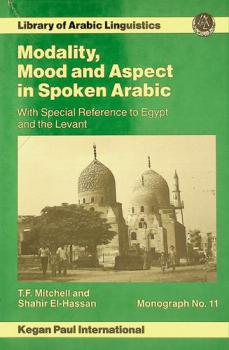
Modality, mood, and aspect in spoken Arabic : with special reference to Egypt and the Levant
This is the first full-length monograph derived from the Leeds University investigation into the structure of Educated Spoken Arabic which has so far been published. It would be difficult to underestimate the value of this corpus for the study of variation in modern Educated Spoken Arabic, since it is unique in its size, comprehensiveness and geographical representativeness, covering educated spoken usage in all the major population centres of the eastern Arab world, and drawing from a wide variety of contexts of use. The major contributions such studies can make to Arabic linguistics are two: synchronically, in showing just how much of the syntactic structure of modern Educated Spoken Arabic - however much morphological and lexical variation may divide one region from another - is in fact shared property; and, diachronically, if the degree of sharing of syntactic phenomena which cannot be plausibly derived from Classical Arabic turns out to be high (as from the present study it seems to be), is providing more evidence that ESA in fact represents a contemporary pan-Arab continuation of age-old shared spoken forms which were never identical with what we now call Classical Arabic, and which, through centuries of trade and constant contacts throughout the eastern Arab area, have continued to develop independently of it.
Book

Africa's Last Colonial Currency
Colonialism persists in many African countries due to the continuation of imperial monetary policy. This is the little-known account of the CFA Franc and economic imperialism. The CFA Franc was created in 1945, binding fourteen African states and split into two monetary zones. Why did French colonial authorities create it and how does it work? Why was independence not extended to monetary sovereignty for former French colonies? Through an exploration of the genesis of the currency and an examination of how the economic system works, the authors seek to answer these questions and more. As protests against the colonial currency grow, the need for myth-busting on the CFA Franc is vital and this exposé of colonial infrastructure proves that decolonisation is unfinished business.
eBook
The Unfavorable Result in Plastic Surgery
Highly Commended by the BMA Medical Book Awards for Surgery!
The Unfavorable Result in Plastic Surgery has been lauded as a classic text in plastic surgery, described by reviewers as \"an unforgettable masterpiece, \" \"an invaluable companion text, \" and \"a vast resource.\" Mimis Cohen co-authored the widely acclaimed third edition with the late Robert Goldwyn. Along with his esteemed coeditors and a cadre of prominent plastic surgeons, Dr. Cohen has produced an illuminating fourth edition. Embracing the book's original philosophy, \"Mistakes are often the best teachers, \" the updated text and videos are remarkable in their candor, yielding a vast number of lessons typically not shared in the literature.
In the first three sections, top experts discuss topics connected with plastic surgery complications including patient dissatisfaction, psychological aspects of cosmetic plastic surgery, legal/safety issues, the management of scars/redo surgery, infections, and wound management. Sections four through nine detail the treatment of specific procedural complications, challenges, secondary surgery, and avoidance of suboptimal outcomes. Experts in their respective subspecialties discuss alternative approaches and considerations in aesthetic plastic surgery, breast surgery, pediatric & craniofacial surgery, reconstructive plastic surgery for head & neck, body & lower extremity, hand & upper extremity, and burns.
Key Highlights
* Concise, easy-to-cross-reference text, evidence-based clinical pearls, and case presentations provide in-depth understanding on the prevention, recognition, and management of unfavorable results
* Preoperative, intraoperative, and postoperative surgical complications and risks
* Updated in full color with more than 3, 200 illustrations, including a bespoke outstanding artwork program
* More than 100 technical video clips posted in the Thieme MediaCenter deliver additional educational insights
The Unfavorable Result in Plastic Surgery: Avoidance and Management, Fourth Edition, is an essential reference for all plastic, aesthetic, and reconstructive surgeons and residents. It expands on the masterful legacy of the original and is certain to become a go-to, indispensable source of learning for future generations of plastic surgeons.
eBook
Essentials of Spinal Cord Injury
The definitive guide to putting spinal cord injury research into practice
Essentials of Spinal Cord Injury is written for the spinal cord injury (SCI) team and reflects the multidisciplinary nature of treating patients with SCI. It integrates emerging medical and surgical approaches to SCI with neuroanatomy, neurophysiology, neuroimaging, neuroplasticity, and cellular transplantation. This comprehensive yet concise reference will enable neurosurgeons, orthopedic surgeons, neurologists, and allied health professionals caring for SCI patients to translate research results into patient care. It is also an excellent resource for those preparing for the board exam in SCI medicine.
Key Features:
* Material is cross-referenced to highlight relationships between the different areas of SCI
* Chapters are concise, focused, and include key points, pearls, and pitfalls
* An Overview of the Literature table is provided in most chapters, giving readers a meaningful distillation of each publication referenced
* Each editor is a world-renowned expert in one of these core disciplines involved in the management of SCI patients: neurosurgery, orthopedic surgery, spinal cord science, and rehabilitative medicine
This is a must-have guide that all neurosurgeons, orthopedic surgeons, neurologists, and allied health professionals involved in the care of spinal cord injury patients should have on their bookshelf.
eBook
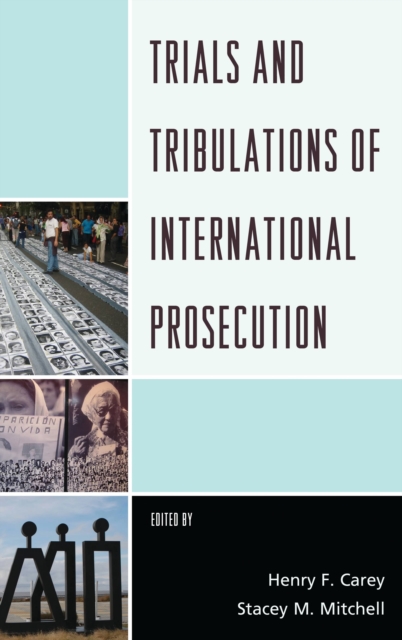
Trials and tribulations of international prosecution
There have been many political dilemmas that impose structural constraints on the effort to legalize, judicialize, and criminalize normatively deviant behavior in international politics. The annual costs of these tribunals has peaked at approximately
eBook

Franciscan Wealth
Originally published in Italian in 2004, Todeschini's studies highlight the relationship between the development of the Franciscan movement and medieval economic thinking and practice. While not the first economists the early Franciscans approached the marketplace out of their rigorous Christian religiosity and showed clearly the necessary connection between morality and business.
eBook
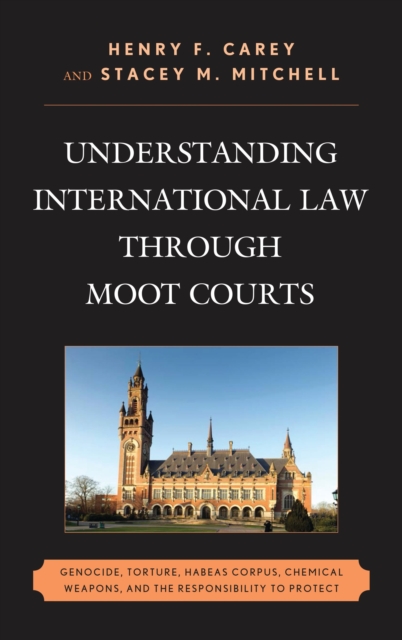
Understanding international law through moot courts
Understanding International Law through Moot Courts: Genocide, Torture, Habeas Corpus, Chemical Weapons, and the Responsibility to Protect consists of five sets of opposing legal briefs and judge’s decisions for five moot court cases held before the International Court of Justice and the International Criminal Court. Each moot court brief included in the book addresses contemporary controversies in international affairs; issues ranging from the application of the newly emerging Responsibility to Protect (R2P) doctrine, to the torture of detainees, to the derogation from international due process protections. These moot court briefs and case judgments help students formulate legal arguments that will be applicable to other similar cases. They also provide students with excellent sources of international and domestic law, as well as greater comprehension of topics ranging from jurisdictional disputes to matters of evidence. Chapter 1 of the book provides an overview of the book as well as instructions regarding the construction of a moot court. Chapter two, by George Andreopoulos discusses the interrelationship between human rights and international criminal law. Chapters 3 through 7 are the cases. The introduction to each chapter (and subsequently each case) lays out the facts of the case in question, discusses (where applicable) issues associated with the material and contextual elements of the crimes(s) in question, provides additional topics for classroom discussion, and also places the issues of contention between the parties within the broader context of foreign affairs and international relations. After each set of briefs and legal judgments is an appendix which includes an example moot court, as well as an appendix that includes a set of alterable facts that students and faculty could adopt to change the general legal argument of the particular case.
eBook

Mieres Reborn
Mieres Reborn reveals how patient observation and an analysis of one small community have much to tell us about human progress more generally. Not long ago Mieres, a village in the eastern foothills of the Pyrenees, seemed destined to die. As in countless thousands of rural communities around the world, young people in Mieres over the years have moved to the towns and cities, leaving behind abandoned fields and meadows, derelict houses, and their aging and disconsolate parents and grandparents. Close observation of this social microcosm over two decades reveals the capacity of ordinary people in a locality to reinvent themselves, reconstruct relationships with the wider world, and confront new threats to their collective survival. A. F. Robertson describes how the determination that Mieres should survive is most evident in a vigorous round of fiestas, fairs, and other public events in which natives, exiles, and newcomers work to create a lively sense of belonging. Since the 1980s, Mieres has been enlivened by a reverse flow of migrants from the cities, new settlers who have brought an infusion of youth to the community, devised new livelihoods, revitalized the village school, energized the native ”Mierencs,” and provided the impetus for a rediscovery of historical roots and political identity. The regeneration of life in the countryside, in part a reaction to urban expansion and decay, is a global phenomenon of increasing political, economic, and social significance.
eBook
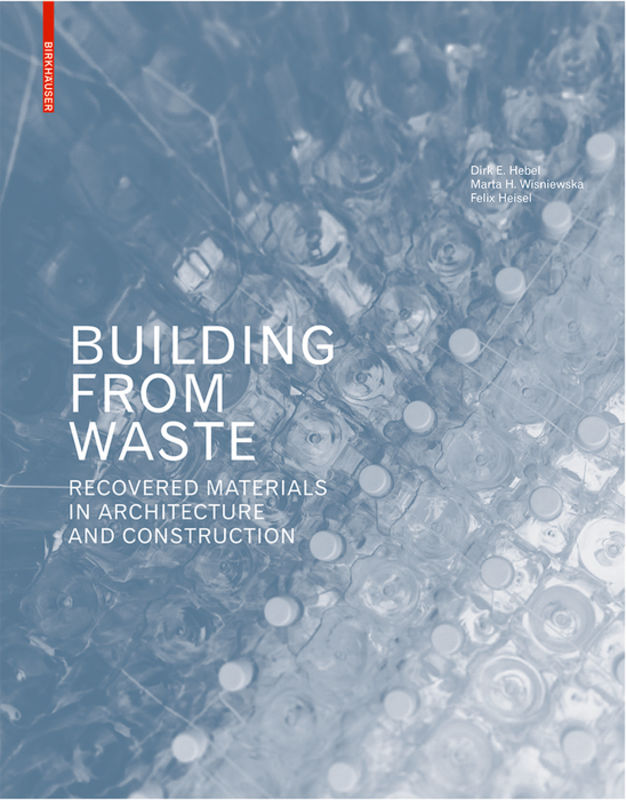
Building from Waste
\"Reduce, Reuse, Recycle, and Recover\" is the sustainable guideline that has replaced the \"Take, Make, Waste\" attitude of the industrial age. Based on their background at the ETH Zurich and the Future Cities Laboratory in Singapore, the authors provide both a conceptual and practical look into materials and products which use waste as a renewable resource. This book introduces an inventory of current projects and building elements, ranging from marketed products, among them façade panels made of straw and self-healing concrete, to advanced research and development like newspaper, wood or jeans denim used as isolating fibres. Going beyond the mere recycling aspect of reused materials, it looks into innovative concepts of how materials usually regarded as waste can be processed into new construction elements. The products are organized along the manufacturing processes: densified, reconfigured, transformed, designed and cultivated materials. A product directory presents all materials and projects in this book according to their functional uses in construction: load-bearing, self-supporting, insulating, waterproofing and finishing products.
eBook
Hack Proofing Sun Solaris 8
The only way to stop a hacker is to think like one!Sun Microsystem's venerable and well-respected operating system Solaris is currently in version 8, and runs on both Intel and Sun Hardware.Solaris is one of the most comprehensive and popular UNIX operating systems available.
eBook