
Catalogue Search | MBRL


Are you sure you want to remove the book from the shelf?

{{itemTitle}}
6
result(s) for
"Mitroff, Ian I., author"
Sort by:


Managing crisis before they happen
Egypt Air. Nike. The Intel Chip. Could these crises have been prevented? Maybe. Could they have been handled better? Definitely
Book

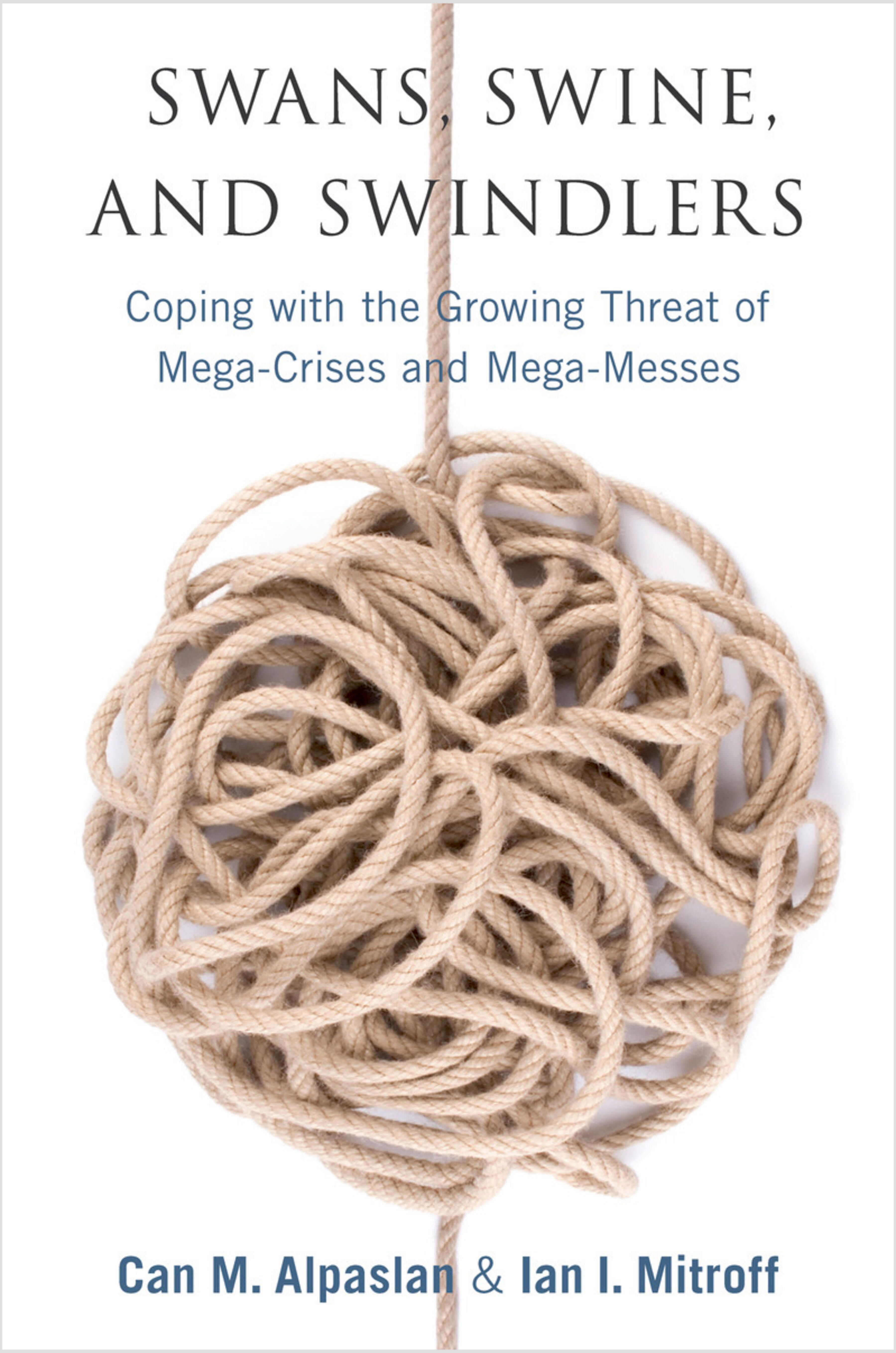
Swans, Swine, and Swindlers
Swans, Swine, and Swindlers addresses a core, contemporary question: What steps can we take to better anticipate and manage mega-crises, such as Haiti, Katrina, and 9/11? This book explores the concept of \"messes.\" A mess is a web of complex and dynamically interacting, ill-defined, and/or wicked problems; their solutions; and our conscious and unconscious assumptions, beliefs, emotions, and values. The roots of messes can be classified as Swans (the inability to surface and test false assumptions and mistaken beliefs), Swine (the inability to confront and manage greed, hubris, arrogance, and narcissism), and Swindlers (the inability to confront, detect, and stop unethical and corrupt behavior). Working systematically with this concept and these classifications, authors Can M. Alpaslan and Ian I. Mitroff reveal that all crises are messes; one must learn to understand and manage them as such. They then provide tools and frameworks that readers can use to more effectively deal with the crises of today and tomorrow. Drawing on ideas from research areas as diverse as human development, philosophy, rhetoric, psychology, and high reliability organizations, this book aims to be the definitive guide for a new era in crisis management. Therefore, it is a must-have for practitioners, scholars, and students who study and deal in real-life crises.
eBook

Managing crises before they happen : what every executive and manager needs to know about crisis management
Egypt Air. Nike. The Intel Chip. Could these crises have been prevented? Maybe. Could they have been handled better? Definitely.
eBook
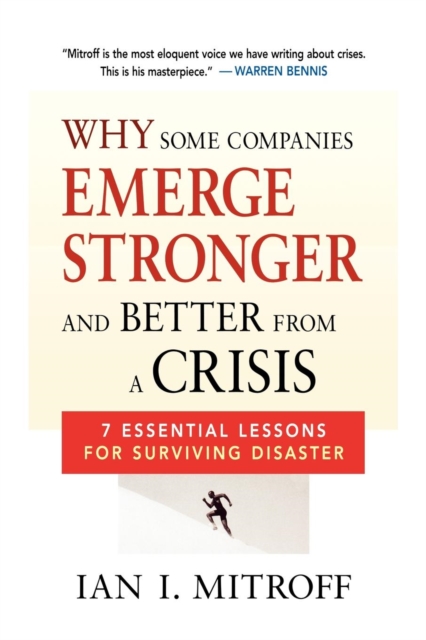
Why some companies emerge stronger and better from a crisis
There is a fundamental difference between business continuity planning and crisis management. Even a complete operational plan does little to prepare a company to come through a crisis with strength and confidence. According to Ian Mitroff, crises can (and will) now arise with unprecedented frequency, complexity, and destructive power, as what was once rare is now the norm: terrorism, cyberattacks, large-scale fraud, and kidnappings.
eBook