
Catalogue Search | MBRL


Are you sure you want to remove the book from the shelf?

{{itemTitle}}
124
result(s) for
"Mohamed, Ally"
Sort by:

M-libraries 4 : from margin to mainstream-mobile technologies transforming lives and libraries
Based on the proceedings of the Fourth International M-Libraries Conference held in Milton Keynes in 2012, this volume explores the variety of work that libraries are doing across the world to deliver resources to users, via a growing plethora of mobile and hand-held devices.
Book
Competency Profile of the Digital and Online Teacher in Future Education
As education progresses in the digital era and in the Fourth Industrial Revolution, learning will be adaptive and individualized to meet the needs of individual learners. This is possible because of emerging technology, artificial intelligence, and the internet of things. This study is making significant contribution to future education by identifying forces that are shaping education and developing a competency profile for the digital teacher of the future. The research conducted focus groups and interviews with education experts from six countries to identify the forces shaping education in the future and the competencies required by the digital teacher to function effectively. The Competency Profile for the Digital Teacher (CPDT) can be used to train and orient the digital teacher of the future.
Journal Article
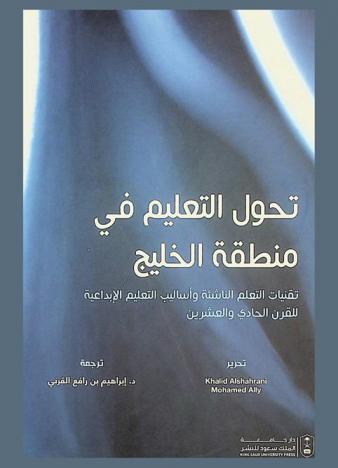
تحول التعليم في منطقة الخليج : تقنيات التعلم الناشئة وأساليب التعليم الإبداعية للقرن الحادي والعشرين
يعد هذا الكتاب مساهمة لسد الفجوة بين التعليم والتقنيات وأساليب التدريس ولا يقتصر دوره على مجال التقنيات فحسب بل يعد أيضا مرجعا حديثا للباحثين وللمختصين حول تطور استراتيجيات التعليم في دول الخليج العربي وشارك في هذا الكتاب نخبة من الجنسين مكونة من 22 أكاديميا من مختلف دول العالم عاصروا التعليم في السعودية والخليج بشكل عام حيث ساهموا عبر ستة عشر فصلا بعرض خلاصة تجربتهم الأكاديمية في التدريس باستخدام تقنيات التعليم الحديثة وطرائق التدريس الابداعية وبغية الوصول إلى تطبيق إجرائي لنتائج البحوث في تبني أفضل الممارسات للتحول وإحداث تغيير جذري في التعليم، من أجل إعداد الدارسين في منطقة الخليج للقرن الحادي والعشرين.
BOOK

Sub-national stratification of malaria risk in mainland Tanzania: a simplified assembly of survey and routine data
Background
Recent malaria control efforts in mainland Tanzania have led to progressive changes in the prevalence of malaria infection in children, from 18.1% (2008) to 7.3% (2017). As the landscape of malaria transmission changes, a sub-national stratification becomes crucial for optimized cost-effective implementation of interventions. This paper describes the processes, data and outputs of the approach used to produce a simplified, pragmatic malaria risk stratification of 184 councils in mainland Tanzania.
Methods
Assemblies of annual parasite incidence and fever test positivity rate for the period 2016–2017 as well as confirmed malaria incidence and malaria positivity in pregnant women for the period 2015–2017 were obtained from routine district health information software. In addition, parasite prevalence in school children (
Pf
PR
5to16
) were obtained from the two latest biennial council representative school malaria parasitaemia surveys, 2014–2015 and 2017. The
Pf
PR
5to16
served as a guide to set appropriate cut-offs for the other indicators. For each indicator, the maximum value from the past 3 years was used to allocate councils to one of four risk groups: very low (< 1%
Pf
PR
5to16
), low (1− < 5%
Pf
PR
5to16
), moderate (5− < 30%
Pf
PR
5to16
) and high (≥ 30%
Pf
PR
5to16
). Scores were assigned to each risk group per indicator per council and the total score was used to determine the overall risk strata of all councils.
Results
Out of 184 councils, 28 were in the very low stratum (12% of the population), 34 in the low stratum (28% of population), 49 in the moderate stratum (23% of population) and 73 in the high stratum (37% of population). Geographically, most of the councils in the low and very low strata were situated in the central corridor running from the north-east to south-west parts of the country, whilst the areas in the moderate to high strata were situated in the north-west and south-east regions.
Conclusion
A stratification approach based on multiple routine and survey malaria information was developed. This pragmatic approach can be rapidly reproduced without the use of sophisticated statistical methods, hence, lies within the scope of national malaria programmes across Africa.
Journal Article

Malaria infection and anemia status in under-five children from Southern Tanzania where seasonal malaria chemoprevention is being implemented
Malaria and anemia remain major public health challenges in Tanzania. Household socioeconomic factors are known to influence these conditions. However, it is not clear how these factors influence malaria transmission and anemia in Masasi and Nanyumbu Districts. This study presents findings on malaria and anemia situation in under-five children and its influencing socioeconomic factors in Masasi and Nanyumbu Districts, surveyed as part of an ongoing seasonal malaria chemoprevention operational study.
A community-based cross-sectional survey was conducted between August and September 2020. Finger-prick blood samples collected from children aged 3-59 months were used to test for malaria infection using malaria rapid diagnostic test (mRDT), thick smears for determination of asexual and sexual parasitemia, and thin smear for parasite speciation. Hemoglobin concentration was measured using a HemoCue spectrophotometer. A structured questionnaire was used to collect household socioeconomic information from parents/caregivers of screened children. The prevalence of malaria was the primary outcome. Chi-square tests, t-tests, and logistic regression models were used appropriately.
Overall mRDT-based malaria prevalence was 15.9% (373/2340), and was significantly higher in Nanyumbu (23.7% (167/705) than Masasi District (12.6% (206/1635), p<0.001. Location (Nanyumbu), no formal education, household number of people, household number of under-fives, not having a bed net, thatched roof, open/partially open eave, sand/soil floor, and low socioeconomic status were major risks for malaria infection. Some 53.9% (1196/2218) children had anemia, and the majority were in Nanyumbu (63.5% (458/705), p<0.001. Location (Nanyumbu), mRDT positive, not owning a bed net, not sleeping under bed net, open/partially open eave, thatched window, sex of the child, and age of the child were major risk factors for anemia.
Prevalence of malaria and anemia was high and was strongly associated with household socioeconomic factors. Improving household socioeconomic status is expected to reduce the prevalence of the conditions in the area.
Journal Article
Nationwide school malaria parasitaemia survey in public primary schools, the United Republic of Tanzania
Background
A nationwide, school, malaria survey was implemented to assess the risk factors of malaria prevalence and bed net use among primary school children in mainland Tanzania. This allowed the mapping of malaria prevalence at council level and assessment of malaria risk factors among school children.
Methods
A cross-sectional, school, malaria parasitaemia survey was conducted in 25 regions, 166 councils and 357 schools in three phases:
(
1) August to September 2014; (2) May 2015; and, (3) October 2015. Children were tested for malaria parasites using rapid diagnostic tests and were interviewed about household information, parents’ education, bed net indicators as well as recent history of fever. Multilevel mixed effects logistic regression models were fitted to estimate odds ratios of risk factors for malaria infection and for bed net use while adjusting for school effect.
Results
In total, 49,113 children were interviewed and tested for malaria infection. The overall prevalence of malaria was 21.6%, ranging from < 0.1 to 53% among regions and from 0 to 76.4% among councils. The malaria prevalence was below 5% in 62 of the 166 councils and above 50% in 18 councils and between 5 and 50% in the other councils. The variation of malaria prevalence between schools was greatest in regions with a high mean prevalence, while the variation was marked by a few outlying schools in regions with a low mean prevalence. Overall, 70% of the children reported using mosquito nets, with the highest percentage observed among educated parents (80.7%), low land areas (82.7%) and those living in urban areas (82.2%).
Conclusions
The observed prevalence among school children showed marked variation at regional and sub-regional levels across the country. Findings of this survey are useful for updating the malaria epidemiological profile and for stratification of malaria transmission by region, council and age groups, which is essential for guiding resource allocation, evaluation and prioritization of malaria interventions.
Journal Article
Simulating the council-specific impact of anti-malaria interventions: A tool to support malaria strategic planning in Tanzania
The decision-making process for malaria control and elimination strategies has become more challenging. Interventions need to be targeted at council level to allow for changing malaria epidemiology and an increase in the number of possible interventions. Models of malaria dynamics can support this process by simulating potential impacts of multiple interventions in different settings and determining appropriate packages of interventions for meeting specific expected targets.
The OpenMalaria model of malaria dynamics was calibrated for all 184 councils in mainland Tanzania using data from malaria indicator surveys, school parasitaemia surveys, entomological surveillance, and vector control deployment data. The simulations were run for different transmission intensities per region and five interventions, currently or potentially included in the National Malaria Strategic Plan, individually and in combination. The simulated prevalences were fitted to council specific prevalences derived from geostatistical models to obtain council specific predictions of the prevalence and number of cases between 2017 and 2020. The predictions were used to evaluate in silico the feasibility of the national target of reaching a prevalence of below 1% by 2020, and to suggest alternative intervention stratifications for the country.
The historical prevalence trend was fitted for each council with an agreement of 87% in 2016 (95%CI: 0.84-0.90) and an agreement of 90% for the historical trend (2003-2016) (95%CI: 0.87-0.93) The current national malaria strategy was expected to reduce the malaria prevalence between 2016 and 2020 on average by 23.8% (95% CI: 19.7%-27.9%) if current case management levels were maintained, and by 52.1% (95% CI: 48.8%-55.3%) if the case management were improved. Insecticide treated nets and case management were the most cost-effective interventions, expected to reduce the prevalence by 25.0% (95% CI: 19.7%-30.2) and to avert 37 million cases between 2017 and 2020. Mass drug administration was included in most councils in the stratification selected for meeting the national target at minimal costs, expected to reduce the prevalence by 77.5% (95%CI: 70.5%-84.5%) and to avert 102 million cases, with almost twice higher costs than those of the current national strategy. In summary, the model suggested that current interventions are not sufficient to reach the national aim of a prevalence of less than 1% by 2020 and a revised strategic plan needs to consider additional, more effective interventions, especially in high transmission areas and that the targets need to be revisited.
The methodology reported here is based on intensive interactions with the NMCP and provides a helpful tool for assessing the feasibility of country specific targets and for determining which intervention stratifications at sub-national level will have most impact. This country-led application could support strategic planning of malaria control in many other malaria endemic countries.
Journal Article
The use of routine health facility data for micro-stratification of malaria risk in mainland Tanzania
Background
Current efforts to estimate the spatially diverse malaria burden in malaria-endemic countries largely involve the use of epidemiological modelling methods for describing temporal and spatial heterogeneity using sparse interpolated prevalence data from periodic cross-sectional surveys. However, more malaria-endemic countries are beginning to consider local routine data for this purpose. Nevertheless, routine information from health facilities (HFs) remains widely under-utilized despite improved data quality, including increased access to diagnostic testing and the adoption of the electronic District Health Information System (DHIS2). This paper describes the process undertaken in mainland Tanzania using routine data to develop a high-resolution, micro-stratification risk map to guide future malaria control efforts.
Methods
Combinations of various routine malariometric indicators collected from 7098 HFs were assembled across 3065 wards of mainland Tanzania for the period 2017–2019. The reported council-level prevalence classification in school children aged 5–16 years (
Pf
PR
5–16
) was used as a benchmark to define four malaria risk groups. These groups were subsequently used to derive cut-offs for the routine indicators by minimizing misclassifications and maximizing overall agreement. The derived-cutoffs were converted into numbered scores and summed across the three indicators to allocate wards into their overall risk stratum.
Results
Of 3065 wards, 353 were assigned to the very low strata (10.5% of the total ward population), 717 to the low strata (28.6% of the population), 525 to the moderate strata (16.2% of the population), and 1470 to the high strata (39.8% of the population). The resulting micro-stratification revealed malaria risk heterogeneity within 80 councils and identified wards that would benefit from community-level focal interventions, such as community-case management, indoor residual spraying and larviciding.
Conclusion
The micro-stratification approach employed is simple and pragmatic, with potential to be easily adopted by the malaria programme in Tanzania. It makes use of available routine data that are rich in spatial resolution and that can be readily accessed allowing for a stratification of malaria risk below the council level. Such a framework is optimal for supporting evidence-based, decentralized malaria control planning, thereby improving the effectiveness and allocation efficiency of malaria control interventions.
Journal Article

Similar Prevalence of Plasmodium falciparum and Non-P. falciparum Malaria Infections among Schoolchildren, Tanzania
Achieving malaria elimination requires considering both Plasmodium falciparum and non–P. falciparum infections. We determined prevalence and geographic distribution of 4 Plasmodium spp. by performing PCR on dried blood spots collected within 8 regions of Tanzania during 2017. Among 3,456 schoolchildren, 22% had P. falciparum, 24% had P. ovale spp., 4% had P. malariae, and 0.3% had P. vivax infections. Most (91%) schoolchildren with P. ovale infections had low parasite densities; 64% of P. ovale infections were single-species infections, and 35% of those were detected in low malaria endemic regions. P. malariae infections were predominantly (73%) co-infections with P. falciparum. P. vivax was detected mostly in northern and eastern regions. Co-infections with >1 non–P. falciparum species occurred in 43% of P. falciparum infections. A high prevalence of P. ovale infections exists among schoolchildren in Tanzania, underscoring the need for detection and treatment strategies that target non–P. falciparum species.
Journal Article

Evaluating the impact of self-service cash deposit machines on the performance of commercial banks in Tanzania
This study aims to evaluate the impact of utilization of self-service cash deposit machines (SSCDMs) on the financial performance of Tanzanian commercial banks, focusing on key parameters like capital adequacy, asset quality, management quality, earning ability, and liquidity. The research, conducted over six years (2017–2022), utilizes a CAMEL analysis and combines secondary data review with primary data collected through interviews. Four commercial banks' audited financial statements serve as the primary data source. The findings indicate a mixed impact of SSCDM utilization on bank performance, with some banks experiencing positive effects on capital adequacy and liquidity ratios, while others show performance fluctuations. Overall, SSCDMs are found to enhance operational efficiency and convenience, attracting more customers and increasing deposit volumes. However, potential liquidity management challenges are noted. This study contributes valuable insights to the evolving Tanzanian banking sector, aiding policymakers and bank management in informed decision-making regarding self-service banking technologies
.
Graphical abstract
Journal Article