
Catalogue Search | MBRL


Are you sure you want to remove the book from the shelf?

{{itemTitle}}
34
result(s) for
"Mol, Angus A.A."
Sort by:

Finding the fun: Towards a playful archaeology
Games and other forms of play are core human activities, as vitally constitutive of cultural and social practices in the past as they are today. Consequently, play, games and fun should be central in archaeological theory, but our review shows they are anything but. Instead, very few studies deal with these concepts at all, and most of those that do focus on how the affordances play offers link it to ritual, power or other ‘more serious’ phenomena. Here, we offer an explanation as to why play has taken such a backseat in archaeological thought and practice, relating it to the ambivalent aesthetics of having fun with the past in our own discipline. Building on our own playful practices and those of other scholars in the ancient board gaming and archaeogaming communities, we propose a move towards a more playful archaeology, which can provide us with a new window into the past as well as into our own professional practices.
Journal Article

Stage of encounters: migration, mobility and interaction in the pre-colonial and early colonial Caribbean
The Caribbean Sea was centre stage in the earliest, sustained encounters between the New and Old Worlds, heralding the mass movement of people, goods and ideas between two previously unconnected parts of the world. The repercussions of this are woven into the fabric of modern multi-ethnic Caribbean society. However, our current understanding of this important chapter in world history is skewed due to large shortfalls in our knowledge of indigenous agencies in these encounters. A trans-disciplinary field of research, based on the synergy of archaeological and network approaches towards local contexts, provides fresh insights into how indigenous agency developed during these encounters, particularly in terms of migration, mobility and interaction dynamics. The present article illustrates how four indigenous Caribbean communities (re-)negotiated, adapted and integrated their multi-scalar social networks prior to and in the course of the different phases of the colonization process.
Journal Article

Remotely Local: Ego-networks of Late Pre-colonial (AD 1000-1450) Saba, North-eastern Caribbean
Ego-networks, based on a socio-metric method for the analysis of the direct social relations an individual engages in, of archaeological site assemblages may be used to great effect in archaeology. They provide a means to combine multi-scalar and multidisciplinary data and thereby explore sites as a nexus of material relations. This paper outlines how such a site ego-network could be constructed. This is illustrated using the fourteenth century site of Kelbey's Ridge 2, Saba, in the North-eastern Caribbean.Kelbey's Ridge 2 is an interesting case study since it was likely a newly established, but also short-lived settlement. The reason for settlement may have been that, even if the island of Saba was relatively poor in terrestrial resources, it had a geographically strategic location and access to rich marine resources. Intra-site features at the site evidence a complex set of relations between house spaces and living and deceased members of the community. Additionally, the site's engagement with the wider island world is reflective of a transitional moment for communities in the late pre-colonial North-eastern Caribbean. A betweenness analysis of its ego-network provides a new perspective of Kelbey's Ridge 2, pinpointing material practices and objects that must have been crucial for the viability and identity of the community. This case study shows that ego-networks may be profitably used alongside current archaeological relational theories, substantive studies of site assemblages and other archaeological network approaches.
Journal Article
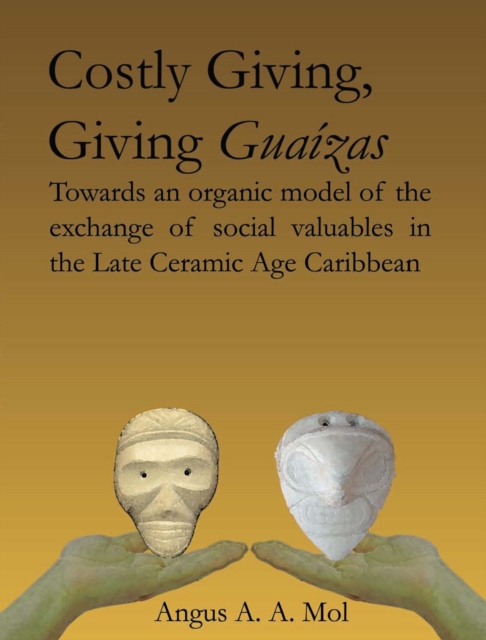
Costly Giving, Giving Guaizas : Towards An Organic Model Of The Exchange Of Social Valuables In The Late Ce
An Archaeology of Exchange is primarily an archaeology of human sociality and anti-sociality. Nevertheless, archaeological studies of exchange are numerous and varied, and archaeologists do not always approach exchange as a social mechanism, concentrating rather on the cultural, economic or political implications of exchange. Even so, at times it is worth retracing the implicit theoretical steps that archaeologists have taken and look at human sociality through the eyes of exchange as something new. This is undertaken here by concentrating on the exchange of social valuables in the later part of the Late Ceramic Age of the Greater and Lesser Antilles (AD 1000/1100-1492). Questions concerning this exchange are framed in a novel mix of theories such as Costly Signalling Theory coupled with the paradox of keeping-while-giving and the notion of gene/culture co-evolution joined with Complex Adaptive System theory. All these theories can be related back to the concept of exchange as put forward by the French sociologist Marcel Mauss in his famous \"Essai sur le don\" of 1950. This theoretical framework is put to the test by an extensive case-study of a specific category of Late Ceramic Age social valuables, shell faces, which have an area of distribution that ranges from central Cuba to the Ile de Ronde in the Grenadines. The study of these enigmatic artefacts provides new insights into the nature and use of social valuables by communities and individuals in the Late Ceramic Age.
eBook

From the Stone Age to the Information Age
Video games are one of today's quintessential media and cultural forms, but they also have a surprising and many-sided relation with the past (Morgan 2016). This certainly holds true for Sid Meier's Civilization (MicroProse & Firaxis Games 1991–2016), which is a series of turn-based, strategy video games in which you lead a historic civilization “from the Stone Age to the Information Age” (Civilization ca. 2016). Sid Meier's Civilization VI , the newest iteration of the series developed by Firaxis and released on October 21, 2016, allows players to step into the shoes of idealized political figures such as Gilgamesh, Montezuma, Teddy Roosevelt, and Gandhi. Via these and other leaders, you aim to achieve supremacy over all other civilizations. This is done through founding cities, creating infrastructure, building armies, conducting diplomacy, spreading culture and religion, and choosing “technologies” and “civics”—philosophical or ideological breakthroughs—for your civilization to focus on.
Journal Article
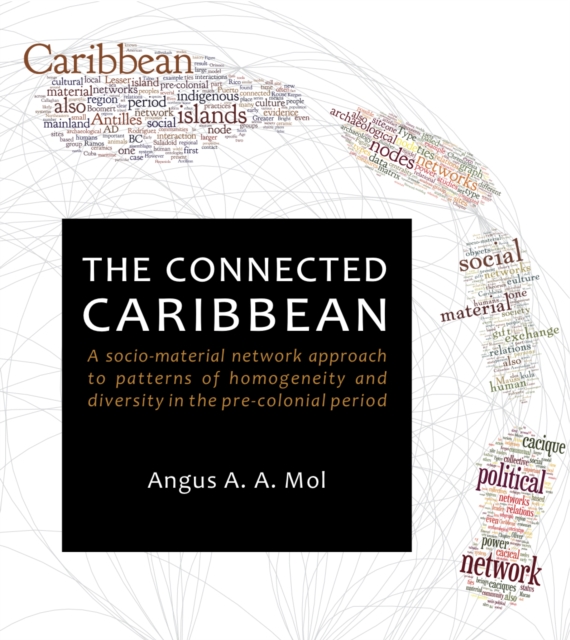
The Connected Caribbean
The modern-day Caribbean is a stunningly diverse but also intricately interconnected geo-cultural region, resulting partly from the islands shared colonial histories and an increasingly globalizing economy. Perhaps more importantly, before the encounter between the New and Old World took place, the indigenous societies and cultures of the pre-colonial Caribbean were already united in diversity. This work seeks to study the patterns of this pre-colonial homogeneity and diversity and uncover some of their underlying processes and dynamics.In contrast to earlier studies of its kind, this study adopts an archaeological network approach, in part derived from the network sciences. In archaeology, network approaches can be used to explore the complex relations between objects, sites or other archaeological features, and as such represents a powerful new tool for studying material culture systems. Archaeological research in general aims to uncover the social relations and human interactions underlying these material culture systems. Therefore, the interdependencies between social networks and material culture systems are another major focus of this study.This approach and theoretical framework is tested in four case studies dealing with lithic distribution networks, site assemblages as ego-networks, indigenous political networks, and the analysis of artefact styles in 2-mode networks. These were selected for their pertinence to key research themes in Caribbean archaeology, in particular the current debates about the nature of ties and interactions between culturally different communities in the region, and the structure and dynamics of pre-colonial socio-political organisation. The outcomes of these case studies show that archaeological network approaches can provide surprising new insights into longstanding questions about the patterns of pre-colonial
connectivity in the region.
eBook

The Gift of the « Face of the Living »: Shell faces as social valuables in the Caribbean Late Ceramic Age
The Gift of the « Face of the Living »: Shell faces as social valuables in the Caribbean Late Ceramic Age. The peoples of the Caribbean Late Ceramic Age (AD 600/800-1492) were in contact through intensive and extensive exchange networks. This article takes a close look at the social mechanism behind one of these networks, which consists of face-depicting shell discs or cones. This is done from a gift-theoretical framework that focuses on aspects of alienability/inalienability of these shell faces in a specifically Caribbean setting. These artefacts are characterized from the indigenous concept of guaízas – « faces of the living » – as understood from ethnohistoric sources. After treating their iconography and giving an overview of their archaeological and socio-cultural contexts the discussion will focus on alienable and inalienable qualities of these artefacts. Finally, « shell faces as guaízas » will be used in an argument in which they figure as social valuables that are used to control extra-communal Others.
Journal Article

Costly Giving, Giving Guaízas
An Archaeology of Exchange is primarily an archaeology of human sociality and anti-sociality. Nevertheless, archaeological studies of exchange are numerous and varied, and archaeologists do not always approach exchange as a social mechanism, concentrating rather on the cultural, economic or political implications of exchange. Even so, at times it is worth retracing the implicit theoretical steps that archaeologists have taken and look at human sociality through the eyes of exchange as something new. This is undertaken here by concentrating on the exchange of social valuables in the later part of the Late Ceramic Age of the Greater and Lesser Antilles (AD 1000/1100-1492). Questions concerning this exchange are framed in a novel mix of theories such as Costly Signalling Theory coupled with the paradox of keeping-while-giving and the notion of gene/culture co-evolution joined with Complex Adaptive System theory. All these theories can be related back to the concept of exchange as put forward by the French sociologist Marcel Mauss in his famous \"Essai sur le don\" of 1950. This theoretical framework is put to the test by an extensive case-study of a specific category of Late Ceramic Age social valuables, shell faces, which have an area of distribution that ranges from central Cuba to the Ile de Ronde in the Grenadines. The study of these enigmatic artefacts provides new insights into the nature and use of social valuables by communities and individuals in the Late Ceramic Age.
eBook