
Catalogue Search | MBRL


Are you sure you want to remove the book from the shelf?

{{itemTitle}}
4
result(s) for
"Monosson, Emily, author"
Sort by:

Blight : fungi and the coming pandemic
\"A prescient warning about the mysterious and deadly world of fungi-and how to avert further loss across species, including our own. Fungi are everywhere. Most are harmless; some are helpful. A few are killers. Collectively, infectious fungi are the most devastating agents of disease on earth, and a fungus that can persist in the environment without its host is here to stay. In Blight, Emily Monosson documents how trade, travel, and a changing climate are making us all more vulnerable to invasion. Populations of bats, frogs, and salamanders face extinction. In the Northwest, America's beloved national parks are covered with the spindly corpses of whitebark pines. Food crops are under siege, threatening our coffee, bananas, and wheat-and, more broadly, our global food security. Candida auris, drug-resistant and resilient, infects hospital patients and those with weakened immune systems. Coccidioides, which lives in drier dusty regions, may cause infection in apparently healthy people. The horrors go on. Yet prevention is not impossible. Tracing the history of fungal spread and the most recent discoveries in the field, Monosson meets scientists who are working tirelessly to protect species under threat, and whose innovative approaches to fungal invasion have the potential to save human lives. Delving into case studies at once fascinating, sobering, and hopeful, Blight serves as a wake-up call, a reminder of the delicate interconnectedness of the natural world, and a lesson in seeing life on our planet with renewed humility and awe\"-- Provided by publisher.
Book
Natural Defense
For more than a century, we have relied on chemical cures to keep our bodies free from disease and our farms free from bugs and weeds. We rarely consider human and agricultural health together, but both are based on the same ecology, and both are being threatened by organisms that have evolved to resist our antibiotics and pesticides. Patients suffer from C.diff, a painful, potentially lethal gut infection associated with multiple rounds of antibiotics; orange groves rot from insect-borne bacteria; and the blight responsible for the Irish potato famine outmaneuvers fungicides. Our chemicals are failing us.
Fortunately, scientists are finding new solutions that work with, rather than against, nature. Emily Monosson explores science's most innovative strategies, from high-tech gene editing to the ancient practice of fecal transplants. There are viruses that infect and bust apart bacteria; vaccines engineered to better provoke our natural defenses; and insect pheromones that throw crop-destroying moths into a misguided sexual frenzy. Some technologies will ultimately fizzle; others may hold the key to abundant food and unprecedented health. Each represents a growing understanding of how to employ ecology for our own protection.
Monosson gives readers a peek into the fascinating and hopeful world of natural defenses. Her book is full of optimism, not simply for particular cures, but for a sustainable approach to human welfare that will benefit generations to come.
eBook

Unnatural Selection
Gonorrhea.Bed bugs.Weeds.Salamanders.People.All are evolving, some surprisingly rapidly, in response to our chemical age.In Unnatural Selection , Emily Monosson shows how our drugs, pesticides, and pollution are exerting intense selection pressure on all manner of species.And we humans might not like the result.
eBook
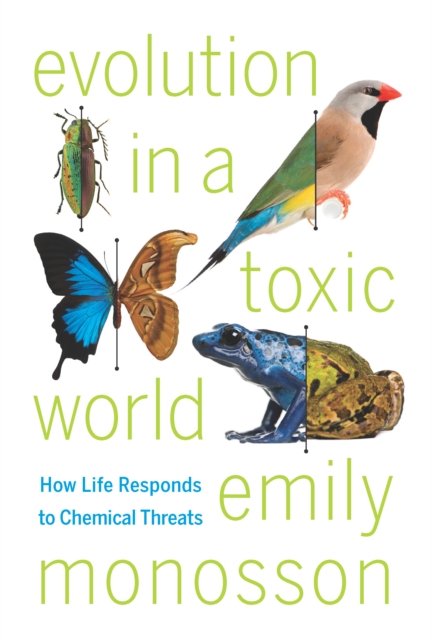
Evolution in a toxic world : how life responds to chemical threats
With BPA in baby bottles, mercury in fish, and lead in computer monitors, the world has become a toxic place. But as Emily Monosson demonstrates in her groundbreaking new book, it has always been toxic. When oxygen first developed in Earth's atmosphere, it threatened the very existence of life: now we literally can't live without it. According to Monosson, examining how life adapted to such early threats can teach us a great deal about today's (and tomorrow's) most dangerous contaminants. While the study of evolution has advanced many other sciences, from conservation biology to medicine, the field of toxicology has yet to embrace this critical approach.
In Evolution in a Toxic World, Monosson seeks to change that. She traces the development of life's defense systems—the mechanisms that transform, excrete, and stow away potentially harmful chemicals—from more than three billion years ago to today. Beginning with our earliest ancestors' response to ultraviolet radiation, Monosson explores the evolution of chemical defenses such as antioxidants, metal binding proteins, detoxification, and cell death.
As we alter the world's chemistry, these defenses often become overwhelmed faster than our bodies can adapt. But studying how our complex internal defense network currently operates, and how it came to be that way, may allow us to predict how it will react to novel and existing chemicals. This understanding could lead to not only better management and preventative measures, but possibly treatment of current diseases. Development of that knowledge starts with this pioneering book.
eBook