Catalogue Search | MBRL


Are you sure you want to remove the book from the shelf?

{{itemTitle}}
3
result(s) for
"Montaigne, Michel de, 1533-1592. Essais"
Sort by:
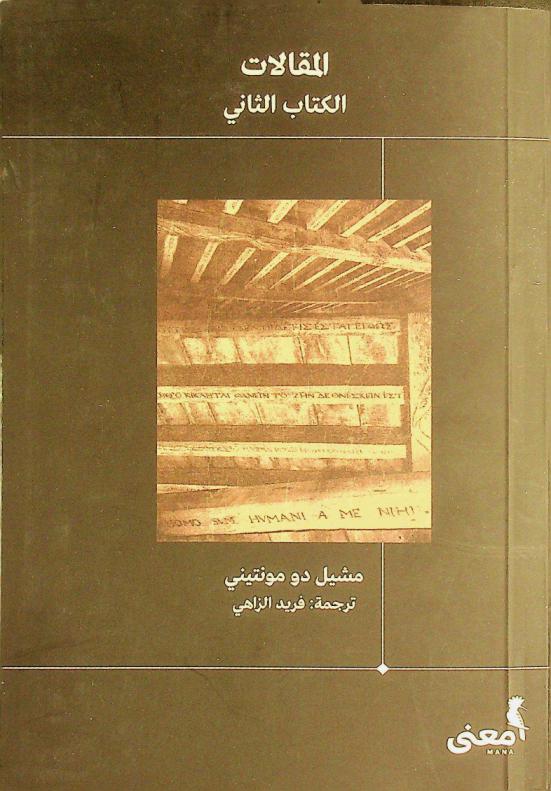
مقالات
يتناول كتاب (مقالات) والذي قام بتأليفه (ميشيل دي مونتاني) في حوالي (368) صفحة من القطع المتوسط موضوع (الأدب الفرنسي) مستعرضا المحتويات التالية : الفصل الأول وهو بعنوان قد نصل بطرق مختلفة إلى نتيجة واحدة، والفصل الثاني وهو بعنوان عن الحزن، والفصل الثالث وهو بعنوان إن انفعالاتنا تبقى من بعدنا، والفصل الرابع وهو بعنوان كيف نلقي اللوم على أسباب واهية ؟، والفصل الخامس وهو بعنوان هل ينبغي على القائد المحاصر أن يخرج للتفاوض ؟، والفصل السادس وهو بعنوان لا تخلو ساعة المفاوضات من الخطر، والفصل السابع وهو بعنوان إنما الأعمال بالنيات، والفصل الثامن وهو بعنوان عن الفراغ، والفصل التاسع وهو بعنوان عن الكذابين، والفصل العاشر وهو بعنوان عن الرد السريع والرد البطئ، وغيرها من الفصول.
Book

After Montaigne
Writers of the modern essay can trace their chosen genre all the way back to Michel de Montaigne (1533-92). But save for the recent notable best sellerHow to Live: A Life of Montaigneby Sarah Bakewell, Montaigne is largely ignored.After Montaigne-a collection of twenty-four new personal essays intended as tribute-aims to correct this collective lapse of memory and introduce modern readers and writers to their stylistic forebear.Though it's been over four hundred years since he began writing his essays, Montaigne's writing is still fresh, and his use of the form as a means of self-exploration in the world around him reads as innovative-even by modern standards. He is, simply put, the writer to whom all essayists are indebted. Each contributor has chosen one of Montaigne's 107 essays and has written his/her own essay of the same title and on the same theme, using a quote from Montaigne's essay as an epigraph. The overall effect is akin to a covers album, with each writer offering his or her own interpretation and stylistic verve to Montaigne's themes in ways that both reinforce and challenge the French writer's prose, ideas, and forms. Featuring a who's who of contemporary essayists,After Montaigneoffers astartling engagement with Montaigne and the essay form while also pointing the way to the genre's potential new directions.
eBook