
Catalogue Search | MBRL


Are you sure you want to remove the book from the shelf?

{{itemTitle}}
17
result(s) for
"Moore, Patrick author"
Sort by:


Astronomy with a Budget Telescope
In its Second Edition, this complete guide to buying and using a low-cost amateur astronomical telescope updates computer controls, digital cameras, dropping prices and rising quality of devices. Offers reviews and test reports on available budget telescopes.
eBook


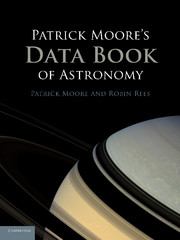
Patrick Moore's Data Book of Astronomy
Packed with up-to-date astronomical data about the Solar System, our Galaxy and the wider Universe, this is a one-stop reference for astronomers of all levels. It gives the names, positions, sizes and other key facts of all the planets and their satellites; discusses the Sun in depth, from sunspots to solar eclipses; lists the dates for cometary returns, close-approach asteroids, and significant meteor showers; and includes 88 star charts, with the names, positions, magnitudes and spectra of the stars, along with key data on nebulae and clusters. Full of facts and figures, this is the only book you need to look up data about astronomy. It is destined to become the standard reference for everyone interested in astronomy.
eBook
NY should step up crystal meth curbs
For public health reasons, New York has focused thus far on the impact of crystal meth on the gay community. And it is true that crystal has been a major factor in rising HIV rates for gay men. As for younger gay men, they are largely disconnected from the history of the AIDS crisis because of a generational disconnect in the gay community. Though they watch neutered versions of themselves on television, young gay men do not have many opportunities to discuss the reality of their sexual desires and are left with seeing sex as either monogamous marriage or shameful promiscuity. These programs exist and could be quickly implemented in New York. If they were, New York would be able to deal not only with the risk crystal represents to gay men but also to plan for the near future. In California, crystal use is spreading far beyond the stereotype of gay party boys; the drug is taking hold among lawyers, construction workers, media executives and factory workers of all genders and sexual preferences.
Newspaper Article

Gay vote as illusion: What does it mean?
[John Kerry] is supportive of gay issues but appears to have made a calculated decision that moderate swing voters are more important than the nearly 3 million gay votes [Al Gore] received in the last election. Because of the dismal options they face, it is assumed that gay voters will follow Kerry even if he abandons their most popular cause. It is as if [George Bush] announced his support for late-term abortion while trying to reassure Christian Conservatives that he supported their agenda.
Newspaper Article
Must Asexuality Be the Price of Gay Assimilation?
Marriage is a problematic goal in terms of gay sexuality. It doesn't exactly deny sexuality, but it does seek to tame it. Yet the monogamous ideal enshrined in marriage is a challenge regardless of one's sexual orientation. With the Census Bureau reporting that divorce rates are climbing and new marriages decreasing, it seems that gays are fighting to get into a burning house. If the legalization of gay marriage is achieved, will homosexuals be further marginalized if they can't or won't conform to a heterosexual ideal that even straight people can't meet? Careful polling would help answer the question of whether marriage is even a widely shared goal within the gay community. Many gays will breathe a sigh of relief at the idea that gay life is no longer defined solely by sex. And marriage may be a noble goal for some. But in redefining what it means to be gay in America, the gay community itself is on the verge of marginalizing those who refuse to conform to a system of heterosexual morality. The logic underlying a desexualized gay assimilation is understandable - straight Americans can identify with gay people who fulfill the roles of spouse, friend, parent, caretaker, soldier and consumer. But what does the future hold for gay Americans who don't have an interest in or the ability to play these roles according to the script? Leaving them isolated is too high a price for assimilation.
Newspaper Article
AIDS is not just a foreign crisis, Rural parts of U.S. have severe problems with HIV virus that require same response as that given to Africa
Perhaps the largest systemic problem that has led to a crisis in HIV treatment in this country is the failure of the American health care system. In poor, rural areas of the United States, 40 percent of residents live without private health insurance. These areas also lack the AIDS care organizations that provide support to poor people with AIDS in urban settings. When combined with a growing shortage of physicians and hospitals in rural America, people facing a serious disease like AIDS live in dire conditions. Waiting lists for even basic HIV medications, which are provided by the federal AIDS Drug Assistance Program, persist in Arkansas, Alabama, Kentucky and West Virginia - even while these medications are beginning to be distributed in Africa. Yet these problems go unaddressed. We Americans have short attention spans, and we've tired of dealing with AIDS domestically. It is far easier to wring our hands about foreign plagues than to face the problems in our own backyard. None of this is to argue that we should decrease funding to AIDS programs in Africa. In fact, we can have greater compassion for Africa if we understand that this disease remains a crisis at home as well. When that awareness is achieved, we can be proud to say America is Africa.
Newspaper Article
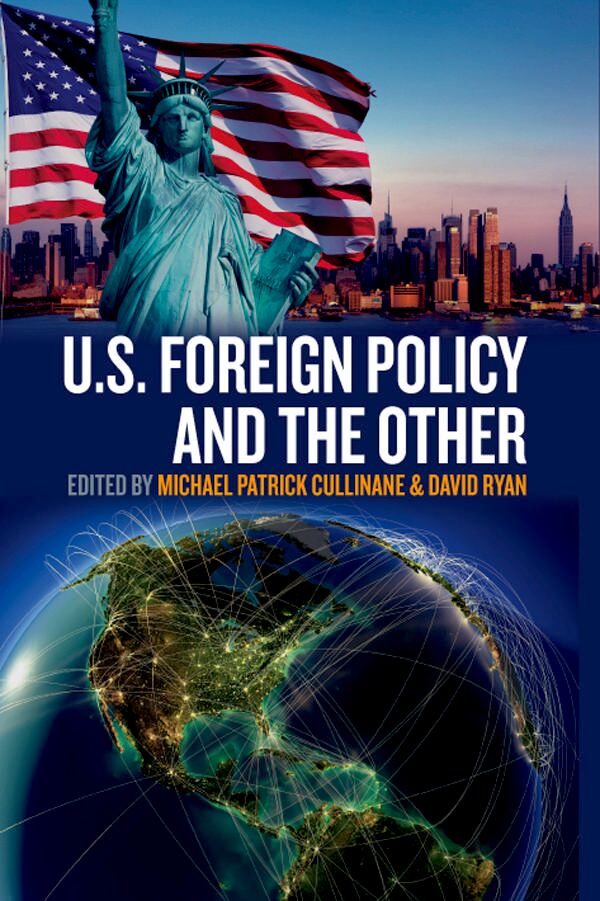
U.S. foreign policy and the other
John Quincy Adams warned Americans not to search abroad for monsters to destroy, yet such figures have frequently habituated the discourses of U.S. foreign policy. This collection of essays focuses on counter-identities in American consciousness to explain how foreign policies and the discourse surrounding them develop. Whether it is the seemingly ubiquitous evil of Hitler during World War II or the more complicated perceptions of communism throughout the Cold War, these essays illuminate the cultural contexts that constructed rival identities. The authors challenge our understanding of \"others,\" looking at early applications of the concept in the eighteenth century to recent twenty-first century conflicts, establishing how this phenomenon is central to decision making through centuries of conflict.
eBook