
Catalogue Search | MBRL


Are you sure you want to remove the book from the shelf?

{{itemTitle}}
400
result(s) for
"Morgan, Luke"
Sort by:


LEAVE YOUR GUNS AT HOME: THE CONSTITUTIONALITY OF A PROHIBITION ON CARRYING FIREARMS AT POLITICAL DEMONSTRATIONS
Armed protest has long been a tool of American political groups. Neo-Nazis, socialists, fascists, antifascists, the Black Panthers, neo-Confederates, and others have all taken up arms not necessarily to do violence, but to do politics. But such protests always risk rending a violent hole in our social fabric. If war is politics by other means, armed protests erase the distinction. This Note argues that the Constitution's relevant guarantees of individual rights—the First and Second Amendments—do not include a constitutional right to armed protest. With respect to free speech, it is unlikely that current doctrine would cover armed protests. But, considering ongoing First Amendment expansion, this Note argues for a categorical exclusion of guns, and perhaps other express constitutional guarantees, from expressive conduct doctrine. As for the Second Amendment, armed protest is not within the historically understood scope of the right to keep and bear arms. More importantly, though, Heller's \"sensitive places\" exception recognizes a fundamental reality about the relationship between the First and Second Amendments: the Second Amendment must cede certain arenas—churches, government buildings, schools, theaters, protests, and the like—to the First. Instruments of violence cannot be permitted to distort outcomes in the marketplace of ideas.
Journal Article
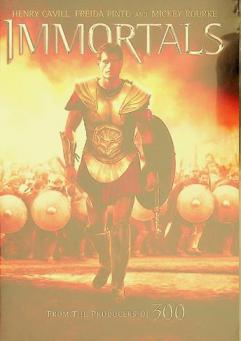
Immortals
\"In this epic tale of vengeance and destiny, power-mad King Hyperion ... threatens to destroy all of humanity on his maniacal quest to obtain the ultimate weapon - the legendary Epirus Bow that gives the power to unleash war on both Heaven and Earth. But Theseus ..., a heroic young villager chosen by the gods, rises up to stop Hyperion's brutal rampage. With supernatural help from the beautiful oracle Phaedra ..., Theseus embraces his destiny and leads a fierce band of warriors in a desperate fight for the future of mankind\"--Container.
DVD

The Monster in the Garden
Monsters, grotesque creatures, and giants were frequently depicted in Italian Renaissance landscape design, yet they have rarely been studied. Their ubiquity indicates that gardens of the period conveyed darker, more disturbing themes than has been acknowledged.In The Monster in the Garden, Luke Morgan argues that the monster is a key figure in Renaissance culture. Monsters were ciphers for contemporary anxieties about normative social life and identity. Drawing on sixteenth-century medical, legal, and scientific texts, as well as recent scholarship on monstrosity, abnormality, and difference in early modern Europe, he considers the garden within a broader framework of inquiry. Developing a new conceptual model of Renaissance landscape design, Morgan argues that the presence of monsters was not incidental but an essential feature of the experience of gardens.
eBook

Measurement of Fumonisins in Maize Using a Portable Mass Spectrometer
Fumonisins are a group of mycotoxins that routinely contaminate maize. Their presence is monitored at multiple stages from harvest to final product. Immunoassays are routinely used to screen commodities in the field while laboratory-based methods, such as mass spectrometry (MS), are used for confirmation. The use of a portable mass spectrometer unlocks the potential to conduct confirmatory analyses outside of traditional laboratories. Herein, a portable mass spectrometer was used to measure fumonisins in maize. Samples were extracted with aqueous methanol, cleaned up on an immunoaffinity column, and tested with the portable MS. The limits of detection were 0.15, 0.19, and 0.28 mg/kg maize for fumonisins B1 (FB1), FB2/FB3, and total fumonisins, respectively. The corresponding limits of quantitation in maize were 0.33, 0.59, and 0.74 mg/kg. Recoveries ranged from 93.6% to 108.6%. However, RSDs ranged from 12.0 to 29.8%. The method was applied to the detection of fumonisins in 64 samples of maize collected as part of the Illinois Department of Agriculture’s monitoring program. Good correlations were observed between the portable MS and a laboratory-based LC-MS method (r2 from 0.9132 to 0.9481). Results suggest the portable MS can be applied to the measurement of fumonisins in maize at levels relevant to international regulations.
Journal Article

The monster in the garden: reframing Renaissance landscape design
Monsters, grotesque creatures and giants were frequently depicted in Italian Renaissance landscape design, yet they have rarely been studied. Their ubiquity indicates that gardens of the period conveyed darker, more disturbing themes that has been acknowledged. In this book, Luke Morgan argues that the monster is a key figure in Renaissance culture. Monsters were ciphers for contemporary anxieties about normative social life and identity. Drawing on 16th-century medical, legal and scientific texts, as well as recent scholarship on monstrosity, abnormality, and difference in early modern Europe, he considers the gardne within a broader framework of enquiry.
eBook


A new infinite family of star normal quotient graphs of twisted wreath type
We construct the first infinite families of locally 2-arc transitive graphs with the property that the automorphism group has two orbits on vertices and is quasiprimitive on exactly one orbit, of twisted wreath type. This work contributes to Giudici, Li and Praeger’s program for the classification of locally 2-arc transitive graphs by showing that the star normal quotient twisted wreath category also contains infinitely many graphs.
Journal Article
