
Catalogue Search | MBRL


Are you sure you want to remove the book from the shelf?

{{itemTitle}}
744
result(s) for
"Morgan, Sally"
Sort by:

Changing planet : what is the environmental impact of human migration and settlement?
Discusses the history of human migration and examines how natural areas are being changed by human movement and urbanization, including information on deforestation, emergency migration, and solutions for the future.
Book

Dexamethasone and supportive care with or without whole brain radiotherapy in treating patients with non-small cell lung cancer with brain metastases unsuitable for resection or stereotactic radiotherapy (QUARTZ): results from a phase 3, non-inferiority, randomised trial
Whole brain radiotherapy (WBRT) and dexamethasone are widely used to treat brain metastases from non-small cell lung cancer (NSCLC), although there have been no randomised clinical trials showing that WBRT improves either quality of life or overall survival. Even after treatment with WBRT, the prognosis of this patient group is poor. We aimed to establish whether WBRT could be omitted without a significant effect on survival or quality of life.
The Quality of Life after Treatment for Brain Metastases (QUARTZ) study is a non-inferiority, phase 3 randomised trial done at 69 UK and three Australian centres. NSCLC patients with brain metastases unsuitable for surgical resection or stereotactic radiotherapy were randomly assigned (1:1) to optimal supportive care (OSC) including dexamethasone plus WBRT (20 Gy in five daily fractions) or OSC alone (including dexamethasone). The dose of dexamethasone was determined by the patients' symptoms and titrated downwards if symptoms improved. Allocation to treatment group was done by a phone call from the hospital to the Medical Research Council Clinical Trials Unit at University College London using a minimisation programme with a random element and stratification by centre, Karnofsky Performance Status (KPS), gender, status of brain metastases, and the status of primary lung cancer. The primary outcome measure was quality-adjusted life-years (QALYs). QALYs were generated from overall survival and patients' weekly completion of the EQ-5D questionnaire. Treatment with OSC alone was considered non-inferior if it was no more than 7 QALY days worse than treatment with WBRT plus OSC, which required 534 patients (80% power, 5% [one-sided] significance level). Analysis was done by intention to treat for all randomly assigned patients. The trial is registered with ISRCTN, number ISRCTN3826061.
Between March 2, 2007, and Aug 29, 2014, 538 patients were recruited from 69 UK and three Australian centres, and were randomly assigned to receive either OSC plus WBRT (269) or OSC alone (269). Baseline characteristics were balanced between groups, and the median age of participants was 66 years (range 38–85). Significantly more episodes of drowsiness, hair loss, nausea, and dry or itchy scalp were reported while patients were receiving WBRT, although there was no evidence of a difference in the rate of serious adverse events between the two groups. There was no evidence of a difference in overall survival (hazard ratio 1·06, 95% CI 0·90–1·26), overall quality of life, or dexamethasone use between the two groups. The difference between the mean QALYs was 4·7 days (46·4 QALY days for the OSC plus WBRT group vs 41·7 QALY days for the OSC group), with two-sided 90% CI of −12·7 to 3·3.
Although the primary outcome measure result includes the prespecified non-inferiority margin, the combination of the small difference in QALYs and the absence of a difference in survival and quality of life between the two groups suggests that WBRT provides little additional clinically significant benefit for this patient group.
Cancer Research UK, Medical Research Council Clinical Trials Unit at University College London, and the National Health and Medical Research Council in Australia.
Journal Article

Tigers
\"Discusses the life of tigers and profiles different types of tigers, along with providing facts about habitat, hunting practices, diet, and more. Also includes records on tigers\"--Provided by publisher.
Book

Subsurface structure of a submarine hydrothermal system in ocean crust formed at the East Pacific Rise, ODP/IODP Site 1256
ODP/IODP Hole 1256D penetrates an in situ section of ocean crust formed at the East Pacific Rise, through lavas and sheeted dikes and ∼100 m into plutonic rocks. We use mineralogy, oxygen isotopes, and fluid inclusions to understand hydrothermal processes. The lavas are slightly altered at low temperatures (<150°C) to phyllosilicates and iron oxyhydroxides, with a stepwise increase in grade downward to greenschist minerals in the upper dikes. This resulted from generally upwelling hydrothermal fluids in the dikes mixing with cooler seawater solutions in the lavas, also producing minor metal sulfide mineralization in the upper dikes. Alteration grade increases downward in the dikes, with increasing recrystallization to amphibole and loss of metals at higher temperatures (>350°C up to ∼600°C). Intrusion of gabbro bodies into the lower dikes resulted in contact metamorphism to granoblastic hornfels at 850°C–900°C, representing a thermal boundary layer between the axial melt lens and the overlying hydrothermal system. Downward penetration of hydrothermal fluids led to rehydration of granoblastic dikes and plutonic rocks at ∼800°C down to <300°C. Fluid inclusion and oxygen isotope data show that vein quartz formed at ∼300°C to >450°C from hydrothermal fluids that were affected by supercritical phase separation. Fluids had variable salinities and were enriched in 18O (+0.4‰ to +3.5‰) relative to seawater, similar to seafloor vent fluids. Dike margins are brecciated and mineralized, suggesting hydrothermal activity coeval with magmatism. Anhydrite formed mainly in the upper dikes when partly reacted seawater fluids were heated as they penetrated deeper into the system. Low‐temperature alteration of the volcanic section continued as cold seawater penetrated along fluid pathways, forming minor iron oxyhydroxides in the rocks. Hydrothermal processes at Site 1256 fit with current models whereby greenschist alteration of dikes at low water/rock ratios is overprinted by fracture‐controlled alteration and mineralization by upwelling hydrothermal fluids, a conductive boundary layer above gabbroic intrusions, leaching of metals from dikes and gabbros in the deep “root zone,” and stepped thermal and alteration gradients in the basement. The Site 1256 section, however, is intact and retains recharge effects (anhydrite), allowing an integrated view of processes in the subsurface.
Journal Article

Eagles
\"Discusses the life of eagles and profiles different types of eagles, along with providing facts about food, shelter, habitat, and more. Also includes records on eagles\"--Provided by publisher.
Book
Heat flow in the Lesser Antilles island arc and adjacent back arc Grenada basin
Using temperature gradients measured in 10 holes at 6 sites, we generate the first high fidelity heat flow measurements from Integrated Ocean Drilling Program drill holes across the northern and central Lesser Antilles arc and back arc Grenada basin. The implied heat flow, after correcting for bathymetry and sedimentation effects, ranges from about 0.1 W/m2 on the crest of the arc, midway between the volcanic islands of Montserrat and Guadeloupe, to <0.07 W/m2 at distances >15 km from the crest in the back arc direction. Combined with previous measurements, we find that the magnitude and spatial pattern of heat flow are similar to those at continental arcs. The heat flow in the Grenada basin to the west of the active arc is 0.06 W/m2, a factor of 2 lower than that found in the previous and most recent study. There is no thermal evidence for significant shallow fluid advection at any of these sites. Present‐day volcanism is confined to the region with the highest heat flow. Key Points Heat flow in the Lesser Antilles is similar to other volcanic arcs No evidence for subsurface fluid flow Volcanism is confined to the region with high heat flow
Journal Article

Alligators and crocodiles
\"Discusses the life of alligators and crocodiles and profiles different types of each, along with providing facts about food, shelter, habitat, and more. Also includes records on alligators and crocodiles\"--Provided by publisher.
Book

Refocusing a Nursing Lens Distorted by Perfection: The Call for a Mid-range Theory
Using a critical, post-modern perspective, the need for a mid-range theory is proposed regarding the risk and potential oppression caused by the socially-constructed phenomenon of perfection and its distorting influence on development of a nursing lens. The term, nursing lens, is analyzed from a historical perspective, defined as a concept, and differentiated from a nursing gaze. The relationship between a nursing lens and nursing gaze is explored suggesting a process for developing nursing perceptions about practice and self. The position of perfection in the industry of healthcare and nursing is examined with the Perfectibility Model as an exemplar. Perfectibility is proposed as a distortion to a nursing lens leading to unsafe practice and an unrealistic view of self. Implications are explored for fully developing the mid-range theory of Refocusing a Nursing Lens Distorted by Perfection, and testing the theory for use in education and practice. The incipient theory has potential to radically transform nursing.
Journal Article
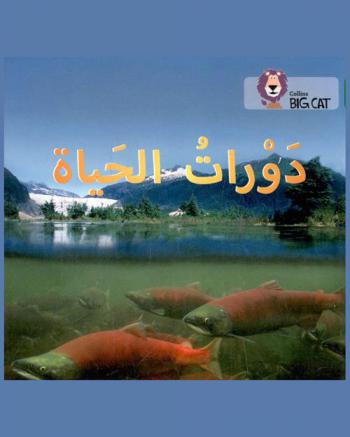
دورات الحياة
يتناول كتاب (دورات الحياة) والذي قامت بتأليفها \"سالي مورجن\" في حوالي (55) صفحة من القطع المتوسط، موضوع (دورة حياة الأسماك) وخاصة سمك السلمون، فلسمك السلمون نمط فريد من الحياة. فهي تولد في المياه العذبة في الأنهار الباردة ولكنها تقضي عمرها في المياه المالحة في المحيطات وهي تبدل لونها بحسب تقدمها بالعمر، كما أنها تواجه صعابا هائلة في رحلتها البحرية عبر المحيطات والبحار، من ملاحقة أسماك القرش والدببة والنسور لها، إلى جشع بعض الصيادين الذين يتبعون أفواجها لصيدها. ليعود إلى الأنهار أقل من عشر الذين غادروها وهكذا تتكرر دورة الحياة من جديد.
Book

Understanding Dysphagia Care in Pakistan: A Survey of Current Speech Language Therapy Practice
Dysphagia affects individuals across all ages and has pervasive and potentially life-threatening consequences. Individuals with dysphagia are assessed and treated by speech and language therapists (SLTs), however, little attention has been paid to their practices in Pakistan. This study aimed to explore SLTs practices for dysphagia assessment, signs and symptoms observed during evaluation, and management strategies, alongside barriers and facilitators to service delivery in Pakistan. A 45-item survey was distributed to SLTs online. Responses were received from 101 participants and analyzed descriptively, and open-text responses were analyzed using content analysis. Results revealed that 65.3% SLTs worked across the lifespan, and most (79.4%) had dysphagia-related experience of five years or less. SLTs were an active workforce engaged with varying ages, disorders, and settings, yet dysphagia contributed to a small caseload percentage for most. Analyses found informal clinical exams were more frequently used than instrumental assessments. A variety of service provision facilitators were described, such as supportive teams and accessible resources, and responses about barriers revealed gaps in awareness, education, and guidance. This exploratory study presents novel and unexplored data which provides a deeper understanding of dysphagia-related care in Pakistan.
Journal Article