
Catalogue Search | MBRL


Are you sure you want to remove the book from the shelf?

{{itemTitle}}
295
result(s) for
"Morrison, Toni"
Sort by:

Home
\"The story of a Korean war veteran on a quest to save his younger sister\"-- Provided by publisher.
Book

Life in His Language
Eulogy delivered at James Baldwin’s funeral. Published in The New York Times, December 20, 1987, Sunday, Late City Final Edition Section 7; Page 27, Column 1; Book Review Desk.
Journal Article


HOW CAN VALUES BE TAUGHT IN THE UNIVERSITY?
The university's re-invention of itself and its mission responded to major historical upheavals: wars, transformations in economy, new populations, etc., and as newer, better, and more likely provable knowledge accumulated in the sciences, the shift in the goals of universities was dramatic and may have led some to think that the secular education offered by the academy strives only for value-free, objective, pure research, analysis and exposition. [...]the real or imagined search for \"goodness\" in some figuration is still part of the justifying, legitimizing language of the academy. Several initiatives are already in place at many universities (certainly at Princeton) which constitute a kind of secular pulpit: the encouragement of voluntarism, an announced high regard and reward for students engaged in public service work; policy measures instituted by administrators to protect and defend their populations from harassment and assaults on their liberty and safety; careful and mediated responses to civil rights legislation; regular voluntary examinations of itself for inequities of representation; the creation of institutes and centers funded for precisely the airing and pursuit of ethical questions and allied problems of inculcating value (not least of which is the sponsor of this conference-the University Center for Human Values). Yet as assaults on and demands for school prayer, religious symbols on school property, and control of course curricula become legal cases making their way through courts, frequently invoking the separation of state and church, that legal journey both skirts and displays another question: not whether or how, but which.
Journal Article
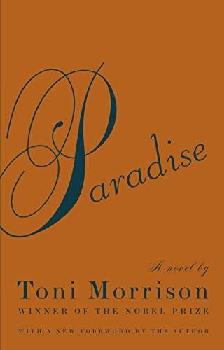

Toni Morrison on the Agenda of Displacement
This powerful commitment to caring, whatever the cost, is now threatened by a force almost as cruel as the origins of wealth: that force is the movement of peoples under duress at, beyond, and across borders. This current movement is greater now than it has ever been and it costs a lot--to defend against it, to accommodate it, to contain it, protect it, control and service it. It involves the trek of workers, intellectuals, agencies, refugees, traders, immigrants, diplomats, and armies all crossing oceans and continents, through custom offices and via hidden routes, with multiple narratives spoken in multiple languages of commerce, of military intervention, political persecution, rescue, exile, violence, poverty, death, and shame. There is no doubt that the voluntary or involuntary displacement of people all over the globe tops the agenda of the state, the boardrooms, the communities, and the streets.
Journal Article

God help the child
At the center: a young woman who calls herself Bride, whose stunning blue-black skin is only one element of her beauty, her boldness and confidence, her success in life, but which caused her light-skinned mother to deny her even the simplest forms of love. There is Booker, the man Bride loves, and loses to anger. Rain, the mysterious white child with whom she crosses paths. And finally, Bride's mother herself, Sweetness, who takes a lifetime to come to understand that what you do to children matters. And they might never forget.
Book

The piano lesson
Winner of the Pulitzer Prize for Drama and winner of the New York Drama Critics Circle Award for Best Play, this modern American classic is about family, and the legacy of slavery in America.August Wilson has already given the American theater such spell-binding plays about the black experience in 20th-century America as Ma Rainey's Black Bottom, Joe Turner's Come and Gone, and the Pulitzer Prize-winningFences. In his second Pulitzer Prize-winner, The Piano Lesson, Wilson has fashioned perhaps his most haunting and dramatic work.At the heart of the play stands the ornately carved upright piano which, as the Charles family's prized, hard-won possession, has been gathering dust in the parlor of Berniece Charles's Pittsburgh home. When Boy Willie, Berniece's exuberant brother, bursts into her life with his dream of buying the same Mississippi land that his family had worked as slaves, he plans to sell their antique piano for the hard cash he needs to stake his future. But Berniece refuses to sell, clinging to the piano as a reminder of the history that is their family legacy. This dilemma is the real \"piano lesson,\" reminding us that blacks are often deprived both of the symbols of their past and of opportunity in the present.
eBook
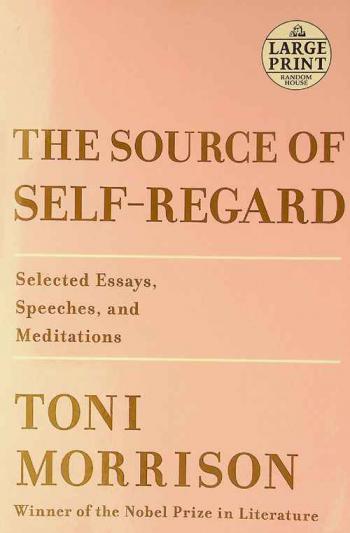
The source of self-regard : selected essays, speeches, and meditations
The source of self-regard is brimming with all the elegance of mind and style, the literary prowess and moral compass that are Toni Morrison's inimitable hallmark. It is divided into three parts: the first is introduced by a powerful prayer for the dead of 9/11; the second by a searching meditation on Martin Luther King Jr., and the last by a heart-wrenching eulogy for James Baldwin. In the writings and speeches included here, Morrison takes on contested social issues: the foreigner, female empowerment, the press, money, \"black matter(s),\" and human rights. She looks at enduring matters of culture: the role of the artist in society, the literary imagination, the Afro-American presence in American literature, and in her Nobel lecture, the power of language itself. And here too is piercing commentary on her own work (including The Bluest Eye, Sula, Tar Baby, Jazz, Beloved, and Paradise) and that of others, among them, painter and collagist Romare Bearden, author Toni Cade Bambara, and theater director Peter Sellars. In all, The source of self-regard is a luminous and essential addition to Toni Morrison's oeuvre

The Collected Poems of Lucille Clifton 1965-2010
Winner of the 2013 Hurston/Wright Legacy Award for Poetry \"The Collected Poems of Lucille Clifton 1965-2010may be the most important book of poetry to appear in years.\"--Publishers Weekly \"All poetry readers will want to own this book; almost everything is in it.\"--Publishers Weekly \"If you only read one poetry book in 2012,The Collected Poems of Lucille Cliftonought to be it.\"-NPR \"The 'Collected Clifton' is a gift, not just for her fans...but for all of us.\"--The Washington Post \"The love readers feel for Lucille Clifton-both the woman and her poetry-is constant and deeply felt. The lines that surface most frequently in praise of her work and her person are moving declarations of racial pride, courage, steadfastness.\"-Toni Morrison, from the Foreword The Collected Poems of Lucille Clifton 1965-2010combines all eleven of Lucille Clifton's published collections with more than fifty previously unpublished poems. The unpublished poems feature early poems from 1965-1969, a collection-in-progress titledthe book of days(2008), and a poignant selection of final poems. An insightful foreword by Nobel Prize-winning author Toni Morrison and comprehensive afterword by noted poet Kevin Young frames Clifton's lifetime body of work, providing the definitive statement about this major America poet's career. On February 13, 2010, the poetry world lost one of its most distinguished members with the passing of Lucille Clifton. In the last year of her life, she was named the first African American woman to receive the $100,000 Ruth Lilly Poetry Prize honoring a US poet whose \"lifetime accomplishments warrant extraordinary recognition,\" and was posthumously awarded the Robert Frost Medal for lifetime achievement from the Poetry Society of America. \"mother-tongue: to man-kind\" (from the unpublishedthe book of days): all that I am asking isthat you see me as somethingmore than a common occurrence,more than a woman in her ordinary skin.
eBook