
Catalogue Search | MBRL


Are you sure you want to remove the book from the shelf?

{{itemTitle}}
323
result(s) for
"Morton, Margaret"
Sort by:


Associations Between Dehydration, Cognitive Impairment, and Frailty in Older Hospitalized Patients: An Exploratory Study
How to Obtain Contact Hours by Reading This Article
Instructions
XX contact hours will be awarded by Villanova University College of Nursing upon successful completion of this activity. A contact hour is a unit of measurement that denotes 60 minutes of an organized learning activity. This is a learner-based activity. Villanova University College of Nursing does not require submission of your answers to the quiz. A contact hour certificate will be awarded once you register, pay the registration fee, and complete the evaluation form online at XX contact hours will be awarded by Villanova University College of Nursing upon successful completion of this activity. A contact hour is a unit of measurement that denotes 60 minutes of an organized learning activity. This is a learner-based activity. Villanova University College of Nursing does not require submission of your answers to the quiz. A contact hour certificate will be awarded once you register, pay the registration fee, and complete the evaluation form online at
https://villanova.gosignmeup.com
. To obtain contact hours you must:
1.
Read the article, “XXXX XXXX XXXXXX XXXXXXX XXXX XXXX XXX XXX XXXX XX” found on pages XX–XX, carefully noting any tables and other illustrative materials that are included to enhance your knowledge and understanding of the content. Be sure to keep track of the amount of time (number of minutes) you spend reading the article and completing the quiz.
2.
Read and answer each question on the quiz. After completing all of the questions, compare your answers to those provided within this issue. If you have incorrect answers, return to the article for further study.
3.
Go to the Villanova website listed above to register for contact hour credit. You will be asked to provide your name; contact information; and a VISA, MasterCard, or Discover card number for payment of the $20.00 fee. Once you complete the online evaluation, a certificate will be automatically generated.
This activity is valid for continuing education credit until MONTH XX, 20XX.
Contact Hours
This activity is co-provided by Villanova University College of Nursing and SLACK Incorporated.
Villanova University College of Nursing is accredited as a provider of continuing nursing education by the American Nurses Credentialing Center's Commission on Accreditation.
Activity Objectives
1.
XXX
2.
XXX
Disclosure Statement
Neither the planners nor the author have any conflicts of interest to disclose.
The current exploratory study (a) assessed the prevalence of dehydration in older adults (age ≥60 years) with and without cog nitive impairment (CI) admitted to the hospital; and (b) examined associations between dehydration, CI, and frailty. Forty-four patients participated and dehydration was assessed within 24 hours of admission and at Day 4 or discharge (whichever occurred first). Patients' cognitive function and frailty statuses were assessed using validated instruments. Twenty-seven (61%) patients had CI and 61% were frail. Prevalence of dehydration at admission was 29% (The current exploratory study (a) assessed the prevalence of dehydration in older adults (age ≥60 years) with and without cog nitive impairment (CI) admitted to the hospital; and (b) examined associations between dehydration, CI, and frailty. Forty-four patients participated and dehydration was assessed within 24 hours of admission and at Day 4 or discharge (whichever occurred first). Patients' cognitive function and frailty statuses were assessed using validated instruments. Twenty-seven (61%) patients had CI and 61% were frail. Prevalence of dehydration at admission was 29% (
n
= 12) and 19% (
n
= 6) at study exit, and dehydration status did not differ according to CI or frailty status. However, within the non-CI group, significantly more frail than fit patients were dehydrated at admission (
p
= 0.03). Findings indi cate dehydration is common among older hospitalized patients and that frailty may increase the risk for dehydration in cognitively intact older adults. [
Journal of Gerontological Nursing
,
xx
(x), xx–xx.]
Journal Article


Outcome of ventilated infants born at term without major congenital abnormalities
The longer-term outcome of term-born infants without congenital anomalies requiring ventilation in the first 24 h after birth has rarely been reported. Our aims were to determine the mortality and long-term morbidity of such infants and identify risk factors for adverse outcome. The outcomes of 43 of 45 infants born at term consecutively requiring mechanical ventilation were reviewed. The infants had: meconium aspiration syndrome (
n
= 11), hypoxic ischaemic encephalopathy (HIE) (
n
= 11), respiratory depression (
n
= 12), sepsis (
n
= 5), persistent pulmonary hypertension of the newborn (
n
= 3) and middle cerebral artery infarction (
n
= 1). Eleven infants developed seizures (26%), 13 (30%) had abnormal electroencephalograms and 11 (26%) had abnormal MRI scans; 26% had an adverse outcome: six died, and five had severe neurodisability at 2 years. The infants with congenital toxoplasmosis and a middle cerebral artery infarction were excluded from the prediction analysis. In the remaining 41 patients, requirement for anticonvulsants (relative risk, RR = 4.44, 95% CI = 1.48 to 12.70;
p
= 0.014) and prolonged ventilation (longer than 3 days) (RR 4.83, 95% CI 1.51 to 15.64) predicted adverse outcome. Infants with HIE had an increased risk of adverse outcome (relative risk 5.45, 95% CI 1.01 to 33.85), but an adverse outcome occurred in infants with other diagnoses.
Conclusion
: Mortality and neurodisability at follow-up were common in infants born at term without major congenital anomalies who required mechanical ventilation in the first 24 h after birth, particularly in those who developed seizures requiring treatment and prolonged ventilation.
Journal Article
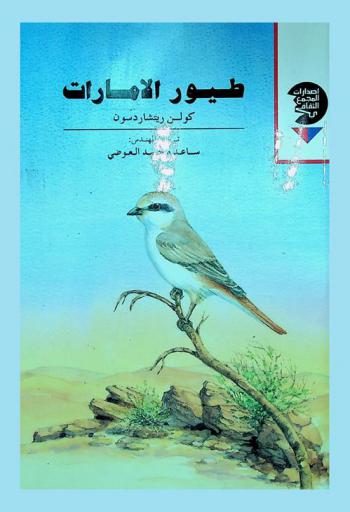
طيور الإمارات
تعتبر دولة الإمارات العربية المتحدة من أكثر دول شبه الجزيرة العربية إثارة بطيورها، حيث الملايين من مئات الأنواع تعبرها مرتين في العام في هجرة من وإلى روسيا وأوروبا حتى القطب الجنوبي وحيث أنواع جديدة من الطيور أخذت تزداد في شبه الجزيرة العربية ومعها حيوانات صحراوية عديدة مقيمة. يتعرف القارئ من خلال هذا الكتاب على الطيور التي يمكن مشاهدتها في دولة الإمارات العربية وسيعرف الأوقات التي يتوقع قدومها فيها وأفضل الأماكن التي يمكن مشاهدتها فيها.
Book

Recombinant Salmonella vaccines for biodefence
There is a requirement for vaccines to protect against pathogens that may be misused for bioterrorism or biowarfare purposes. In particular, biodefence vaccines are required that may be used for safe and easy immunisation of populations and that can rapidly induce mucosal immunity to provide protection at the lung surface against a range of airborne agents. To address this need, recombinant
Salmonella vaccines are being developed. In this review, the technologies used, considerations needed, progress made, and future prospects for developing multivalent
Salmonella-based vaccines for biodefence are discussed.
Journal Article
The River People
A group of homeless men assembled a row of plywood shanties along the seawall that borders the East River between the Manhattan Bridge and the Brooklyn Bridge. Several of the individuals had been evicted from Tompkins Square Park; others were expelled from vacant lots, public parks, or abandoned buildings. Here, several photographs of these river people are presented.
Journal Article

Use of a visual cueing system to retell events: Child with Fetal Alcohol Syndrome
A descriptive case study design was used with a 5-year old male diagnosed with Fetal Alcohol Syndrome (FAS). The purpose of the study was to explore the effectiveness of a visual cueing system (VCS) to assist the subject in retelling events from an activity. Variables were included in the analysis to explore their effect on the subject's success in sequenced retell. These variables included: Subject \"distractive\" behaviors and clinician redirection attempts. The initial questions from this study went unanswered due to an absence of baseline data; therefore, a post hoc analysis was completed. Post hoc coding included: Subject's quality verbal interactions (QVIs), adult references to \"help,\" and subject's percentage of events included in retell. Results from the post hoc analysis suggest a relationship between the subject's QVIs and his success in retelling events from the activity. Final measures suggest generalization of skills from the VCS to a narrative retell task.
Dissertation
A Salmonella enterica serovar Typhi vaccine expressing Yersinia pestis F1 antigen on its surface provides protection against plague in mice
A recombinant strain of attenuated
Salmonella enterica serovar Typhi surface-expressing
Yersinia pestis F1 antigen was generated by transforming strain BRD1116 (
aroA aroC htrA) with plasmid pAH34L encoding the
Y. pestis caf operon. BRD1116/pAH34L was stable in vitro and in vivo. An immunisation regimen of two intranasal doses of 1×10
8
cfu of BRD1116/pAH34L given intranasally to mice 7 days apart induced the strongest immune response compared to other regimens and protected 13 out of 20 mice from lethal challenge with
Y. pestis. Intranasal immunisation of mice constitutes a model for oral immunisation with
Salmonella vaccines in humans. Thus, the results demonstrate that attenuated strains of
S. enterica serovar Typhi which express
Y. pestis F1 antigen may be developed to provide an oral vaccine against plague suitable for use in humans.
Journal Article
RecombinantSalmonellavaccines for biodefence
There is a requirement for vaccines to protect against pathogens that may be misused for bioterrorism or biowarfare purposes. In particular, biodefence vaccines are required that may be used for safe and easy immunisation of populations and that can rapidly induce mucosal immunity to provide protection at the lung surface against a range of airborne agents. To address this need, recombinantSalmonellavaccines are being developed. In this review, the technologies used, considerations needed, progress made, and future prospects for developing multivalentSalmonella-based vaccines for biodefence are discussed.
Journal Article