
Catalogue Search | MBRL


Are you sure you want to remove the book from the shelf?

{{itemTitle}}
117
result(s) for
"Muller, Enrico"
Sort by:

Narrowing the Differential Diagnosis of Cystic Lesions in Smokers with Expiratory CT Acquisition Using the Cyst-Airway Communication Hypothesis
The aim of this study was to assess percentage respiratory changes (δ) in the size of pulmonary cysts of different smoking-related etiologies. Retrospectively, we measured the cystic lesions due to histopathological-confirmed honeycombing from interstitial pulmonary fibrosis, pulmonary Langerhans cell histiocytosis (PLCH), and paraseptal emphysema, using paired inspiratory and expiratory CT scans. In a sample of 72 patients and 216 lesions, the mean diameter of PLCH and honeycombing decreased during expiration (PLCH,
δ
= 60.9%;
p
= 0.001; honeycombing,
δ
= 47.5%;
p
= 0.014). Conversely, paraseptal emphysema did not show any changes (
δ
= 5.2%;
p
= 0.34). In summary, our results demonstrated that cysts in smokers with PLCH and honeycombing fibrosis get smaller during expiratory CT scans, whereas the size of cystic-like lesions due to paraseptal emphysema and bullae tend to remain constant during respiratory cycles. These results support the hypothesis of cyst-airway communication in some cystic diseases, which could assist in the differential diagnosis in smoking-related lung diseases.
Journal Article

Unlocking the clinical potential of paired inspiratory and expiratory CT scans in the differential diagnosis of cystic lung diseases: A systematic review
Currently, high-resolution computed tomography (HRCT) is the imaging of choice for the differential diagnosis of various cystic lung lesions, including true cystic lung diseases (CLD) and lesions that may mimic them. However, the traditionally used inspiratory scan still presents a significant spectrum of overlapping radiological features. Recent studies have demonstrated variation in lesion size between inspiratory and expiratory phases, probably due to cyst-airway communication. In this study, we aimed to conduct a systematic review of paired inspiratory and expiratory HRCT in the assessment of cystic lesions as an additional tool to narrow the differential diagnosis.
A systematic search was performed in PubMed, Scopus, EMBASE, BVS, and Cochrane through August 2023. Full-text articles that performed paired inspiratory and expiratory CT scans in adult patients with cystic lung lesions were included, with the outcome measured as the reduction in lesion size according to the respiratory phase. Diagnoses were confirmed through histopathological or radiological features.
Out of the 96 records, three studies met the criteria for inclusion and were analyzed, comprising a total of 149 participants and 513 cystic lesions. Pulmonary Langerhans Cell Histiocytosis (PLCH), Lymphangioleiomyomatosis (LAM) honeycombing and cystic bronchiectasis became considerably smaller during expiratory CT scans, while the size of emphysema tended to remain constant during respiratory cycles.
This study has suggested that paired inspiratory and expiratory CT scans can be valuable for helping differentiate between emphysema and other diseases with a cystic pattern due to their ability to reveal dynamic properties of the lesions. However, the average reduction in cyst size as a single parameter is not sufficient for further refining diagnostics. Studies exploring advanced metrics to assess the reduction in lesion diameter emerge as potential opportunities to investigate the cyst-airway communication hypothesis and further enhance the diagnostic accuracy of paired methods.
Journal Article

Zur Genealogie des Zivilisationsprozesses: Friedrich Nietzsche und Norbert Elias
Philosopher Friedrich Nietzsche and sociologist Norbert Elias are both famous for their influential interpretations of modern European culture as a whole. Nietzsche'sOn the Genealogy of Moralsand Elias'The Civilizing Processcrossed disciplinary boundaries with respect to both content and method, and both books are still of great contemporary interest. This volume brings international specialists together for the first time to explore the connections between these two works.
eBook
Pulmonary Acinus: Understanding the Computed Tomography Findings from an Acinar Perspective
The lung acinus is the most distal portion of the airway responsible for the gas exchange. The normal acini are not visible on conventional computed tomography (CT), but the advent of micro-CT improved the understanding of the microarchitecture of healthy acini. The comprehension of the acinar architecture is pivotal for the understanding of CT findings of diseases that involve the acini. Centriacinar emphysema, for example, presents as round areas of low attenuation due to the destruction of the most central acini with compensatory enlargement of proximal acini due to alveolar wall destruction. In pulmonary fibrosis, intralobular septal fibrosis manifests as acinar wall thickening with an overlap of acinar collapse and compensatory dilation of surrounding acini constituting the cystic disease typical of the usual interstitial pneumonia pattern. This is a state-of-the-art review to describe the acinar structure from the micro-CT perspective and display how the comprehension of the acinar structure can aid in the interpretation of its microarchitecture disruption on conventional CT.
Journal Article
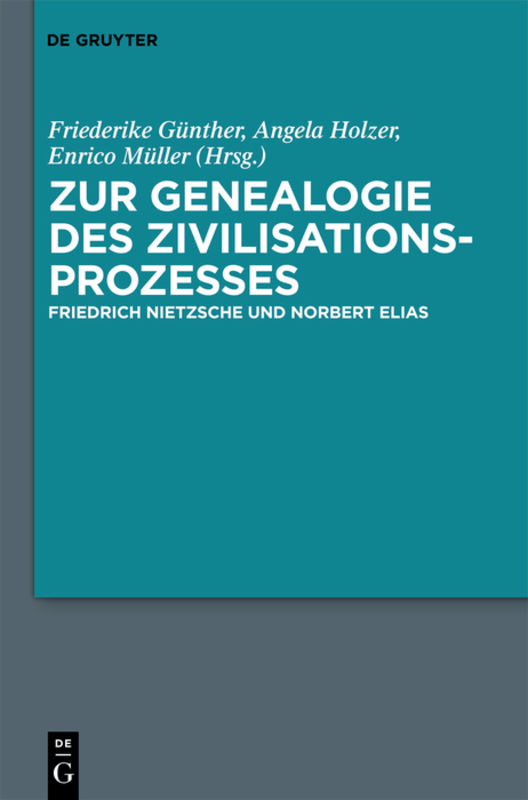
Zur Genealogie des Zivilisationsprozesses
Friedrich Nietzsche und Norbert Elias haben zivilisationsgeschichtliche Entwürfe Europas vorgelegt, die unter den Bedingungen einer stetig voranschreitenden Globalisierung weiter an Bedeutung gewinnen werden.Die philosophische Brisanz ihres Zugriffs wird v.a.
eBook

Jürgen Villers: Das Paradigma des Alphabets. Platon und die Schriftbedingtheit der Philosophie
Jürgen Villers: Das Paradigma des Alphabets. Platon und die Schriftbedingtheit der Philosophie. Würzburg: Königshausen & Neumann 2005. 497 S.
Journal Article

DNA damage and Repair Modify DNA methylation and Chromatin Domain of the Targeted Locus: Mechanism of allele methylation polymorphism
We characterize the changes in chromatin structure, DNA methylation and transcription during and after homologous DNA repair (HR). We find that HR modifies the DNA methylation pattern of the repaired segment. HR also alters local histone H3 methylation as well chromatin structure by inducing DNA-chromatin loops connecting the 5′ and 3′ ends of the repaired gene. During a two-week period after repair, transcription-associated demethylation promoted by Base Excision Repair enzymes further modifies methylation of the repaired DNA. Subsequently, the repaired genes display stable but diverse methylation profiles. These profiles govern the levels of expression in each clone. Our data argue that DNA methylation and chromatin remodelling induced by HR may be a source of permanent variation of gene expression in somatic cells.
Journal Article

TASL is the SLC15A4-associated adaptor for IRF5 activation by TLR7–9
Toll-like receptors (TLRs) have a crucial role in the recognition of pathogens and initiation of immune responses
1
–
3
. Here we show that a previously uncharacterized protein encoded by
CXorf21—
a gene that is associated with systemic lupus erythematosus
4
,
5
—interacts with the endolysosomal transporter SLC15A4, an essential but poorly understood component of the endolysosomal TLR machinery also linked to autoimmune disease
4
,
6
–
9
. Loss of this type-I-interferon-inducible protein, which we refer to as ‘TLR adaptor interacting with SLC15A4 on the lysosome’ (TASL), abrogated responses to endolysosomal TLR agonists in both primary and transformed human immune cells. Deletion of SLC15A4 or TASL specifically impaired the activation of the IRF pathway without affecting NF-κB and MAPK signalling, which indicates that ligand recognition and TLR engagement in the endolysosome occurred normally. Extensive mutagenesis of TASL demonstrated that its localization and function relies on the interaction with SLC15A4. TASL contains a conserved pLxIS motif (in which p denotes a hydrophilic residue and x denotes any residue) that mediates the recruitment and activation of IRF5. This finding shows that TASL is an innate immune adaptor for TLR7, TLR8 and TLR9 signalling, revealing a clear mechanistic analogy with the IRF3 adaptors STING, MAVS and TRIF
10
,
11
. The identification of TASL as the component that links endolysosomal TLRs to the IRF5 transcription factor via SLC15A4 provides a mechanistic explanation for the involvement of these proteins in systemic lupus erythematosus
12
–
14
.
The interaction between TASL and SLC15A4 links endolysosomal Toll-like receptors to the transcription factor IRF5, providing a mechanistic explanation for the involvement of the complex in systemic lupus erythematosus.
Journal Article