
Catalogue Search | MBRL


Are you sure you want to remove the book from the shelf?

{{itemTitle}}
6
result(s) for
"Murphy, Neil, editor"
Sort by:

Fighting with shadows or, Sciamachy : a novel
\"Fighting with Shadows tells of violently sundered geographical borders, of maddening religious differences, of the anguished gaps between people as they struggle to find each other, and of how the dead reside among its inhabitants long after they've passed. The imagination's encounter with reality registers Dermot Healey's relentless fascination with the way things are seen and with the things themselves, or the \"erotica of little things.\" A realist account and nightmarish fable, Fighting with Shadows is critical to the history of modern Irish fiction\"-- Provided by publisher.
Book
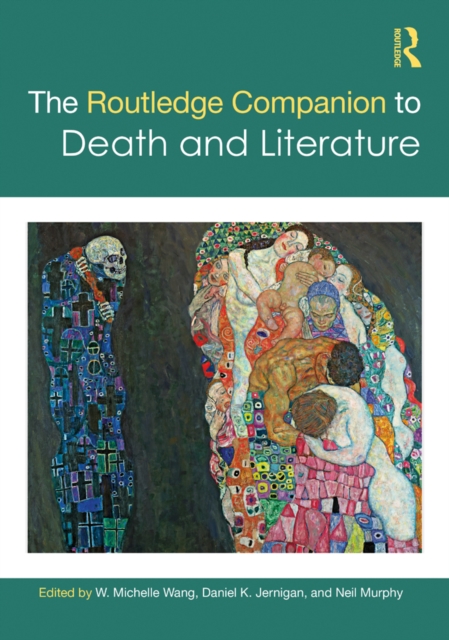
The Routledge Companion to Death and Literature
The Routledge Companion to Death and Literature seeks to understand the ways in which literature has engaged deeply with the ever-evolving relationship humanity has with its ultimate demise. It is the most comprehensive collection in this growing field of study and includes essays by Brian McHale, Catherine Belling, Ronald Schleifer, Helen Swift, and Ira Nadel, as well as the work of a generation of younger scholars from around the globe, who bring valuable transnational insights.
Encompassing a diverse range of mediums and genres - including biography and autobiography, documentary, drama, elegy, film, the novel and graphic novel, opera, picturebooks, poetry, television, and more - the contributors offer a dynamic mix of approaches that range from expansive perspectives on particular periods and genres to extended analyses of select case studies. Essays are included from every major Western period, including Classical, Middle Ages, Renaissance, and so on, right up to the contemporary.
This collection provides a telling demonstration of the myriad ways that humanity has learned to live with the inevitability of death, where \"live with\" itself might mean any number of things: from consoling, to memorializing, to rationalizing, to fending off, to evading, and, perhaps most compellingly of all, to escaping. Engagingly written and drawing on examples from around the world, this volume is indispensable to both students and scholars working in the fields of medical humanities, thanatography (death studies), life writing, Victorian studies, modernist studies, narrative, contemporary fiction, popular culture, and more.
eBook

The collected short stories
\"Dermot Healy wrote intricate and innovative short stories that, along with works by Neil Jordan and Desmond Hogan, relaunched the Irish short story tradition. Set in small-town Ireland and the equally suffocating confines of the Irish expat communities of 1970s London, Healy's stories show compassion toward the marginalized and the dispossessed. Gathering all of Healy's stories together for the first time, this collection includes the long prose-drama \"Before the Off\" and Healy's final short works, \"Along the Lines\" and \"Images\" -- Provided by publisher.
Book

Kiss the Blood Off My Hands
Consider the usual view of film noir: endless rainy nights populated by down-at-the-heel boxers, writers, and private eyes stumbling toward inescapable doom while stalked by crooked cops and cheating wives in a neon-lit urban jungle. But a new generation of writers is pushing aside the fog of cigarette smoke surrounding classic noir scholarship. In Kiss the Blood Off My Hands: On Classic Film Noir , Robert Miklitsch curates a bold collection of essays that reassesses the genre's iconic style, history, and themes. Contributors analyze the oft-overlooked female detective and little-examined aspects of filmmaking like love songs and radio aesthetics, discuss the significance of the producer and women's pulp fiction, and investigate topics as disparate as Disney noir and the Fifties heist film, B-movie back projection and blacklisted British directors. At the same time the writers' collective reconsideration shows the impact of race and gender, history and sexuality, technology and transnationality on the genre. As bracing as a stiff drink, Kiss the Blood Off My Hands writes the future of noir scholarship in lipstick and chalk lines for film fans and scholars alike. Contributors are Krin Gabbard, Philippa Gates, Julie Grossman, Robert Miklitsch, Robert Murphy, Mark Osteen, Vivian Sobchack, Andrew Spicer, J. P. Telotte, and Neil Verma.
eBook
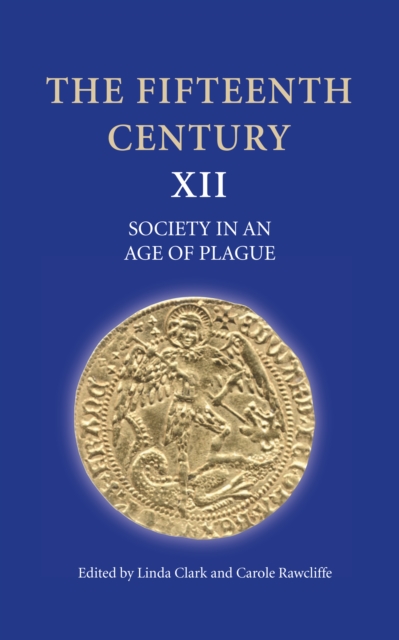
Society in an age of plague
Described as \"a golden age of pathogens\", the long fifteenth century was notable for a series of international, national and regional epidemics that had a profound effect upon the fabric of society. The impact of pestilence upon the literary, religious, social and political life of men, women and children throughout Europe and beyond continues to excite lively debate among historians, as the ten papers presented in this volume confirm. They deal with theresponse of urban communities in England, France and Italy to matters of public health, governance and welfare, as well as addressing the reactions of the medical profession to successive outbreaks of disease, and of individuals to the omnipresence of death, while two, very different, essays examine the important, if sometimes controversial, contribution now being made by microbiologists to our understanding of the Black Death. Contributors: J.L. Bolton, Elma Brenner, Samuel Cohn, John Henderson, Neil Murphy, Elizabeth Rutledge, Samantha Sagui, Karen Smyth, Jane Stevens Crawshaw, Sheila Sweetinburgh.
eBook
Learning with Computers
Contrary to the belief that computers isolate users, Karen Littleton and Paul Light demonstrate that learning with computers is often a collaborative and social activity. Learning with Computers brings together a significant body of research that shows how working with others at the computer can be beneficial to learners of all ages, from the early school years to the highest levels of education. It also investigates factors such as gender that explain why some interactions are not as productive as others.
eBook