
Catalogue Search | MBRL


Are you sure you want to remove the book from the shelf?

{{itemTitle}}
1,043
result(s) for
"Murray, Alex"
Sort by:


A multidimensional systems biology analysis of cellular senescence in aging and disease
Background
Cellular senescence, a permanent state of replicative arrest in otherwise proliferating cells, is a hallmark of aging and has been linked to aging-related diseases. Many genes play a role in cellular senescence, yet a comprehensive understanding of its pathways is still lacking.
Results
We develop CellAge (
http://genomics.senescence.info/cells
), a manually curated database of 279 human genes driving cellular senescence, and perform various integrative analyses. Genes inducing cellular senescence tend to be overexpressed with age in human tissues and are significantly overrepresented in anti-longevity and tumor-suppressor genes, while genes inhibiting cellular senescence overlap with pro-longevity and oncogenes. Furthermore, cellular senescence genes are strongly conserved in mammals but not in invertebrates. We also build cellular senescence protein-protein interaction and co-expression networks. Clusters in the networks are enriched for cell cycle and immunological processes. Network topological parameters also reveal novel potential cellular senescence regulators. Using siRNAs, we observe that all 26 candidates tested induce at least one marker of senescence with 13 genes (
C9orf40
,
CDC25A
,
CDCA4
,
CKAP2
,
GTF3C4
,
HAUS4
,
IMMT
,
MCM7
,
MTHFD2
,
MYBL2
,
NEK2
,
NIPA2
, and
TCEB3
) decreasing cell number, activating p16/p21, and undergoing morphological changes that resemble cellular senescence.
Conclusions
Overall, our work provides a benchmark resource for researchers to study cellular senescence, and our systems biology analyses reveal new insights and gene regulators of cellular senescence.
Journal Article


Winter is coming: the future of cryopreservation
The preservative effects of low temperature on biological materials have been long recognised, and cryopreservation is now widely used in biomedicine, including in organ transplantation, regenerative medicine and drug discovery. The lack of organs for transplantation constitutes a major medical challenge, stemming largely from the inability to preserve donated organs until a suitable recipient is found. Here, we review the latest cryopreservation methods and applications. We describe the main challenges—scaling up to large volumes and complex tissues, preventing ice formation and mitigating cryoprotectant toxicity—discuss advantages and disadvantages of current methods and outline prospects for the future of the field.
Journal Article
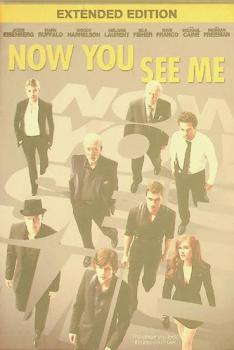
Now you see me 2 : the closer you look, the less you'll see
The Four Horsemen are on a new mission to steal a chip that can decrypt any electronic device in the world.
DVD

Fin-de-Siècle Decadence and Elizabethan Literature
On the 8th of May, Mr. S. Smith, the member for Flintshire, addressed the House of Commons on the dangers of the modern French literature published by Vizetelly, condemning it as \"dirt and horror pure and simple; and the good-humoured Englishman, who might smilingly characterize the French novel as 'rather thick' will be disgusted and tired with the inartistic garbage which is to be found in Zola's La Terre.\" [...]the M.P. could not fathom how Vizetelly was \"allowed with impunity to publish an almost word for word translation of Zola's bestial chef d'œuvre. According to Symonds it was because England was the only country in which the Renaissance and the Reformation had taken place simultaneously that such a drama could have emerged. To understand Ford's artistry it was necessary to see him not as a product of the decadence of Elizabethan drama, but as a harbinger of a much more modern literature: \"he was an analyst; he strained the limits of his art to the utmost; he foreboded new ways of expression. [...]he is less nearly related to the men who wrote Othello, and A Woman Killed with Kindness, and Valentinian, than to those poets and artists of the naked human soul, the writer of Le Rouge et le Noir, and the yet greater writer of Madame Bovary. Saintsbury lamented that the Carolean playwrights had been dismissed based on that most treacherous of all foundations, a hard-driven metaphor. Because they come at the end of a long and fertile period of literature, because a colder and harder kind of poetry followed them, they are said to be \"decadence,\" \"autumn,\" \"over-ripe fruit,\" \"sunset,\" and so forth.
Journal Article

Distribution of age at natural menopause, age at menarche, menstrual cycle length, height and BMI in BRCA1 and BRCA2 pathogenic variant carriers and non-carriers: results from EMBRACE
Background
Carriers of germline pathogenic variants (PVs) in the
BRCA1
and
BRCA2
genes are at higher risk of developing breast and ovarian cancer than the general population. It is unclear if these PVs influence other breast or ovarian cancer risk factors, including age at menopause (ANM), age at menarche (AAM), menstrual cycle length, BMI or height. There is a biological rationale for associations between
BRCA1
and
BRCA2
PVs and reproductive traits, for example involving DNA damage and repair mechanisms. The evidence for or against such associations is limited.
Methods
We used data on 3,046
BRCA1
and 3,264
BRCA2
PV carriers, and 2,857 non-carrier female relatives of PV carriers from the Epidemiological Study of Familial Breast Cancer (EMBRACE). Associations between ANM and PV carrier status was evaluated using linear regression models allowing for censoring. AAM, menstrual cycle length, BMI, and height in carriers and non-carriers were compared using linear and multinomial logistic regression. Analyses were adjusted for potential confounders, and weighted analyses carried out to account for non-random sampling with respect to cancer status.
Results
No statistically significant difference in ANM between carriers and non-carriers was observed in analyses accounting for censoring. Linear regression effect sizes for ANM were -0.002 (95%CI: -0.401, 0.397) and -0.172 (95%CI: -0.531, 0.188), for
BRCA1
and
BRCA2
PV carriers respectively, compared with non-carrier women. The distributions of AAM, menstrual cycle length and BMI were similar between PV carriers and non-carriers, but
BRCA1
PV carriers were slightly taller on average than non-carriers (0.5 cm difference,
p
= 0.003).
Conclusion
Information on the distribution of cancer risk factors in PV carriers is needed for incorporating these factors into multifactorial cancer risk prediction algorithms. Contrary to previous reports, we found no evidence that
BRCA1
or
BRCA2
PV are associated with hormonal or anthropometric factors, except for a weak association with height. We highlight methodological considerations and data limitations inherent in studies aiming to address this question.
Journal Article

Havelock Ellis and Decadent Conversion
Many Decadent writers of the fin de siècle underwent religious conversions, yet the frameworks we have for reading those conversions tend to focus on sexuality and continuity. This essay argues that Havelock Ellis can offer us an alternative means of reading conversion as a much more fundamental revolution of the self’s relationship to the universe. Drawing on Ellis’s literary criticism, his writing on religion, and his biography, and also on William James and Charles Taylor, I develop an understanding of Decadent conversion that is far more capacious and transformational.
Journal Article

Investigating the Crash Protection Performance of a Medical Carrier Bag for Drone Transport
Background: Drone transport regulations in Europe require a crash-protected container (CPC) to be used for the carriage of dangerous goods. With increasing interest in the use of drones for medical logistics, the motivation behind this research was to investigate whether the existing approved medical carriers could also pass as CPCs. To date, there has been little practical experimentation on or theoretical research into the crash protection performance of medical containers. Methods: Addressing this gap, this paper reports findings from a series of drop test experiments to investigate the crashworthiness of a standard medical carrier bag used by the National Health Service (NHS) in the UK. Th drop tests were performed from heights of up to 122 m using standard medical carriers containing bags of dyed saline to examine the robustness of the carrier and whether it could contain any leakages, a key requirement for transporting dangerous goods. Results: The tests found that the medical carrier failed on some drops, with the zipped lid being identified as the main weakness. Conclusions: A new understanding of the carrier’s terminal velocity, impact acceleration, and failure mechanisms were gained and subsequent strengthening and waterproofing remedial measures recommended. New insights and practical recommendations are provided relating to performing formal drop tests and how to conduct these using a drone.
Journal Article

Conservative
The conservative—as both a philosophy and a political ideology—was radically unstable in the Victorian period, and so too were its manifestations in the literary sphere. However, as one of the keynotes of Victorian politics, life, and literature, it raises some serious questions about the consequences for our scholarship that it remains relatively neglected and undertheorized. We should train ourselves to read for the conservative alongside the liberal, to see how conservative aesthetics shape writers and texts in myriad ways.
Journal Article