
Catalogue Search | MBRL


Are you sure you want to remove the book from the shelf?

{{itemTitle}}
5
result(s) for
"Murray, Martin J., author"
Sort by:


Commemorating and Forgetting
When the past is painful, as riddled with violence and injustice as it is in postapartheid South Africa, remembrance presents a problem at once practical and ethical: how much of the past to preserve and recollect and how much to erase and forget if the new nation is to ever unify and move forward? The new South Africa's confrontation of this dilemma is Martin J. Murray's subject inCommemorating and Forgetting. More broadly, this book explores how collective memory works-how framing events, persons, and places worthy of recognition and honor entails a selective appropriation of the past, not a mastery of history.
How is the historical past made to appear in the present? In addressing these questions, Murray reveals how collective memory is stored and disseminated in architecture, statuary, monuments and memorials, literature, and art-\"landscapes of remembrance\" that selectively recall and even fabricate history in the service of nation-building. He examines such vehicles of memory in postapartheid South Africa and parses the stories they tell-stories by turn sanitized, distorted, embellished, and compressed. In this analysis,Commemorating and Forgettingmarks a critical move toward recognizing how the legacies and impositions of white minority rule, far from being truly past, remain embedded in, intertwined with, and imprinted on the new nation's here and now.
eBook
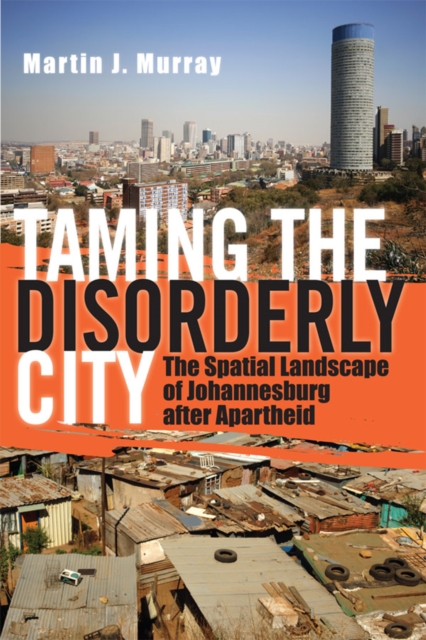
Taming the Disorderly City
In postapartheid Johannesburg, tensions of race and class manifest themselves starkly in struggles over \"rights to the city.\" Real-estate developers and the very poor fight for control of space as the municipal administration steps aside, almost.
eBook

Loose-fit architecture
Loose-Fit Architecture: Designing Buildings for Change September/October 2017 Profile 249 Volume 87 No 5 ISBN 978 1119 152644 Guest-Edited by Alex Lifschutz The idea that a building is 'finished' or 'complete' on the day it opens its doors is hardwired into existing thinking about design, planning and construction. But this ignores the unprecedented rate of social and technological change. A building only begins its life when the contractors leave. With resources at a premium and a greater need for a sustainable use of building materials, can we still afford to construct new housing or indeed any buildings that ignore the need for flexibility or the ability to evolve over time? Our design culture needs to move beyond the idealisation of a creative individual designer generating highly specific forms with fixed uses. The possibilities of adaptation and flexibility have often been overlooked, but they create hugely exciting 'loose-fit' architectures that emancipate users to create their own versatile and vibrant environments. Contributors include: Stewart Brand, Renee Chow, Ellen Dunham-Jones and June Williamson, John Habraken, Edwin Heathcote, Despina Katsakakis, Stephen Kendall, Ian Lambot, Giorgio Macchi, Alexi Marmot, Andrea Martin, Kazunobu Minami, Peter Murray, Brett Steele, and Simon Sturgis.
eBook

Imagination
An exploration of the history of imagination from antiquity to the Renaissance. The shifting definitions of imagination and its ambiguous relations with memory and reason are synthesised within an historical context.
eBook