
Catalogue Search | MBRL


Are you sure you want to remove the book from the shelf?

{{itemTitle}}
13
result(s) for
"Murrie, Daniel C."
Sort by:

Are Forensic Experts Biased by the Side That Retained Them?
How objective are forensic experts when they are retained by one of the opposing sides in an adversarial legal proceeding? Despite long-standing concerns from within the legal system, little is known about whether experts can provide opinions unbiased by the side that retained them. In this experiment, we paid 108 forensic psychologists and psychiatrists to review the same offender case files, but deceived some to believe that they were consulting for the defense and some to believe that they were consulting for the prosecution. Participants scored each offender on two commonly used, well-researched risk-assessment instruments. Those who believed they were working for the prosecution tended to assign higher risk scores to offenders, whereas those who believed they were working for the defense tended to assign lower risk scores to the same offenders; the effect sizes (d) ranged up to 0.85. The results provide strong evidence of an allegiance effect among some forensic experts in adversarial legal proceedings.
Journal Article

Perceptions and estimates of error rates in forensic science: A survey of forensic analysts
•Forensic analysts perceive all types of errors (especially false positives) to be rare.•Analysts typically report a preference to minimize the risk of false positives over false negatives.•Most analysts cannot specify where error rates for their discipline are documented.•Analysts’ estimates of error rates are widely divergent and sometimes unrealistically low.
Every scientific technique features some error, and legal standards for the admissibility of scientific evidence (e.g., Daubert v. Merrill Dow Pharmaceuticals, Inc., 1993; Kumho Tire Co v. Carmichael, 1999) guide trial courts to consider known error rates. However, recent reviews of forensic science conclude that error rates for some common techniques are not well-documented or even established (e.g., NAS, 2009; PCAST, 2016). Furthermore, many forensic analysts have historically denied the presence of error in their field. Therefore, it is important to establish what forensic scientists actually know or believe about errors rates in their disciplines. We surveyed 183 practicing forensic analysts to examine what they think and estimate about error rates in their various disciplines. Results revealed that analysts perceive all types of errors to be rare, with false positive errors even more rare than false negatives. Likewise, analysts typically reported that they prefer to minimize the risk of false positives over false negatives. Most analysts could not specify where error rates for their discipline were documented or published. Their estimates of error in their fields were widely divergent – with some estimates unrealistically low.
Journal Article

Reformulating Suicide Risk Formulation: From Prediction to Prevention
Psychiatrists-in-training typically learn that assessments of suicide risk should culminate in a probability judgment expressed as “low,” “moderate,” or “high.” This way of formulating risk has predominated in psychiatric education and practice, despite little evidence for its validity, reliability, or utility. We present a model for teaching and communicating suicide risk assessments without categorical predictions. Instead, we propose risk formulations which synthesize data into four distinct judgments to directly inform intervention plans: (1) risk status (the patient’s risk relative to a specified subpopulation), (2) risk state (the patient’s risk compared to baseline or other specified time points), (3) available resources from which the patient can draw in crisis, and (4) foreseeable changes that may exacerbate risk. An example case illustrates the conceptual shift from a predictive to a preventive formulation, and we outline steps taken to implement the model in an academic psychiatry setting. Our goal is to inform educational leaders, as well as individual educators, who can together cast a prevention-oriented vision in their academic programs.
Journal Article
Do evidence submission forms expose latent print examiners to task-irrelevant information?
•We reviewed 97 evidence submission forms used by 148 crime laboratories in the U.S.•Many laboratories request information with no direct relevance to latent print comparison.•Approximately half of forms request information regarding suspect and victim sex/ethnicity.•16.5% of forms request potentially biasing and task-irrelevant information regarding latent print comparison.
Emerging research documents the ways in which task-irrelevant contextual information may influence the opinions and decisions that forensic analysts reach regarding evidence (e.g., Dror and Cole, 2010; National Academy of Sciences, 2009; President’s Council of Advisors on Science and Technology, 2016). Consequently, authorities have called for forensic analysts to rely solely on task-relevant information—and to actively avoid task-irrelevant information—when conducting analyses (National Commission on Forensic Science, 2015). In this study, we examined 97 evidence submission forms, used by 148 accredited crime laboratories across the United States, to determine what types of information laboratories solicit when performing latent print analyses. Results indicate that many laboratories request information with no direct relevance to the specific task of latent print comparison. More concerning, approximately one in six forms (16.5%) request information that appears to have a high potential for bias without any discernible relevance to latent print comparison. Solicitations for task-irrelevant information may carry meaningful consequences and current findings inform strategies to reduce the potential for cognitive bias.
Journal Article

Psychopathy, Conduct Disorder, and Stigma
This study investigated the potential influence of labeling a juvenile as psychopathic. Juvenile probation officers (JPOs; N = 260) rendered hypothetical recommendations based on eight mock psychological evaluations. The evaluations varied the presence of two diagnostic criteria (antisocial behavioral history and psychopathic personality traits) and diagnostic labels (psychopathy, conduct disorder, no diagnosis) in order to distinguish criterion effects from labeling effects. The diagnostic criteria of antisocial behavior had a substantial effect on JPO recommendations (effect sizes .50-.79), while the diagnostic criteria of psychopathic personality traits had a more limited effect. Surprisingly, diagnostic labels had little effect, and there were no appreciable differences between conduct disorder and psychopathy diagnoses. These findings illustrate the importance of distinguishing diagnostic criterion effects from diagnostic labeling effects.
Journal Article
Does Interrater (Dis)agreement on Psychopathy Checklist Scores in Sexually Violent Predator Trials Suggest Partisan Allegiance in Forensic Evaluations?
Many studies reveal strong interrater agreement for Hare's Psychopathy Checklist-Revised (PCL-R) when used by trained raters in research contexts. However, no systematic research has examined agreement between PCL-R scores from independent clinicians who are retained by opposing sides in adversarial legal proceedings. We reviewed all 43 sexual-offender civil-commitment trials in one state and identified 23 cases in which opposing evaluators reported PCL-R total scores for the same individual. Differences between scores from opposing evaluators were usually in a direction that supported the party who retained their services. These score differences were greater in size than would be expected based on the instrument's standard error of measurement or the rater agreement values reported in previous PCL-R research. The intraclass correlation for absolute agreement for the PCL-R Total score from a single rater (ICC1,A = .39) was well below levels of agreement observed for the PCL-R in research contexts, and below published test-retest values for the PCL-R. Results raise concerns about the potential for a forensic evaluator's \"partisan allegiance\" to influence PCL-R scores in adversarial proceedings.
Journal Article
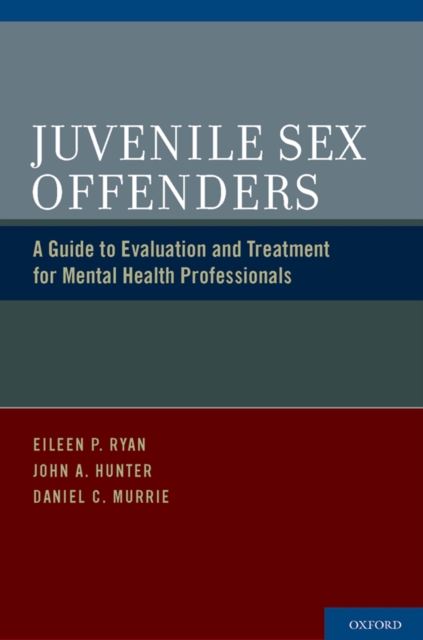
Juvenile Sex Offenders
A significant percentage of sexual abuse in the United States is committed by juveniles, and mental health professionals increasingly receive requests to evaluate these juveniles. With an emphasis on practicality and utility, Juvenile Sex Offenders fills a gap in the current literature by providing a thoughtful, thorough approach to evaluating and treating youth who have committed sexual offenses or have engaged in sexually abusive behavior. Serving as a functional guide, this text expertly prepares clinicians for the challenging task of evaluating juveniles, picking up where traditional clinical training often falls short and providing state-of-the-art assessment techniques as well as an overview of treatment modalities. Chapters highlight the many ways in which juveniles charged with sexual offenses differ from adults, the common dilemmas facing evaluators, and the changing perceptions and legal trends with respect to youth crime. Chapters also cover sexual development and behaviors among children and adolescents, risk factors and risk assessment, case examples for working with attorneys, and interventions and pharmacological approaches. Clinical practitioners with limited forensic training will benefit from the guidance on formal forensic evaluation and the review of literature on assessment approaches specific to youth, while forensic experts will gain developmental perspective in evaluating and treating young sexual offenders. Set in a hopeful and optimistic framework, Juvenile Sex Offenders is a practical, empirically based guide on the best practices in evaluating and treating this poorly understood and underserved population.
eBook
Field Reliability of Competence to Stand Trial Opinions: How Often Do Evaluators Agree, and What Do Judges Decide When Evaluators Disagree?
Despite many studies that examine the reliability of competence to stand trial (CST) evaluations, few shed light on \"field reliability,\" or agreement among forensic evaluators in routine practice. We reviewed 216 cases from Hawaii, which requires three separate evaluations from independent clinicians for each felony defendant referred for CST evaluation. Results revealed moderate agreement. In 71% of initial CST evaluations, all evaluators agreed about a defendant's competence or incompetence (kappa = .65). Agreement was somewhat lower (61%, kappa = .57) in re-evaluations of defendants who were originally found incompetent and sent for restoration services. We also examined the decisions judges made about a defendant's CST. When evaluators disagreed, judges tended to make decisions consistent with the majority opinion. But when judges disagreed with the majority opinion, they more often did so to find a defendant incompetent than competent, suggesting a generally conservative approach. Overall, results reveal moderate agreement among independent evaluators in routine practice. But we discuss the potential for standardized training and methodology to further improve the field reliability of CST evaluations.
Journal Article
Perceptions and Estimates of Error Rates in Forensic Science: A Survey of Forensic AnalystsDaniel C.Murriea1estimates of error rates in forensic science: A survey of forensic analysts
Every scientific technique features some error, and legal standards for the admissibility of scientific evidence (e.g., [1]; [2]Daubert v. Merrill Dow Pharmaceuticals, Inc., 1993; Kumho Tire Co v. Carmichael, 1999) guide trial courts to consider known error rates. However, recent reviews of forensic science conclude that error rates for some common techniques are not well-documented or even established (e.g., [3]; [4]NAS, 2009; PCAST, 2016). Furthermore, many forensic analysts have historically denied the presence of error in their field. Therefore, it is important to establish what forensic scientists actually know or believe about errors rates in their disciplines. We surveyed 183 practicing forensic analysts to examine what they think and estimate about error rates in their various disciplines. Results revealed that analysts perceive all types of errors to be rare, with false positive errors even more rare than false negatives. Likewise, analysts typically reported that they prefer to minimize the risk of false positives over false negatives. Most analysts could not specify where error rates for their discipline were documented or published. Their estimates of error in their fields were widely divergent— – with some estimates being unrealistically low.
Journal Article

Juvenile Sex Offenders
Serving as a functional guide, this text expertly prepares clinicians for the challenging task of evaluating juveniles, picking up where traditional clinical training often falls short and providing state-of-the-art assessment techniques as well as an overview of treatment modalities. Chapters highlight the many ways in which juveniles charged with sexual offenses differ from adults, the common dilemmas facing evaluators, and the changing perceptions and legal trends with respect to youth crime. Chapters also cover sexual development and behaviors among children and adolescents, risk factors and risk assessment, case examples for working with attorneys, and interventions and pharmacological approaches. Clinical practitioners with limited forensic training will benefit from the guidance on formal forensic evaluation and the review of literature on assessment approaches specific to youth, while forensic experts will gain developmental perspective in evaluating and treating young sexual offenders. Set in a hopeful and optimistic framework, this title is a practical, empirically based guide on the best practices in evaluating and treating this poorly understood and underserved population
eBook