
Catalogue Search | MBRL


Are you sure you want to remove the book from the shelf?

{{itemTitle}}
37
result(s) for
"Muskin, Philip R"
Sort by:


Complementary and Integrative Treatments in Psychiatric Practice
With its unrivaled scope, easy readability, and outstanding clinical relevance, Complementary and Integrative Treatments in Psychiatric Practice is an indispensable resource for psychiatric and other health care professionals. It is also well suited for individuals with mental disorders and their family members who are seeking updated, practical information on complementary, alternative, and integrative medicine (CAIM).
An international group of experts, researchers, and clinicians examines an expansive range of treatments that have been chosen on the basis of their therapeutic potential, strength of evidence, safety, clinical experience, geographic and cultural diversity, and public interest.
This guide offers advice on how to best tailor treatments to individual patient needs; combine and integrate treatments for optimal patient outcomes; identify high-quality products; administer appropriate doses; and deal with concerns about liability, safety, and herb-drug interactions. Treatments discussed include: • Nutrients and neutraceuticals• Plant-based medicines• Mind-body practices -- breathing techniques, yoga, qigong, tai chi, and meditation• Art therapy and equine therapy for children and adolescents • Neurotherapy, neurostimulation, and other technologies
Psychiatrists and other physicians, residents, fellows, medical students, psychologists, nurses, and other clinicians will benefit from guidelines for decision making, prioritizing, and combining CAIM treatments, as well as safely integrating CAIM with standard approaches.
That the treatments considered in this clinician's guide are applied to five of the major DSM-5 categories -- depressive disorders, anxiety disorders, trauma- and stressor-related disorders, bipolar and related disorders, and schizophrenia spectrum and other psychotic disorders -- ensures its applicability, timeliness and timelessness.
eBook


Textbook of Medical Psychiatry
The Textbook of Medical Psychiatry was written for the wide range of clinicians who grapple with the diagnostic and treatment challenges inherent in this clinical reality: medical and psychiatric illnesses do not occur in isolation from one another. Because assessment in these cases may be challenging, the book addresses general medical conditions that directly cause psychiatric illness and the medical differential diagnosis of common psychiatric illnesses. In addition, the book describes how the presentation and treatment of both psychiatric and medical disorders are modified by the presence of comorbid conditions. The editors, who are at the forefront of the field, have assembled an outstanding group of contributors, all of whom share the objective of helping psychiatrists, internists, neurologists, trainees, and other health care providers recognize the medical issues facing patients with psychiatric symptoms, and vice versa. Proper assessment and treatment are dependent on the skillful application of this knowledge.
Written in down-to-earth, clinically grounded prose, this text • Provides a comprehensive exploration of approaches to the patient, including perspectives from internists and neurologists on dealing with diagnostic uncertainty and special chapters on the neurological examination, cognitive testing, neuroimaging, laboratory testing, and toxicological syndromes.• Presents a review of medical disorders that can directly or indirectly affect the clinical presentation and course of psychiatric disorders.• Presents a review of psychiatric disorders that can be caused by medical illnesses or affect the clinical presentation and course of medical disorders.• Includes chapters on pain, insomnia, and somatoform disorders, conditions that accompany many psychiatric and medical illnesses and that fall in the boundary between these practice settings.
In clinics and offices every day, physicians encounter patients whose presentations are atypical or whose symptoms are not responsive to usual care. When facing the challenges of accurately assessing complicated symptoms and managing the care of complex patients, clinicians often seek advice from colleagues whose perspectives and expertise they trust. The chapters in the Textbook of Medical Psychiatry can be consulted in much the same fashion, expanding clinicians' knowledge base and helping them to more effectively diagnose and care for their patients.
eBook
American Psychiatric Publishing Board Review Guide for Psychiatry
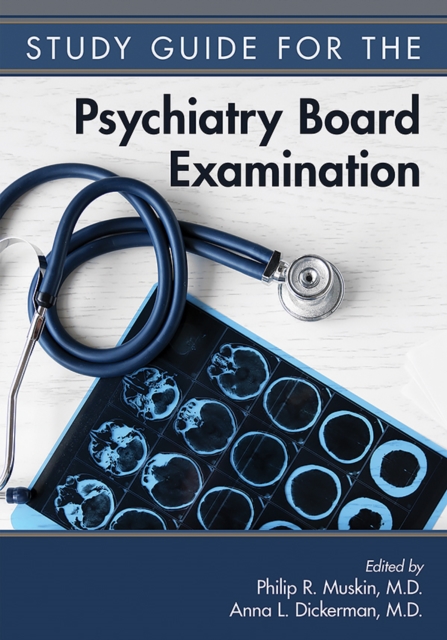
Psychiatrists and residents are faced with the important -- but what may feel overwhelming -- task of refreshing their knowledge of the whole of psychiatric practice, typically while remaining engaged in full-time clinical activity. Psychiatrists will find the logical structure, substantive questions, and thorough explanations provided by the Study Guide for the Psychiatry Board Examination to be as reassuring as they are educational. Although readers are advised to consult a range of resources in preparation for the examination, this guide is indispensable. It is the first and only guide to reflect the revisions contained in DSM-5(R), and it will ably assume a primary role in the study and review process. The guide is designed for maximum usefulness, with specific features and attributes to support knowledge recall and successful examination performance. * The authors are from a cross-section of accomplished students, fellows, and junior and senior faculty, all of whom have faced or will face the board examination and who understand its importance to the profession.* Topics were determined by the American Board of Psychiatry and Neurology Certification Examination in Psychiatry 2015 Content Blueprint.* The approximately 400 questions were formulated from information extracted from widely available American Psychiatric Publishing textbooks and accurately reflect the accepted psychiatric knowledge base.* Each multiple choice question is followed by an explanation of why the correct answer is correct and the others are incorrect, and every question and explanation is referenced, directing the reader to the primary material for more in-depth learning and study.* The volume was designed as a study guide for both the initial psychiatry board examination and the recertification examination. The process of working through the study guide will allow the reader to identify areas of strength and weakness, initiate further study, and test and retest knowledge, ultimately preparing for the examination's rigors. Only the Study Guide for the Psychiatry Board Examination offers support for the new, DSM-5(R) -- compatible examination, and that alone renders it essential.
eBook

The Neuropsychiatry of Headache
Whilst the vast majority of headaches are minor ailments, some patients develop chronic symptoms that have psychiatric dimensions. These symptoms can be immensely challenging to manage and can have a serious impact on the patient's quality of life. The relationship between headache and psychiatric disease is often rationalized as cause and effect; however, the interplay between the two is complex. Management of each of the co-morbid disorders affects the other one in positive and/or negative ways. The Neuropsychiatry of Headache details the current concepts of various headache conditions and the psychiatric syndromes; topics covered include migraine, mood disorders, medication overuse and personality disorders. Headache specialists, neurologists, psychiatrists, neuropsychiatrists and neuropsychologists will find this an invaluable resource for understanding and co-managing these conditions.
eBook

Why I Like Being an Academic Psychiatrist
In some institutions, the only people who really are considered \"academics\" are those who bring in grant money to do research, and who publish in peer-reviewed journals; education is important, but not necessarily the task of such academics. The goal of the education is to enable others to provide the highest quality of clinical care to patients.
Journal Article
Association of Medicine and Psychiatry Primary Care Psychiatry
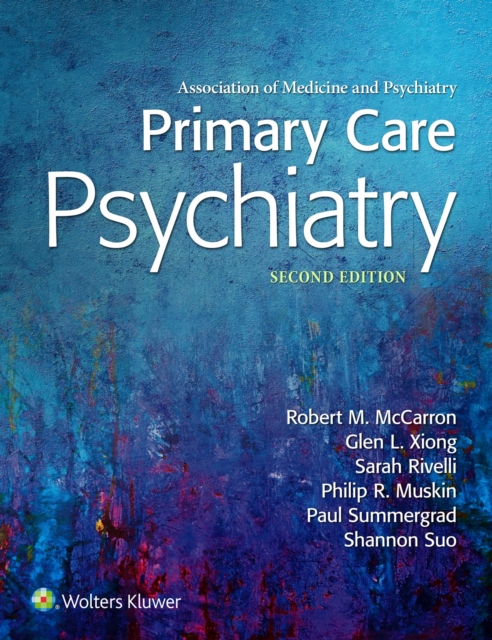
Publisher's Note: Products purchased from 3rd Party sellers are not guaranteed by the Publisher for quality, authenticity, or access to any online entitlements included with the product.Perfect for primary care physicians, nurse practitioners, and PAs, who are routinely confronted with behavioral health disorders among patients in a primary care setting, the second edition of this unique multimedia handbook-now affiliated with the Association of Medicine and Psychiatry-sits at the intersection of primary care and psychiatry. You'll find much that is new: updated fundamentals on depression, anxiety, psychosis, substance, and eating disorders, as well as overviews on CBT, motivational therapy, and common pharmacological therapies. With contributors from the worlds of both psychiatry and primary care, you have a perfect package on how to integrate the two in order to deliver better mental health care for your patients.
eBook

Study Guide for the Psychiatry Board Examination
Authors from the full career spectrum -- medical students, fellows, and junior and senior faculty -- collaborated in the development and refinement of this study guide, a monumental task undertaken and executed with professional seriousness and academic rigor.
eBook