
Catalogue Search | MBRL


Are you sure you want to remove the book from the shelf?

{{itemTitle}}
3
result(s) for
"Mwaba, Stary"
Sort by:

Visualising China in Southern Africa
Engaging with the work of contemporary African and Chinese artists while analysing broader material production, the essays in this volume are wide-ranging in their analysis of ceramics, photography, painting, etching, sculpture, film, performance, postcards, stamps, installations, political posters, cartoons and architecture.
With China’s rise as the new superpower, its presence in Africa has expanded, leading to significant economic, geopolitical and cultural shifts. Chinese and African encounters through the lens of the visual arts and material culture, however, is a neglected field. Visualising China in Southern Africa is a ground-breaking volume that addresses this deficit through engaging with the work of contemporary African and Chinese artists while analysing broader material production that prefigures the current relationship. The essays are wide-ranging in their analysis of ceramics, photography, painting, etching, sculpture, film, performance, postcards, stamps, installations, political posters, cartoons and architecture. Richly illustrated, the collection includes scholarly chapters, photo essays, interviews, and artists’ personal accounts, organised around four themes: material flows, orientations and transgressions, spatial imaginaries, and biographies.
eBook
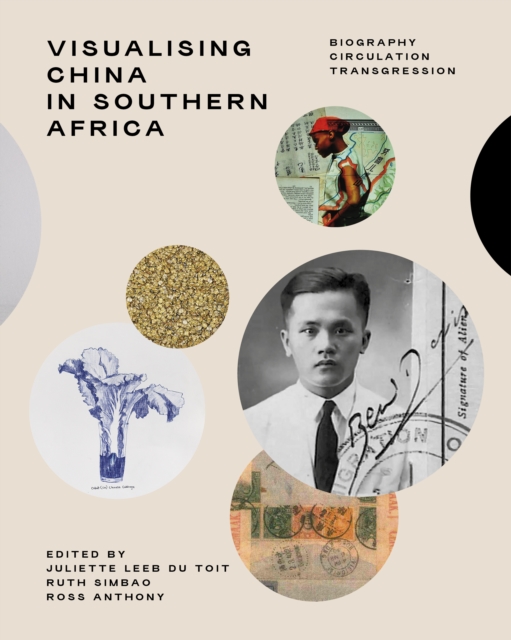
Visualising China in Southern Africa: Circulation, Biography, Transgression
China and Africa have long shared a history of allegiance and contact points through global political forces from the time of colonialism and the Cold War. With China's rise as the new superpower, its presence in Africa has expanded, leading to significant economic, geopolitical and cultural shifts. While issues such as trade, aid and development have received much attention, Chinese and African encounters through the lens of the visual arts and material culture is a neglected field. Visualising China in Southern Africa: Biography, Circulation, Transgression is a ground-breaking volume that addresses this deficit through engaging with the work of contemporary African and Chinese artists while analysing broader material production that prefigures the current relationship. The essays are wide-ranging in their analysis of ceramics, photography, painting, etching, sculpture, film, performance, postcards, stamps, installations, political posters, cartoons and architecture. Visualising China in Southern Africa confines its focus to southern Africa, yet even within this region, the context is complex. Ethnicity and nationalism, the lingering influence of Cold War allegiances and colonial configurations all continue to play a role. The various visual cultures discussed in this volume emphasise the commonality of these categories, but also point towards other shared histories that transcend the nation-state category. The collection includes scholarly chapters, photo essays, interviews, and artists' personal accounts, organised around four themes: material flows, orientations and transgressions, spatial imaginaries, and biographies. The artists, photographers, filmmakers, curators and collectors in this volume include: Stary Mwaba, Hua Jiming, Anawana Haloba, Gerald Machona, Nobukho Nqaba, Marcus Neustetter, Brett Murray, Diane Victor, William Kentridge, Kristin NG-Yang, Kok Nam, Mark Lewis, the Chinese Camera Club of South Africa, Wu Jing, Henion Han and Shengkai Wu.
eBook
Abapakati: Chinese Intermediaries and Artisanal Mining on the Zambian Copperbelt
Stary Mwaba and Ruth Simbao first met in Zambia in the early 2000s, and then reconnected a decade later through their mutual research interest in the Chinese presence in Zambia and the visual arts. Mwaba had just completed a residency at Künstlerhaus Bethanien in Berlin, and was working as an artist in Lusaka, while Simbao was lecturing Art History and Visual Culture in South Africa. Joining Simbao's postgraduate research programme, Geopolitics and the Arts of Africa as a Master of Fine Art (MFA) candidate, Mwaba created the exhibition Black Mountain in February 2019.In December 2019, Mwaba and Simbao drove together from Lusaka to the Copperbelt to photograph the Black Mountain mining slags in Kitwe and Chingola. This trip along a road that is in many places corrugated from the weight of trucks bearing copper and other goods, formed the basis of this collaborative photographic essay. Abapakati – ‘those in the middle’ – considers the impact of Chinese intermediaries outside of multinational mining companies who have created a new small-scale market for artisanal mining at old mineral dumpsites on the Copperbelt.Conversations over the years about Mwaba's personal experiences of growing up on the Copperbelt, and his cousin's work as an artisanal miner, create (auto)biographical lenses through which the Chinese presence in Zambia is viewed. This approach emphasises the need to look beyond sweeping stories, preconceived ideas and social media rumours that often fail to consider on-theground experiences. Small stories that are connected to individuals’ daily lives are filled with specificities, exceptions and ambiguities.In this photo essay, the Chinese intermediaries – men and women who negotiate to buy minerals from small-scale Zambian miners – are not explicitly represented, but the impact of their presence is subtly felt in local engagements with the natural and urban landscapes of the Copperbelt. Importantly, the influence of abapakati is positioned within a broader context of colonial history and local politics, all of which shape the stories of the Black Mountain slags and the experiences of artisanal miners.Stary Mwaba was born in 1976 in Chingola, a mining town on the Zambian Copperbelt, and spent his formative years in Chingola, Kitwe and Mufulira. He lived with his grandparents, who had migrated to the Copperbelt in the late 1950s, while his parents lived in nearby Kitwe. His father and some of his other relatives were miners and worked for Zambia Consolidated Copper Mines (ZCCM).
Book Chapter