
Catalogue Search | MBRL


Are you sure you want to remove the book from the shelf?

{{itemTitle}}
59
result(s) for
"NESBET, ANNE"
Sort by:

Cloud and wallfish
\"Slip behind the Iron Curtain into a world of smoke, secrets, and lies in this stunning novel where someone is always listening and nothing is as it seems. Noah Keller has a pretty normal life, until one wild afternoon when his parents pick him up from school and head straight for the airport, telling him on the ride that his name isn't really Noah and he didn't really just turn eleven in March. And he can't even ask them why, not because of his Astonishing Stutter, but because asking questions is against the newly instated rules. (Rule Number Two: Don't talk about serious things indoors, because Rule Number One: They will always be listening). As Noah, now \"Jonah Brown,\" and his parents head behind the Iron Curtain into East Berlin, the rules and secrets begin to pile up so quickly that he can hardly keep track of the questions bubbling up inside him: Who, exactly, is listening and why? When did his mother become fluent in so many languages? And what really happened to the parents of his only friend, Cloud-Claudia, the lonely girl who lives downstairs? In an intricately plotted novel full of espionage and intrigue, friendship and family, Anne Nesbet cracks history wide open and gets right to the heart of what it feels like to be an outsider in a world that's impossible to understand.\"--Supplied by publisher.
Book

The orphan band of Springdale
\"It's 1941, and tensions are rising in the United States as the Second World War rages in Europe. Eleven-year-old Gusta's life, like the world around her, is about to change. Her father, a foreign-born labor organizer, has had to flee the country, and Gusta has been sent to live in an orphanage run by her grandmother. Nearsighted, snaggletoothed Gusta arrives in Springdale, Maine, lugging her one precious possession: a beloved old French horn, her sole memento of her father. But in a family that's long on troubles and short on money, how can a girl hang on to something so valuable and yet so useless when Gusta's mill-worker uncle needs surgery to fix his mangled hand, with no union to help him pay? Inspired by her mother's fanciful stories, Gusta secretly hopes to find the coin-like \"Wish\" that her sea-captain grandfather supposedly left hidden somewhere. Meanwhile, even as Gusta gets to know the rambunctious orphans at the home, she feels like an outsider at her new school -- and finds herself facing patriotism turned to prejudice, alien registration drives, and a family secret likely to turn the small town upside down.\" -- Amazon.com
Book
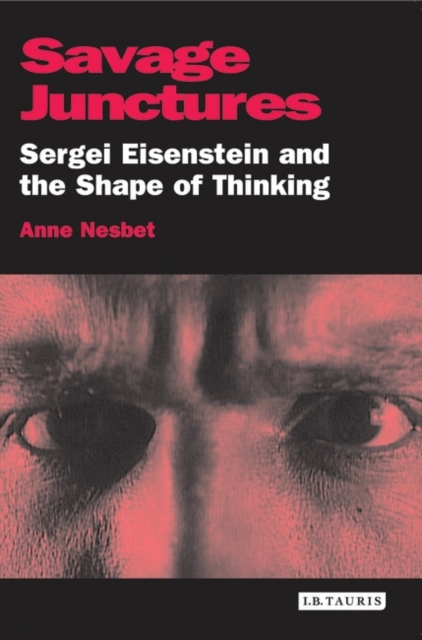
Savage Junctures : Sergei Eisenstein and the Shape of Thinking
Eisenstein delighted in unlikely juxtapositions, being apt to cite from Stalin and Disney in one breath. The heterogeneity underlying his work is breathtaking and his lack of decorum and refusal to be categorised tend to make critics uneasy but not Anne Nesbet. Based on extensive research in the Eisenstein archives, her book is an original, beautifully written exploration of Eisenstein's omnivorous consumption of high and low culture and his wide-ranging experiments in 'thinking in pictures'. Savage Junctures provides fresh insights into Eisenstein's films and writings. It examines the multiple contexts within which his films evolved and Eisenstein's appropriation of all of world culture as his source. Like Eisenstein himself, Anne Nesbet is particularly interested in the possibilities of visual image making and each chapter addresses the problem of his image-based thinking from a different perspective. Each chapter also offers a fundamentally new interpretation of the films and writings that make up his oeuvre. This is a major new contribution to studies in Soviet cinema and culture and to the field of film studies.
eBook


Skyscrapers, Consular Territory, and Hell: What Bulgakov and Eizenshtein Learned about Space from Il'f and Petrov's America
The Soviet comic writers Il'ia Il'f and Evgenii Petrov traveled across America in late 1935–36, gathering material for the travelogue published upon their return as “Odnoetazhnaia Amerika” (One-Story America) in the journal Znamia and then as a book in 1937, just at the time of Il'f's death. The book was a popular success and remarkably influential: the architectural structures of “One-Story America“—its skyscrapers, staircases, one-story bungalows—reappear in literary and cultural monuments of the 1930s and 1940s, namely Mikhail Bulgakov's novel about the Devil's eventful visit to Moscow, The Master and Margarita, and Sergei Eizenshtein's essays on montage. These works share an interest in the construction of space and perspective: paradoxical spatial constructions, embedded spaces, verticality, the “trick of the skyscraper,” and what Eizenshtein referred to as the “charm” of “acrobatic points of view.“
Journal Article


Émile Zola, Kozintsev and Trauberg, and Film as Department Store
Nesbet examines Grigorii Kozintsev and Leonid Trauberg's use of Emile Zola's 1883 novel Au Bonheur des Dames as a basis for their 1929 film Novyi Vavilon. Zola's novel was, on the face of it, completely unsuitable, perhaps the least suitable of all of Zola's novels for revolutionary appropriation. It is telling that two other remakes of Au Bonheur des Dames contemporaneous to Kozintsev and Trauberg's film both are set in a thoroughly capitalist \"today\" and both arrive (as we shall see later) at \"happy ends\" without any recourse to revolution whatsoever: Julien Duvivier's 1930 Au Bonheur des Dames and the American film that canonized Clara Bow as the \"It\" girl in 1927: It, directed by Clarence Badger. To judge from the company it kept, Novyi Vavilon was on shaky ideological ground when it repaired to Zola's department store novel as a basis for revolutionary film.
Journal Article