
Catalogue Search | MBRL


Are you sure you want to remove the book from the shelf?

{{itemTitle}}
5
result(s) for
"National Maritime Museum (Great Britain)"
Sort by:


Sir John Franklin's Erebus and Terror Expedition
In 1845, British explorer Sir John Franklin set out on a voyage to find the North-West Passage - the sea route linking the Atlantic Ocean to the Pacific.The expedition was expected to complete its mission within three years and return home in triumph but the two ships, HMS Erebus and HMS Terror , and the 129 men aboard them disappeared.
eBook

The telescope : a short history
\"As an instrument of science and navigation the telescope was at the forefront of discovery. Even today it is vital to modern understanding of space and the origins of matter. The story of its development is a fascinating narrative of scientific endeavour, exploration and ingenuity, encompassing the lives of scientists and astronomers such as Galileo, Newton, William Herschel and Edmund Halley as well as the exploits of naval officers and explorers like Cloudisley Shovell and James Cook. Richard Dunn presents an engaging historical survey that traces the telescope from its invention in 1608 to its contemporary applications in astrophysics. Profusely illustrated with exquisite examples of telescopes and other prints, drawings and artworks, The Telescope will appeal to all those with an interest in science, discovery and exploration, maritime history, seafaring or astronomy\" -- Publisher description.
Book

New naval history
A New Naval History brings together the most significant and interdisciplinary approaches to contemporary naval history. The last few decades have witnessed a transformation in how this field is researched and understood and this volume captures the state of a field that continues to develop apace. It examines – through the prism of naval affairs – issues of nationhood and imperialism; the legacy of Nelson; the socio-cultural realities of life in ships and naval bases; and the processes of commemoration, journalism and stage-managed pageantry that plotted the interrelationship of ship and shore. This bold and original publication will be essential for undergraduate and postgraduate students of naval and maritime history. Beyond that, though, it marks an important intervention into wider historiographies that will be read by scholars from across the spectrum of social history, cultural studies and the analysis of national identity.
eBook
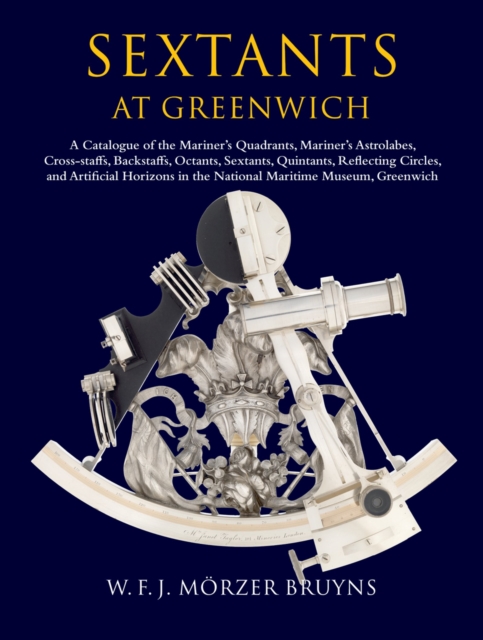
Sextants at Greenwich
This book describes the history and development of navigating instruments. Before satellites these were used to measure the altitude of the sun and stars above the horizon, to determine the ship's position at sea. The book also contains a catalogue of 347 mariner's astrolabes, cross-staffs, backstaffs, and octants, sextants and artificial horizons.
eBook