
Catalogue Search | MBRL


Are you sure you want to remove the book from the shelf?

{{itemTitle}}
10,267
result(s) for
"Neal, Anthony"
Sort by:


The oral presidency of Barack Obama
This book offers an examination of the signature weapon of Barack Obama’s presidency: his speeches. It provides an in-depth, analytical look at the words of Barack Obama through the social and cultural contexts that made the content of his speeches timeless. The book draws on the oral tradition of the Black church in order to help explain aspects of the president’s speaking style and to establish a direct link between the president’s words and actions.
eBook


Boundary-Layer Detection at Cryogenic Conditions Using Temperature Sensitive Paint Coupled with a Carbon Nanotube Heating Layer
Detection of flow transition on aircraft surfaces and models can be vital to the development of future vehicles and computational methods for evaluating vehicle concepts. In testing at ambient conditions, IR thermography is ideal for this measurement. However, for higher Reynolds number testing, cryogenic facilities are often used, in which IR thermography is difficult to employ. In these facilities, temperature sensitive paint is an alternative with a temperature step introduced to enhance the natural temperature change from transition. Traditional methods for inducing the temperature step by changing the liquid nitrogen injection rate often change the tunnel conditions. Recent work has shown that adding a layer consisting of carbon nanotubes to the surface can be used to impart a temperature step on the model surface with little change in the operating conditions. Unfortunately, this system physically degraded at 130 K and lost heating capability. This paper describes a modification of this technique enabling operation down to at least 77 K, well below the temperature reached in cryogenic facilities. This is possible because the CNT layer is in a polyurethane binder. This was tested on a Natural Laminar Flow model in a cryogenic facility and transition detection was successfully visualized at conditions from 200 K to 110 K. Results were also compared with the traditional temperature step method.
Journal Article

Soul Babies
In Soul Babies, Mark Anthony Neal explains the complexities and contradictions of black life and culture after the end of the Civil Rights era. He traces the emergence of what he calls a \"post-soul aesthetic,\" a transformation of values that marked a profound change in African American thought and experience. Lively and provocative, Soul Babies offers a valuable new way of thinking about black popular culture and the legacy of the sixties.
eBook

Radiation doses and fractionation schedules in non-low-risk ductal carcinoma in situ in the breast (BIG 3–07/TROG 07.01): a randomised, factorial, multicentre, open-label, phase 3 study
Whole breast irradiation (WBI) after conservative surgery for ductal carcinoma in situ (DCIS) reduces local recurrence. We investigated whether a tumour bed boost after WBI improved outcomes, and examined radiation dose fractionation sensitivity for non-low-risk DCIS.
The study was an international, randomised, unmasked, phase 3 trial involving 136 participating centres of six clinical trials organisations in 11 countries (Australia, New Zealand, Singapore, Canada, the Netherlands, Belgium, France, Switzerland, Italy, Ireland, and the UK). Eligible patients were women aged 18 years or older with unilateral, histologically proven, non-low-risk DCIS treated by breast-conserving surgery with at least 1 mm of clear radial resection margins. They were assigned to one of four groups (1:1:1:1) of no tumour bed boost versus boost after conventional versus hypofractionated WBI, or randomly assigned to one of two groups (1:1) of no boost versus boost after each centre prespecified conventional or hypofractionated WBI. The conventional WBI used was 50 Gy in 25 fractions, and hypofractionated WBI was 42·5 Gy in 16 fractions. A boost dose of 16 Gy in eight fractions, if allocated, was delivered after WBI. Patients and clinicians were not masked to treatment allocation. The primary endpoint was time to local recurrence. This trial is registered with ClinicalTrials.gov (NCT00470236).
Between June 25, 2007, and June 30, 2014, 1608 patients were randomly assigned to have no boost (805 patients) or boost (803 patients). Conventional WBI was given to 831 patients, and hypofractionated WBI was given to 777 patients. Median follow-up was 6·6 years. The 5-year free-from-local-recurrence rates were 92·7% (95% CI 90·6–94·4%) in the no-boost group and 97·1% (95·6–98·1%) in the boost group (hazard ratio 0·47; 0·31–0·72; p<0·001). The boost group had higher rates of grade 2 or higher breast pain (10% [8–12%] vs 14% [12–17%], p=0·003) and induration (6% [5–8%] vs 14% [11–16%], p<0·001).
In patients with resected non-low-risk DCIS, a tumour bed boost after WBI reduced local recurrence with an increase in grade 2 or greater toxicity. The results provide the first randomised trial data to support the use of boost radiation after postoperative WBI in these patients to improve local control. The international scale of the study supports the generalisability of the results.
National Health and Medical Research Council of Australia, Susan G Komen for the Cure, Breast Cancer Now, OncoSuisse, Dutch Cancer Society, Canadian Cancer Trials Group.
Journal Article
6 versus 12 months of adjuvant trastuzumab for HER2-positive early breast cancer (PERSEPHONE): 4-year disease-free survival results of a randomised phase 3 non-inferiority trial
Adjuvant trastuzumab significantly improves outcomes for patients with HER2-positive early breast cancer. The standard treatment duration is 12 months but shorter treatment could provide similar efficacy while reducing toxicities and cost. We aimed to investigate whether 6-month adjuvant trastuzumab treatment is non-inferior to the standard 12-month treatment regarding disease-free survival.
This study is an open-label, randomised phase 3 non-inferiority trial. Patients were recruited from 152 centres in the UK. We randomly assigned patients with HER2-positive early breast cancer, aged 18 years or older, and with a clear indication for chemotherapy, by a computerised minimisation process (1:1), to receive either 6-month or 12-month trastuzumab delivered every 3 weeks intravenously (loading dose of 8 mg/kg followed by maintenance doses of 6 mg/kg) or subcutaneously (600 mg), given in combination with chemotherapy (concurrently or sequentially). The primary endpoint was disease-free survival, analysed by intention to treat, with a non-inferiority margin of 3% for 4-year disease-free survival. Safety was analysed in all patients who received trastuzumab. This trial is registered with EudraCT (number 2006–007018–39), ISRCTN (number 52968807), and ClinicalTrials.gov (number NCT00712140).
Between Oct 4, 2007, and July 31, 2015, 2045 patients were assigned to 12-month trastuzumab treatment and 2044 to 6-month treatment (one patient was excluded because they were double randomised). Median follow-up was 5·4 years (IQR 3·6–6·7) for both treatment groups, during which a disease-free survival event occurred in 265 (13%) of 2043 patients in the 6-month group and 247 (12%) of 2045 patients in the 12-month group. 4-year disease-free survival was 89·4% (95% CI 87·9–90·7) in the 6-month group and 89·8% (88·3–91·1) in the 12-month group (hazard ratio 1·07 [90% CI 0·93–1·24], non-inferiority p=0·011), showing non-inferiority of the 6-month treatment. 6-month trastuzumab treatment resulted in fewer patients reporting severe adverse events (373 [19%] of 1939 patients vs 459 [24%] of 1894 patients, p=0·0002) or stopping early because of cardiotoxicity (61 [3%] of 1939 patients vs 146 [8%] of 1894 patients, p<0·0001).
We have shown that 6-month trastuzumab treatment is non-inferior to 12-month treatment in patients with HER2-positive early breast cancer, with less cardiotoxicity and fewer severe adverse events. These results support consideration of reduced duration trastuzumab for women at similar risk of recurrence as to those included in the trial.
UK National Institute for Health Research, Health Technology Assessment Programme.
Journal Article
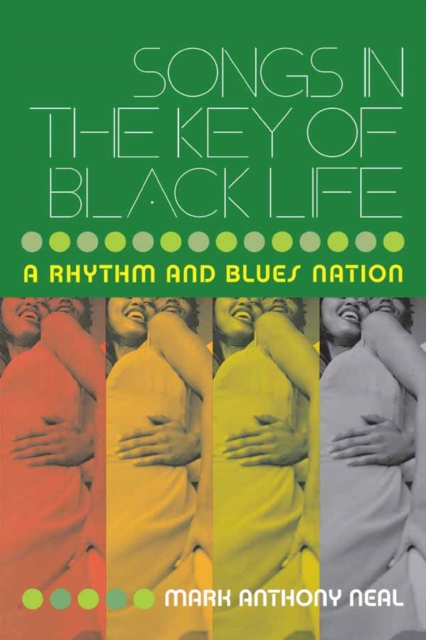
Songs in the Key of Black Life
First Published in 2003. Routledge is an imprint of Taylor & Francis, an informa company.
Mark Anthony Neal is Associate Professor of Black Popular Culture in the Program in African and African-American Studies at Duke University. Neal is the author of What the Music Said , Soul Babies , and Songs in the Key of Black Life , all published by Routledge.
eBook

Quality of life after breast-conserving therapy and adjuvant radiotherapy for non-low-risk ductal carcinoma in situ (BIG 3-07/TROG 07.01): 2-year results of a randomised, controlled, phase 3 trial
BIG 3-07/TROG 07.01 is an international, multicentre, randomised, controlled, phase 3 trial evaluating tumour bed boost and hypofractionation in patients with non-low-risk ductal carcinoma in situ following breast-conserving surgery and whole breast radiotherapy. Here, we report the effects of diagnosis and treatment on health-related quality of life (HRQOL) at 2 years.
The BIG 3-07/TROG 07.01 trial is ongoing at 118 hospitals in 11 countries. Women aged 18 years or older with completely excised non-low-risk ductal carcinoma in situ were randomly assigned, by use of a minimisation algorithm, to tumour bed boost or no tumour bed boost, following conventional whole breast radiotherapy or hypofractionated whole breast radiotherapy using one of three randomisation categories. Category A was a 4-arm randomisation of tumour bed boost versus no boost following conventional whole breast radiotherapy (50 Gy in 25 fractions over 5 weeks) versus hypofractionated whole breast radiotherapy (42·5 Gy in 16 fractions over 3·5 weeks). Category B was a 2-arm randomisation between tumour bed boost versus no boost following conventional whole breast radiotherapy, and category C was a 2-arm randomisation between tumour bed boost versus no boost following hypofractionated whole breast radiotherapy. Stratification factors were age at diagnosis, planned endocrine therapy, and treating centre. The primary endpoint, time to local recurrence, will be reported when participants have completed 5 years of follow-up. The HRQOL statistical analysis plan prespecified eight aspects of HRQOL, assessed by four questionnaires at baseline, end of treatment, and at 6, 12, and 24 months after radiotherapy: fatigue and physical functioning (EORTC QLQ-C30); cosmetic status, breast-specific symptoms, arm and shoulder functional status (Breast Cancer Treatment Outcome Scale); body image and sexuality (Body Image Scale); and perceived risk of invasive breast cancer (Cancer Worry Scale and a study-specific question). For each of these measures, tumour bed boost was compared with no boost, and conventional whole breast radiotherapy compared with hypofractionated whole breast radiotherapy, by use of generalised estimating equation models. Analyses were by intention to treat, with Hochberg adjustment for multiple testing. This trial is registered with ClinicalTrials.gov, NCT00470236.
Between June 1, 2007, and Aug 14, 2013, 1208 women were enrolled and randomly assigned to receive no tumour bed boost (n=605) or tumour bed boost (n=603). 396 of 1208 women were assigned to category A: conventional whole breast radiotherapy with tumour bed boost (n=100) or no boost (n=98), or to hypofractionated whole breast radiotherapy with tumour bed boost (n=98) or no boost (n=100). 447 were assigned to category B: conventional whole breast radiotherapy with tumour bed boost (n=223) or no boost (n=224). 365 were assigned to category C: hypofractionated whole breast radiotherapy with tumour bed boost (n=182) or no boost (n=183). All patients were followed up at 2 years for the HRQOL analysis. 1098 (91%) of 1208 patients received their allocated treatment, and most completed their scheduled HRQOL assessments (1147 [95%] of 1208 at baseline; 988 [87%] of 1141 at 2 years). Cosmetic status was worse with tumour bed boost than with no boost across all timepoints (difference 0·10 [95% CI 0·05–0·15], global p=0·00014, Hochberg-adjusted p=0·0016); at the end of treatment, the estimated difference between tumour bed boost and no boost was 0·13 (95% CI 0·06–0·20; p=0·00021), persisting at 24 months (0·13 [0·06–0·20]; p=0·00021). Arm and shoulder function was also adversely affected by tumour bed boost across all timepoints (0·08 [95% CI 0·03–0·13], global p=0·0033, Hochberg adjusted p=0·045); the difference between tumour bed boost and no boost at the end of treatment was 0·08 (0·01 to 0·15, p=0·021), and did not persist at 24 months (0·04 [–0·03 to 0·11], p=0·29). None of the other six prespecified aspects of HRQOL differed significantly after adjustment for multiple testing. Conventional whole breast radiotherapy was associated with worse body image than hypofractionated whole breast radiotherapy at the end of treatment (difference –1·10 [95% CI –1·79 to –0·42], p=0·0016). No significant differences were reported in the other PROs between conventional whole breast radiotherapy compared with hypofractionated whole breast radiotherapy.
Tumour bed boost was associated with persistent adverse effects on cosmetic status and arm and shoulder functional status, which might inform shared decision making while local recurrence analysis is pending.
National Health and Medical Research Council, Susan G Komen for the Cure, Breast Cancer Now, OncoSuisse, Dutch Cancer Society.
Journal Article

Semantic Attributivism: What It Is and What It Can(Not) Do
Semantic attributivism (SA) is the thesis that “good” and “bad” each have only a single semantic function that is attributive. That is, no meaningful use of “good” or “bad” ascribes a single property goodness or badness across all meaningful deployments, but instead meaningful deployments of “good” and “bad” ascribe the variable property of being good in some respect, such as good as a knife, good at chess, good for koalas, etc. SA is frequently taken to ground an argument against the existence of goodness simpliciter, the evaluative property championed by G. E. Moore and utilized by many consequentialist normative theories. In this paper, I have two main aims. First, I resolve two puzzles for SA, developing a clearer and more explanatory version of the theory. Second, I argue that the improved version of SA has no implications for the existence of goodness simpliciter and therefore no implications for consequentialism. The result is that SA, when understood more fully, is revealed to have fewer axiological and normative implications than it is sometimes thought to have.
Dissertation