
Catalogue Search | MBRL


Are you sure you want to remove the book from the shelf?

{{itemTitle}}
13
result(s) for
"Negussie, Elene"
Sort by:
World Heritage Conservation
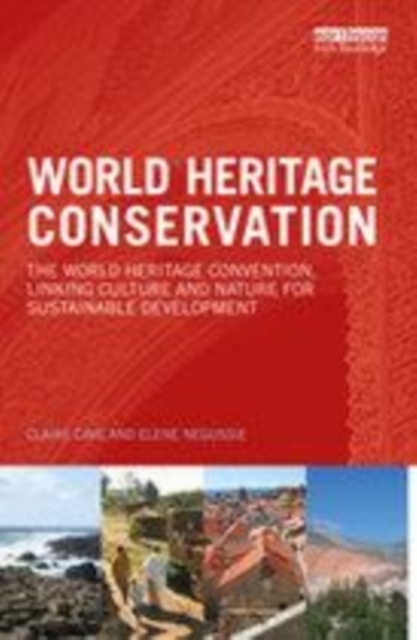
The UNESCO World Heritage Convention has become one of the most successful UN instruments for promoting cultural diplomacy and dialogue on conservation of cultural and natural heritage. This book provides an overview of the convention through an interdisciplinary approach to conservation. It shows that based on the notion of outstanding universal value and international co-operation for the protection of heritage, the convention provides a platform for sustainable development through the conservation and management of heritage of significance to humanity. With increasing globalization of heritage, World Heritage Conservation is reviewed as an emerging interdisciplinary field of study creating new opportunities for inclusive heritage debate both locally and globally, requiring common tools and understanding. With over a thousand properties inscribed on the World Heritage List, from biologically diverse sites such as the Central Amazon Conservation Complex to the urban landscape of the metropolis of Rio de Janeiro, this book will help students, researchers and professionals in the identification, protection, conservation and presentation of World Heritage. Targeted at a diversity of disciplines, the book critically describes the strategies for implementing the convention and the processes of heritage governance for sustainable development.
eBook

Implications of Neo-liberalism for Built Heritage Management: Institutional and Ownership Structures in Ireland and Sweden
This paper explores implications of neo-liberal conventions and practices on institutional and ownership structures for built heritage management. It argues that deliberate adjustments and shifts towards a neo-liberal global economic agenda have raised new issues for decisions relating to ownership and management of the built heritage and consequently concerns for the effects on built environments. This is reflected in the changing role of public institutions and the voluntary sector in built heritage conservation and in processes of privatisation. Based on empirical research which employed a comparative study of urban conservation, the paper draws on the Irish and Swedish experiences with particular reference to the cities of Dublin and Stockholm.
Journal Article

Managing World Heritage
In line with the strategic objectives of the World Heritage Committee, sites should be managed through participatory approaches. Managing World Heritage sustainably should involve collaborating with stakeholders in decision-making throughout the management process. Recognition of local knowledge, pre-existing governance systems and the wide range of values associated with a place should facilitate long-term management and conservation of OUV. This chapter discusses the factors and practices that assist in securing an effective and sustainable management approach. Adaptive management emerged from the ecological sciences in recognition of the complexity and variability of ecosystem processes and functions. A toolkit for assessing management effectiveness for natural World Heritage sites emerged from the WCPA framework as part of a project run by IUCN and UNESCO and funded by the UN Foundation. The importance of financial stability for World Heritage properties is recognized in the text of the convention, in the Operational Guidelines and in the procedures for periodic reporting.
Book Chapter
Introduction to World Heritage Conservation
The Convention concerning the Protection of the World Cultural and Natural Heritage ('World Heritage Convention') has arguably become one of the most successful instruments of the United Nations (UN) in promoting cultural diplomacy, dialogue and international cooperation on heritage conservation. The global growth in tourism is increasingly associated with World Heritage. The use and promotion of World Heritage sites as key tourism destinations have highlighted the dual effects of heritage tourism, i.e. having both positive and negative impacts on conservation and sustainable development. The rise of a global heritage has contributed to the emergence of World Heritage Conservation as an interdisciplinary field of study creating new opportunities for inclusive heritage debate and dialogue both locally and globally, requiring common tools and understanding. The growing global understanding of the interlinkages between culture and nature and the prominent role of the convention reinforce the role of World Heritage Conservation and the need for stimulating interdisciplinary approaches to sustainability.
Book Chapter
Defining World Heritage
World Heritage entails the i.e. that certain cultural and natural heritage sites are of outstanding universal value (OUV) and of importance to humanity as a whole and thus its protection is the duty of the international community. This chapter explores the criteria, conditions and factors that determine World Heritage designation, including review of specific categories such as mixed sites, cultural landscapes, serial and transboundary sites. It also explores World Heritage as a socially constructed process, incorporating both consensus and contested interpretations of what constitutes heritage. Understanding heritage as a social construction emerged primarily from the disciplines of human and social sciences and has become widely accepted in cultural heritage theory, particularly for its revealing of the power structures at work in heritage narratives. Cultural heritage conservation has developed into a modern international movement in which organizations such as ICOMOS and UNESCO play an important norm-setting role in defining and updating conservation thought and practice.
Book Chapter
Endangered heritage
World Heritage sites are threatened not only by the traditional problems of neglect and development but also by new factors such as terrorism and natural hazards which are increasingly understood to be exacerbated by human-induced environmental change. The evidence of humanity's impact on the planet is overwhelming including the emergence of climate change, the global mass extinction of species and the transformation of land cover by deforestation and urbanization. The Anthropocene has been described as the latest geological epoch in which human activities play a major role in altering the ecological and geological systems. This chapter explores human-induced threats to World Heritage. The increasingly global nature of the threats requires a coordinated and cooperative international response. By inscribing a property on the List of World Heritage in Danger (LWHD), the World Heritage Committee has the immediate capacity to assign financial aid from the World Heritage Fund to the endangered property.
Book Chapter
Towards a holistic approach
The success of the World Heritage Convention in inviting all the nations of the world to collaborate on the conservation of a global heritage has been conducive to understanding links between culture and the natural world. As ideas about what constitutes the 'common heritage of humanity' evolve, the processes of international conservation continue to shape conservation practice and heritage management, not least in regard to the questions of 'whose heritage', 'who decides' and 'for what purpose'. Conservation can offer the holistic approach that is needed to safeguard natural and man-made heritage within the broader remit of sustainable development. Holistic conservation requires a re-evaluation of the uses of heritage together with the broader landscape so that, in managing the whole, the altered landscape also plays a vital role in nurturing heritage conservation. Holistic conservation raises the question of how much should humans interfere in the protection of cultural and natural heritage.
Book Chapter
Using World Heritage
The World Heritage Convention stipulated the need for states parties to adopt policy 'which aims to give the cultural and natural heritage a function in the life of the community and to integrate the protection of that heritage into comprehensive planning programmes'. World Heritage designation may either support or alter the sustainability path of heritage sites depending on how uses are managed. This chapter explores different uses of World Heritage sites. It examines some issues which includes how sustainable use is defined, the two-sided impact of tourism on sites, use of World Heritage status and communication, overuse and the role of local communities in maintaining living heritage and place identity. In 2011, UNESCO adopted the Recommendation on the Historic Urban Landscape (HUL) in response to the need for a holistic approach to urban conservation and recognition by the World Heritage Committee that decisions concerning urban sites require a special approach due to the dynamic nature of cities.
Book Chapter
Creating conservation capacities
World Heritage Conservation requires capacities within countries and organizations in order to respond to complex conservation and management issues on the ground. World Heritage Fund was established to facilitate financial support towards the saving of cultural and natural sites of outstanding universal value (OUV). This chapter explores how the original i.e. behind the convention, that of mobilizing international cooperation and financial assistance for the conservation of a common heritage of humanity, has evolved into a wide range of programmes, strategies and activities for the development of capacities in heritage conservation. There are three types of assistance available under the World Heritage Fund: emergency assistance; conservation and management assistance; and preparatory assistance. Funding priority is given to international assistance for properties inscribed on the LWHD, i.e. properties for which major operations and international assistance are necessary for their conservation. Heritage provides opportunities for cultural and socio-economic development and needs to be treated as a finite, valuable and delicate resource.
Book Chapter