
Catalogue Search | MBRL


Are you sure you want to remove the book from the shelf?

{{itemTitle}}
11
result(s) for
"Nelson, Randy Joe"
Sort by:

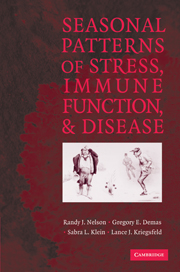
Seasonal Patterns of Stress, Immune Function, and Disease
This book presents evidence that infection is cyclical with the seasons, and that this phenomenon is mirrored in cycles of immune function. The book identifies the mechanisms by which immune systems are bolstered to counteract seasonally-recurrent stressors, such as extreme temperature reductions and food shortages. Stress, infectious diseases, autoimmune diseases, and human cancers are examined, and the role of hormones such as melatonin and glucocorticoids is considered. The book begins with an overview of seasonality, biological rhythms and photoperiodism, and basic immunology, and then discusses seasonal fluctuations in disease prevalence, immune function, and energetics and endocrinology as they relate to immune function. The clinical significance of this issue is also addressed, as such seasonal changes may play an important role in the development and treatment of infections. This first monograph to examine seasonal immune function from an interdisciplinary perspective will serve practitioners as well as advanced undergraduates and graduate students in biology, immunology, human and veterinary medicine, neuroscience, endocrinology, and zoology.
eBook
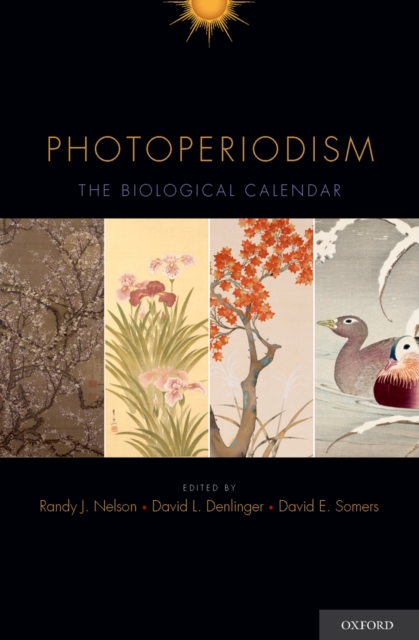
Photoperiodism : the biological calendar
Life evolves in a cyclic environment, and to be successful, organisms must adapt not only to their spatial habitat, but also to their temporal habitat. How do plants and animals determine the time of year so they can anticipate seasonal changes in their habitats? In most cases, day length or photoperiod acts as the principal external cue for determining seasonal activity. For organisms not living at the bottom of the ocean or deep in a cave, day follows night, and the length of the day changes predictably throughout the year. These changes in photoperiod provide the most accurate signal for predicting upcoming seasonal conditions. Measuring day length allows plants and animals to anticipate and adapt to seasonal changes in their environments in order to optimally time key developmental events including seasonal growth and flowering of plants, annual bouts of reproduction, dormancy and migration in insects, and the collapse and re-growth of the reproductive system that drives breeding seasons in mammals and birds. Although research on photoperiodic time measurement originally integrated work on plants and animals, recent work has focused more narrowly and separately on plants, invertebrates, or vertebrates. As the fields have become more specialized there has been less interaction across the broader field of photoperiodism. As a result, researchers in each area often needlessly repeat both theoretical and experimental work. However, over the past decade, intense work on daily and seasonal rhythms in fruit flies, mustard plants, and hamsters and mice, has led to remarkable progress in understanding the phenomenology, as well as the molecular and genetic mechanisms, underlying circadian rhythms and clocks. This book was developed to further this type of cooperation among scientists from all related disciplines.
eBook

Handbook of Psychology, Behavioral Neuroscience
Psychology is of interest to academics from many fields, as well as to the thousands of academic and clinical psychologists and general public who can't help but be interested in learning more about why humans think and behave as they do.
eBook

Handbook of psychology.: (Forensic psychology)
Psychology is of interest to academics from many fields, as well as to the thousands of academic and clinical psychologists and general public who can't help but be interested in learning more about why humans think and behave as they do. This award-winning twelve-volume reference covers every aspect of the ever-fascinating discipline of psychology and represents the most current knowledge in the field. This ten-year revision now covers discoveries based in neuroscience, clinical psychology's new interest in evidence-based practice and mindfulness, and new findings in social, developmental, and forensic psychology.
eBook

Ecoimmunology
This book critically reviews recent advances in ecoimmunology, a newly emergent, interdisciplinary research field that examines interactions among host physiology and disease ecology in a wide range of environmentally relevant contexts.
eBook


Longer lifespan in male mice treated with a weakly estrogenic agonist, an antioxidant, an alpha-glucosidase inhibitor or a Nrf2-inducer
Summary The National Institute on Aging Interventions Testing Program (ITP) evaluates agents hypothesized to increase healthy lifespan in genetically heterogeneous mice. Each compound is tested in parallel at three sites, and all results are published. We report the effects of lifelong treatment of mice with four agents not previously tested: Protandim, fish oil, ursodeoxycholic acid (UDCA) and metformin - the latter with and without rapamycin, and two drugs previously examined: 17-[alpha]-estradiol and nordihydroguaiaretic acid (NDGA), at doses greater and less than used previously. 17-[alpha]-estradiol at a threefold higher dose robustly extended both median and maximal lifespan, but still only in males. The male-specific extension of median lifespan by NDGA was replicated at the original dose, and using doses threefold lower and higher. The effects of NDGA were dose dependent and male specific but without an effect on maximal lifespan. Protandim, a mixture of botanical extracts that activate Nrf2, extended median lifespan in males only. Metformin alone, at a dose of 0.1% in the diet, did not significantly extend lifespan. Metformin (0.1%) combined with rapamycin (14 ppm) robustly extended lifespan, suggestive of an added benefit, based on historical comparison with earlier studies of rapamycin given alone. The [alpha]-glucosidase inhibitor, acarbose, at a concentration previously tested (1000 ppm), significantly increased median longevity in males and 90th percentile lifespan in both sexes, even when treatment was started at 16 months. Neither fish oil nor UDCA extended lifespan. These results underscore the reproducibility of ITP longevity studies and illustrate the importance of identifying optimal doses in lifespan studies.
Journal Article