
Catalogue Search | MBRL


Are you sure you want to remove the book from the shelf?

{{itemTitle}}
667
result(s) for
"Nelson, Robin"
Sort by:

From peanut to peanut butter
\"How does a peanut turn into peanut butter? Follow each step in the food production cycle-- from planting peanut seeds to spreading peanut butter on bread-- in this fascinating book!\"--P. [4] of cover.
Book

Survey of Academic Field Experiences (SAFE): Trainees Report Harassment and Assault
Little is known about the climate of the scientific fieldwork setting as it relates to gendered experiences, sexual harassment, and sexual assault. We conducted an internet-based survey of field scientists (N = 666) to characterize these experiences. Codes of conduct and sexual harassment policies were not regularly encountered by respondents, while harassment and assault were commonly experienced by respondents during trainee career stages. Women trainees were the primary targets; their perpetrators were predominantly senior to them professionally within the research team. Male trainees were more often targeted by their peers at the research site. Few respondents were aware of mechanisms to report incidents; most who did report were unsatisfied with the outcome. These findings suggest that policies emphasizing safety, inclusivity, and collegiality have the potential to improve field experiences of a diversity of researchers, especially during early career stages. These include better awareness of mechanisms for direct and oblique reporting of harassment and assault and, the implementation of productive response mechanisms when such behaviors are reported. Principal investigators are particularly well positioned to influence workplace culture at their field sites.
Journal Article

From cocoa bean to chocolate
\"How does a cocoa bean turn into tasty chocolate? Follow each step in the food production cycle-- from planting cocoa trees to eating a sweet treat-- in this fascinating book!\"--P. [4] of cover.
Book

Navigating cross-cultural research: methodological and ethical considerations
The intensifying pace of research based on cross-cultural studies in the social sciences necessitates a discussion of the unique challenges of multi-sited research. Given an increasing demand for social scientists to expand their data collection beyond WEIRD (Western, educated, industrialized, rich and democratic) populations, there is an urgent need for transdisciplinary conversations on the logistical, scientific and ethical considerations inherent to this type of scholarship. As a group of social scientists engaged in cross-cultural research in psychology and anthropology, we hope to guide prospective cross-cultural researchers through some of the complex scientific and ethical challenges involved in such work: (a) study site selection, (b) community involvement and (c) culturally appropriate research methods. We aim to shed light on some of the difficult ethical quandaries of this type of research. Our recommendation emphasizes a community-centred approach, in which the desires of the community regarding research approach and methodology, community involvement, results communication and distribution, and data sharing are held in the highest regard by the researchers. We argue that such considerations are central to scientific rigour and the foundation of the study of human behaviour.
Journal Article


Signaling Safety: Characterizing Fieldwork Experiences and Their Implications for Career Trajectories
Numerous studies use quantitative measures to evaluate retention, advancement and success in academic settings. Such approaches, however, present challenges for evaluating the lived experiences of academics. Here, we present a qualitative thematic analysis of self-reports of positive and negative experiences that occurred while conducting academic field research. Twenty-six semistructured interviews highlighted two central themes: (1) variability in clarity of appropriate professional behavior and rules at fieldsites, and (2) access, or obstacles therein, to professional resources and opportunity. In some instances, respondent narratives recalled a lack of consequences for violations of rules governing appropriate conduct. These violations included harassment and assault, and ultimately disruptions to career trajectories. A heuristic construct of a traffic light describing Red, Yellow, and Green experiences illustrates the ramifications of this distribution of clarity and access within fieldsite contexts. These results extend the findings from our previously reported Survey of Academic Field Experiences (SAFE) about the climates and contexts created and experienced in field research settings. Moreover, this study addresses specific tactics, such as policies, procedures, and paradigms that fieldsite directors and principal investigators can implement to improve field experiences and better achieve equal opportunity in field research settings. Numerosos estudios usan medidas cuantitativas para evaluar la retención, el ascenso y el éxito en ámbitos académicos. Tales aproximaciones, sin embargo, presentan retos para evaluar las experiencias vividas por los académicos. Aquí presentamos un análisis temático cualitativo de los autoreportes de experiencias positivas y negativas que ocurrieron mientras conducían investigación de campo académica. Veintiséis entrevistas semiestructuradas destacaron dos temas centrales: (1) variabilidad en la claridad de la conducta profesional apropiada y las reglas de los sitios de campo, y (2) acceso, u obstáculos en él, a la oportunidad y los recursos profesionales. En algunas instancias, las narrativas de los respondedores recordaron una falta de consecuencias por las violaciones a las reglas que rigen la conducta apropiada. Estas violaciones incluyeron acoso y asalto, y finalmente disrupciones en las trayectorias de sus carreras. Un constructo heurístico de un semáforo que describe las experiencias de Rojo, Amarillo, y Verde ilustra las ramificaciones de esta distribución de claridad y acceso dentro de los contextos de los sitios de campo. Estos resultados extienden los hallazgos de nuestra Encuesta de las Experiencias de Campo Académicas (SAFE) previamente reportada acerca de los climas y contextos creados y experimentados en entornos de investigación de campo. Adicionalmente, este estudio aborda tácticas específicas, tales como políticas, procedimientos y paradigmas que los directores de sitios de campo e investigadores principales pueden implementar para mejorar las experiencias de campo y lograr de mejor manera la igualdad de oportunidades en sitios de investigación de campo.
Journal Article

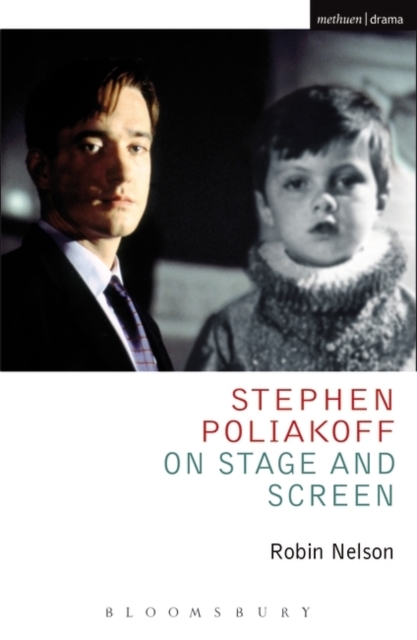
Stephen Poliakoff on Stage and Screen
Professor Nelson's companion considers the stage and screen work of one of the great auteurs of our present age. Ranging across Poliakoff's work for the theatre, his early TV dramas and his high-profile work for the screen since 1998, this is an invaluable study of a unique theatre, film and TV talent.
eBook

Reimaging Process in 2016: Deliberations on a Year of Integrative Slow Science in Biological Anthropology
The year 2016 in biological anthropology represented a return to the methodical study of classic questions and increased integrative team-based research that utilizes multiple methodological approaches. This review is not comprehensive, but rather highlights several papers that reflect trends in four areas of research within biological anthropology: paleoanthropology, primatology, human biology, and anthropological genetics. Methodological innovation enabled scholars in paleoanthropology to tackle questions once hampered by small sample size. Primatologists approached studies of behavior and reproduction with the rigor characteristic of the subdiscipline, while paying increasing attention to anthropogenic influences on primate habitats. Like their colleagues in paleoanthropology, human biologists also returned to enduring questions regarding reproduction, human adaptation, and behavior, including, notably, a focus on variability in cultural practice and meaning, as well as resource inequity. The publications representing anthropological genetics signify a movement toward an incorporation of multiple lines of evidence in our understanding of human and nonhuman primate ancestry, in total, these papers reveal shifts in biological anthropology toward research that is increasingly aware of the limits of siloed science and attuned to addressing issues salient to the populations and communities in which we work. El año 2016 en la antropología biológica representó un retorno al estudio metódico de cues-tiones clásicas, y a la creciente investigación integradora basada en equipos que utiliza múltiples aproximaciones metodológicas. Esta revisión no es exhaustiva, sino que más bien destaca varios artículos que reflejan tendencias en cuatro áreas de investigación dentro de la antropología biológica: paleoantropología, primatología, biología humana, y genética antropológica. La innovación metodológica le permitió a los investigadores en paleoantropología abordar cuestiones antes obstaculizadas por pequeños tamaños de muestra. Los primatólogos se aproximaron a los estudios de comportamiento y reproducción con el rigor característico de la subdisciplina, a la vez que prestando una creciente atención a las influencias antropogénicas sobre los habitats de los primates. Como sus colegas en paleoantropología, los biólogos humanos también retornaron a cuestiones recurrentes con relación a la reproducción, adaptación humana, y comportamiento, incluyendo, notablemente, un enfoque en la variabilidad en las prácticas y significados culturales, así como en la inequidad de los recursos. Las publicaciones representando la genética antropológica, indican un movimiento hacia la incorporación de múltiples líneas de evidencia en nuestro entendimiento de la ascendencia de primates humanos y no humanos. En total, estos artículos revelan cambios en la antropología biológica hacia la investigación que está cada vez más consciente de los límites de una ciencia encasillada y habituada a abordar cuestiones relevantes de las poblaciones y comunidades en las cuales trabajamos.
Journal Article