
Catalogue Search | MBRL


Are you sure you want to remove the book from the shelf?

{{itemTitle}}
105
result(s) for
"Nemerov, Alexander"
Sort by:

Wartime kiss : visions of the moment in the 1940s
\"Wartime Kiss is a personal meditation on the haunting power of American photographs and films from World War II and the later 1940s. Starting with a powerful reinterpretation of one of the most famous photos of all time, Alfred Eisenstaedt's image of a sailor kissing a nurse in Times Square on V-J Day, Alexander Nemerov goes on to examine an idiosyncratic collection of mostly obscure or unknown images and movie episodes--from a photo of Jimmy Stewart and Olivia de Havilland lying on a picnic blanket in the Santa Barbara hills to scenes from such films as Twelve O'Clock High and Hold Back the Dawn. Erotically charged and bearing traces of trauma even when they seem far removed from the war, these photos and scenes seem to hold out the promise of a palpable and emotional connection to those years. Through a series of fascinating stories, Nemerov reveals the surprising background of these bits of film and discovers unexpected connections between the war and Hollywood, from an obsession with aviation to Anne Frank's love of the movies. Beautifully written and illustrated, Wartime Kiss vividly evokes a world in which Margaret Bourke-White could follow a heroic assignment photographing a B-17 bombing mission over Tunis with a job in Hollywood documenting the filming of a war movie. Ultimately this is a book about history as a sensuous experience, a work as mysterious, indescribable, and affecting as a novel by W. G. Sebald\"-- Provided by publisher.
Book

Acting in the night
What can the performance of a single play on one specific night tell us about the world this event inhabited so briefly? Alexander Nemerov takes a performance of Macbeth in Washington, DC on October 17, 1863—with Abraham Lincoln in attendance—to explore this question and illuminate American art, politics, technology, and life as it was being lived. Nemerov’s inspiration is Wallace Stevens and his poem “Anecdote of the Jar,” in which a single object organizes the wilderness around it in the consciousness of the poet. For Nemerov, that evening’s performance of Macbeth reached across the tragedy of civil war to acknowledge the horrors and emptiness of a world it tried and ultimately failed to change.
eBook


John Quidor in hell
John Quidor's people look surprised to be in his paintings. The scurrying man in the background of Leatherstocking Meets the Law, of 1832, alights there like an ant picked up from one surface and placed on another. No sooner do his little legs hit the ground than he starts scampering. For Quidor, this was not all. In the historicizing era of the 1830s--a time when Americans began imagining their relation to the country's Revolutionary origins--he thought of his bug-figures as themselves possessing a history. The skittering-fleeing man, playing the role of deputy Jotham Riddle in Leatherstocking Meets the Law, looks like a sinner fleeing from some devil in a Renaissance painting of hell.
Journal Article

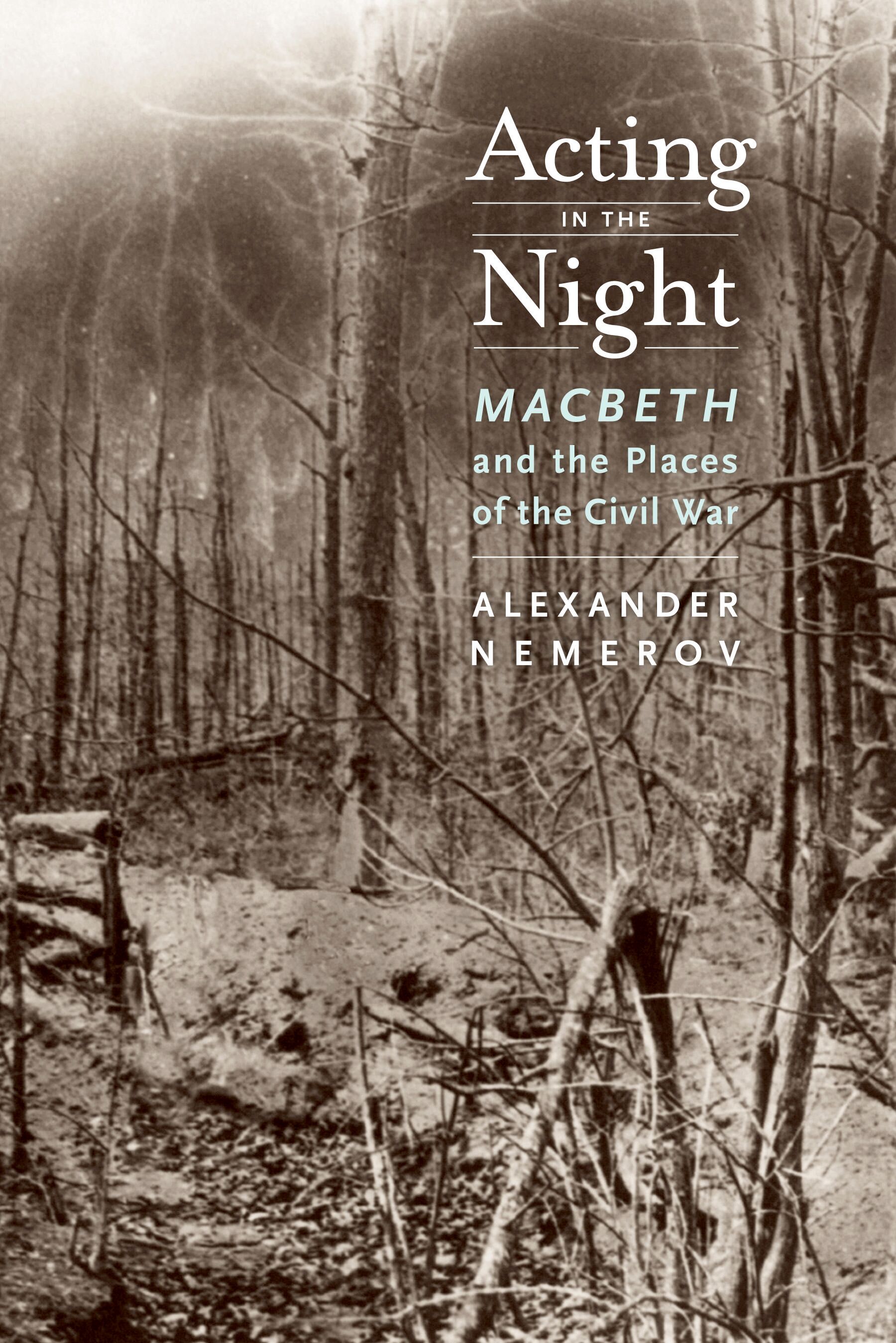
Acting in the Night
What can the performance of a single play on one specific night tell us about the world this event inhabited so briefly? Alexander Nemerov takes a performance of Macbeth in Washington, DC on October 17, 1863—with Abraham Lincoln in attendance—to explore this question and illuminate American art, politics, technology, and life as it was being lived. Nemerov’s inspiration is Wallace Stevens and his poem \"Anecdote of the Jar,\" in which a single object organizes the wilderness around it in the consciousness of the poet. For Nemerov, that evening’s performance of Macbeth reached across the tragedy of civil war to acknowledge the horrors and emptiness of a world it tried and ultimately failed to change.
eBook

True grit : American prints from 1900 to 1950
\"An examination of thirty-eight prints by American artists from the first half of the twentieth century\"--Provided by publisher.
Book

The Destruction of Hood’s Ordnance Train
How is something that is not there still present in a photograph? What is the importance of seeing a photograph in this way? Looking at George Barnard’s Civil War photograph Destruction of Hood’s Ordnance Train, this essay meditates on the operations of imagination in historical images.
Journal Article


Art Is Not the Archive
Scholars reasonably look to the archive for answers to the art. But the art is not the archive. Examining the single document from nineteenth-century American painter John Quidor’s hand in the collection of the Archives of American Art—a letter he wrote in 1868 concerning a real estate deal—I argue that the letter does not explain Quidor’s paintings.
Journal Article